Vulnerability Scan Result

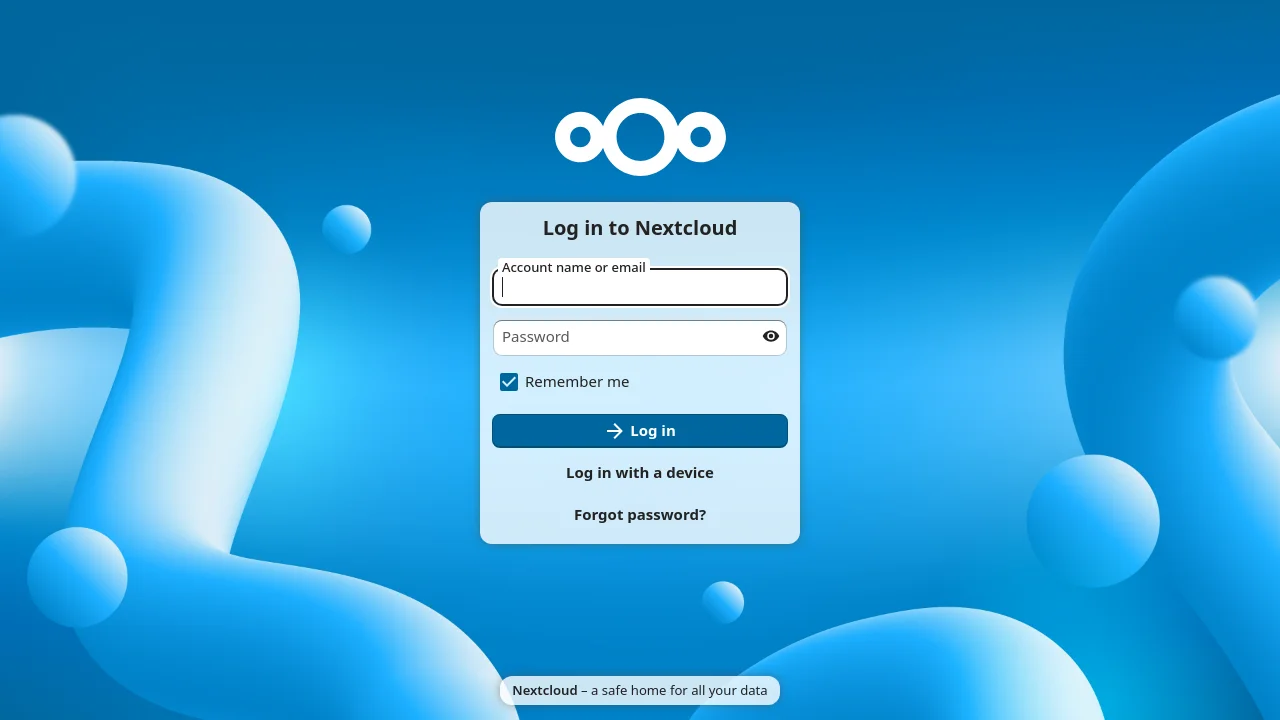
| Title: | Login – Nextcloud |
| Description: | No description found |
| ip_address | 79.59.121.166 |
| country | IT  |
| network_name | Telecom Italia S.p.A. |
| asn | AS3269 |
22/tcp | ssh | OpenSSH 9.6p1 Ubuntu 3ubuntu13.16 |
80/tcp | http | Apache httpd - |
443/tcp | https | Apache httpd - |
8000/tcp | ipcam | Hikvision IPCam control port - |
| Software / Version | Category |
|---|---|
| Backbone.js 1.6.1 | JavaScript frameworks |
| core-js 3.49.0 | JavaScript libraries |
| Handlebars 4.7.8 | JavaScript frameworks |
| Apache HTTP Server | Web servers |
| jQuery 3.7.1 | JavaScript libraries |
| jQuery UI 1.13.3 | JavaScript libraries |
| Moment.js 2.30.1 | JavaScript libraries |
| Nextcloud 32.0.8.2 | Digital asset management, Miscellaneous |
| Open Graph | Miscellaneous |
| ownCloud | Miscellaneous |
| PHP | Programming languages |
| Select2 | JavaScript libraries |
| Underscore.js | JavaScript libraries |
| Vue.js | JavaScript frameworks |
| PWA | Miscellaneous |
| Lodash 1.13.8 | JavaScript libraries |
| HSTS | Security |
Web Application Vulnerabilities
Evidence
| Software / Version | Category |
|---|---|
| Backbone.js 1.6.1 | JavaScript frameworks |
| core-js 3.49.0 | JavaScript libraries |
| Handlebars 4.7.8 | JavaScript frameworks |
| Apache HTTP Server | Web servers |
| jQuery 3.7.1 | JavaScript libraries |
| jQuery UI 1.13.3 | JavaScript libraries |
| Moment.js 2.30.1 | JavaScript libraries |
| Nextcloud 32.0.8.2 | Digital asset management, Miscellaneous |
| Open Graph | Miscellaneous |
| ownCloud | Miscellaneous |
| PHP | Programming languages |
| Select2 | JavaScript libraries |
| Underscore.js | JavaScript libraries |
| Vue.js | JavaScript frameworks |
| PWA | Miscellaneous |
| Lodash 1.13.8 | JavaScript libraries |
| HSTS | Security |
Vulnerability description
We noticed that server software and technology details are exposed, potentially aiding attackers in tailoring specific exploits against identified systems and versions.
Risk description
The risk is that an attacker could use this information to mount specific attacks against the identified software type and version.
Recommendation
We recommend you to eliminate the information which permits the identification of software platform, technology, server and operating system: HTTP server headers, HTML meta information, etc.
Classification
| CWE | CWE-200 |
| OWASP Top 10 - 2017 | |
| OWASP Top 10 - 2021 |
Evidence
Vulnerability description
We found the robots.txt on the target server. This file instructs web crawlers what URLs and endpoints of the web application they can visit and crawl. Website administrators often misuse this file while attempting to hide some web pages from the users.
Risk description
There is no particular security risk in having a robots.txt file. However, it's important to note that adding endpoints in it should not be considered a security measure, as this file can be directly accessed and read by anyone.
Recommendation
We recommend you to manually review the entries from robots.txt and remove the ones which lead to sensitive locations in the website (ex. administration panels, configuration files, etc).
Evidence
| URL | Evidence |
|---|---|
| https://next.elettroservice.me/index.php/login | Response headers include the HTTP Content-Security-Policy security header with the following security issues: |
Vulnerability description
We noticed that the Content-Security-Policy (CSP) header configured for the web application includes unsafe directives. The CSP header activates a protection mechanism implemented in web browsers which prevents exploitation of Cross-Site Scripting vulnerabilities (XSS) by restricting the sources from which content can be loaded or executed.
Risk description
For example, if the unsafe-inline directive is present in the CSP header, the execution of inline scripts and event handlers is allowed. This can be exploited by an attacker to execute arbitrary JavaScript code in the context of the vulnerable application.
Recommendation
Remove the unsafe values from the directives, adopt nonces or hashes for safer inclusion of inline scripts if they are needed, and explicitly define the sources from which scripts, styles, images or other resources can be loaded.
Classification
| CWE | CWE-1021 |
| OWASP Top 10 - 2017 | |
| OWASP Top 10 - 2021 |
Infrastructure Vulnerabilities
Evidence
We managed to detect a publicly accessible SSH service. Starting Nmap ( https://nmap.org ) at 2026-05-04 06:58 EEST Nmap scan report for next.elettroservice.me (79.59.121.166) Host is up (0.011s latency). rDNS record for 79.59.121.166: host-79-59-121-166.business.telecomitalia.it
PORT STATE SERVICE VERSION 22/tcp open ssh OpenSSH 9.6p1 Ubuntu 3ubuntu13.16 (Ubuntu Linux; protocol 2.0) | ssh-auth-methods: | Supported authentication methods: | publickey |_ password Service Info: OS: Linux; CPE: cpe:/o:linux:linux_kernel
Service detection performed. Please report any incorrect results at https://nmap.org/submit/ . Nmap done: 1 IP address (1 host up) scanned in 1.25 seconds
Vulnerability description
We found that the SSH service with username/password authentication is publicly accessible. Network administrators often use remote administration protocols to control devices like switches, routers, and other essential systems. However, allowing these services to be accessible via the Internet can increase security risks, creating potential opportunities for attacks on the organization.
Risk description
Exposing this service online with username/password authentication can enable attackers to launch authentication attacks, like guessing login credentials, and potentially gaining unauthorized access. Vulnerabilities, such as unpatched software, protocol flaws, or backdoors could also be exploited. An example is the CVE-2024-3094 (XZ Utils Backdoor) vulnerability.
Recommendation
We recommend turning off SSH with username/password authentication access over the Internet and instead using a Virtual Private Network (VPN) that mandates two-factor authentication (2FA). If the SSH service is essential for business purposes, we recommend limiting access only from designated IP addresses using a firewall. Furthermore, it is advisable to utilize SSH Public Key Authentication since it employs a key pair to verify the identity of a user or process.
Evidence
| Domain Queried | DNS Record Type | Description | Value |
|---|---|---|---|
| next.elettroservice.me | A | IPv4 address | 79.59.121.166 |
Risk description
An initial step for an attacker aiming to learn about an organization involves conducting searches on its domain names to uncover DNS records associated with the organization. This strategy aims to amass comprehensive insights into the target domain, enabling the attacker to outline the organization's external digital landscape. This gathered intelligence may subsequently serve as a foundation for launching attacks, including those based on social engineering techniques. DNS records pointing to services or servers that are no longer in use can provide an attacker with an easy entry point into the network.
Recommendation
We recommend reviewing all DNS records associated with the domain and identifying and removing unused or obsolete records.
Evidence
| Operating System | Accuracy |
|---|---|
| Linux 4.15 - 5.6 | 85% |
Vulnerability description
OS Detection
Evidence
| Software / Version | Category |
|---|---|
| PHP | Programming languages |
| Vue.js | JavaScript frameworks |
| Apache HTTP Server | Web servers |
| HSTS | Security |
| Nextcloud | Digital asset management, Miscellaneous |
Vulnerability description
We noticed that server software and technology details are exposed, potentially aiding attackers in tailoring specific exploits against identified systems and versions.
Risk description
The risk is that an attacker could use this information to mount specific attacks against the identified software type and version.
Recommendation
We recommend you to eliminate the information which permits the identification of software platform, technology, server and operating system: HTTP server headers, HTML meta information, etc.