Vulnerability Scan Result

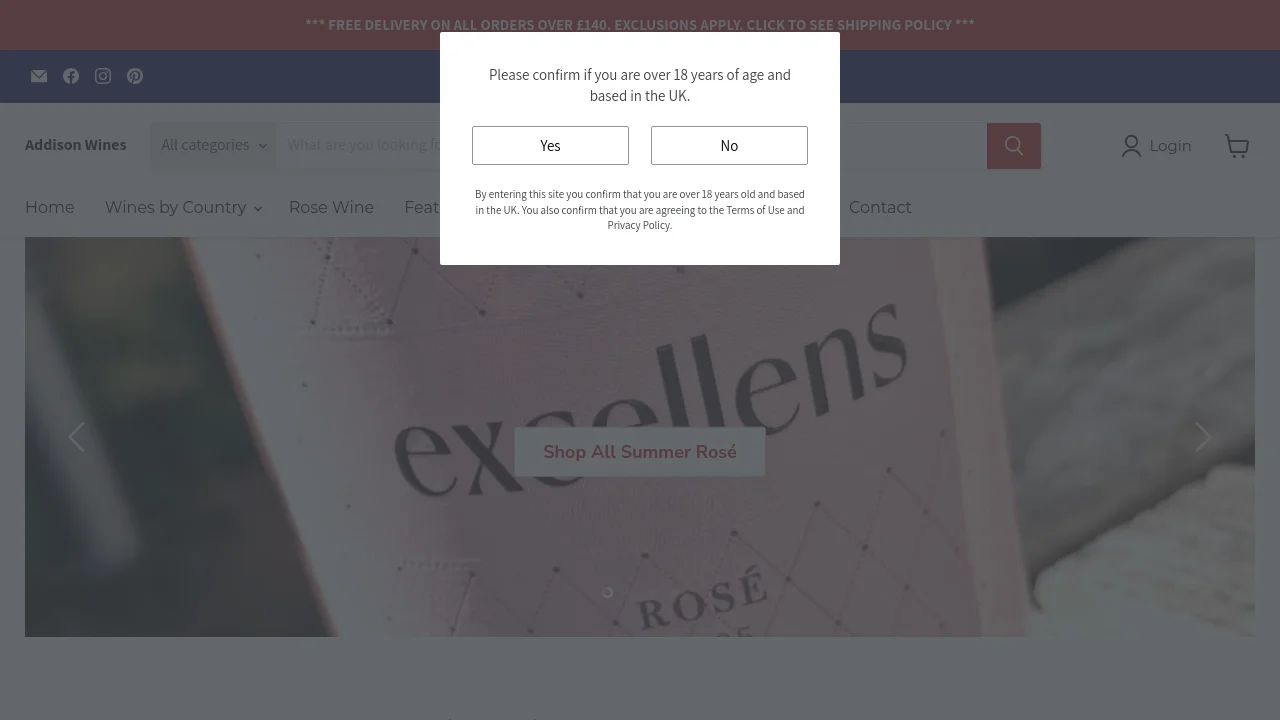
| Title: | Addison Wines |
| Description: | We're a UK based friendly, family run independent wine merchant, focusing on wines produced by family growers. We use a specialist carrier and offer speedy shipping direct to your door. |
| ip_address | 23.227.38.65 |
| country | CA  |
| network_name | Cloudflare, Inc. |
| asn | AS13335 |
80/tcp | http | Cloudflare http proxy - |
443/tcp | https | Cloudflare http proxy - |
2082/tcp | http | Cloudflare http proxy - |
2083/tcp | https | nginx - |
2086/tcp | http | Cloudflare http proxy - |
2087/tcp | https | nginx - |
8080/tcp | http | Cloudflare http proxy - |
8443/tcp | https | Cloudflare http proxy - |
| Software / Version | Category |
|---|---|
| Amazon Web Services | PaaS |
| core-js 2.6.12 | JavaScript libraries |
| Google Analytics | Analytics |
| HTTP/3 | Miscellaneous |
| jQuery 3.7.1 | JavaScript libraries |
| MySQL | Databases |
| Open Graph | Miscellaneous |
| Google Pay | Payment processors |
| PayPal | Payment processors |
| PHP | Programming languages |
| Preact | JavaScript libraries |
| Shop Pay | Payment processors |
| Shopify | Ecommerce |
| DoubleClick Floodlight | Advertising |
| Priority Hints | Performance |
| WordPress | CMS, Blogs |
| American Express | Payment processors |
| Apple Pay | Payment processors |
| Cloudflare | CDN |
| Google Tag Manager | Tag managers |
| Mastercard | Payment processors |
| HSTS | Security |
| Visa | Payment processors |
| Cart Functionality | Ecommerce |
Web Application Vulnerabilities
Evidence
| URL | Cookie Name | Evidence |
|---|---|---|
| https://addisonwines.com/ | localization, cart_currency, _shopify_y, _shopify_s | Set-Cookie: localization=GB Set-Cookie: cart_currency=GBP Set-Cookie: _shopify_y=2bbb3527-7394-4d0e-b535-fc6d3a74f8a7 Set-Cookie: _shopify_s=bd389708-2563-4215-bc81-bf1d45e633e5 |
Vulnerability description
We found that a cookie has been set without the Secure flag, which means the browser will send it over an unencrypted channel (plain HTTP) if such a request is made. The root cause for this usually revolves around misconfigurations in the code or server settings.
Risk description
The risk exists that an attacker will intercept the clear-text communication between the browser and the server and he will steal the cookie of the user. If this is a session cookie, the attacker could gain unauthorized access to the victim's web session.
Recommendation
Whenever a cookie contains sensitive information or is a session token, then it should always be passed using an encrypted channel. Ensure that the secure flag is set for cookies containing such sensitive information.
Classification
| CWE | CWE-614 |
| OWASP Top 10 - 2017 | |
| OWASP Top 10 - 2021 |
Evidence
| URL | Cookie Name | Evidence |
|---|---|---|
| https://addisonwines.com/ | localization, cart_currency, _shopify_y, _shopify_s | The server responded with Set-Cookie header(s) that does not specify the HttpOnly flag: Set-Cookie: localization=GB Set-Cookie: cart_currency=GBP Set-Cookie: _shopify_y=2bbb3527-7394-4d0e-b535-fc6d3a74f8a7 Set-Cookie: _shopify_s=bd389708-2563-4215-bc81-bf1d45e633e5 |
Vulnerability description
We found that a cookie has been set without the HttpOnly flag, which means it can be accessed by potentially malicious JavaScript code running inside the web page. The root cause for this usually revolves around misconfigurations in the code or server settings.
Risk description
The risk is that an attacker who injects malicious JavaScript code on the page (e.g. by using an XSS attack) can access the cookie and can send it to another site. In case of a session cookie, this could lead to session hijacking.
Recommendation
Ensure that the HttpOnly flag is set for all cookies.
Classification
| CWE | CWE-1004 |
| OWASP Top 10 - 2017 | |
| OWASP Top 10 - 2021 |
Evidence
| URL | Evidence |
|---|---|
| https://addisonwines.com/ | Response headers do not include the Referrer-Policy HTTP security header as well as the |
Vulnerability description
We noticed that the target application's server responses lack the Referrer-Policy HTTP header, which controls how much referrer information the browser will send with each request originated from the current web application.
Risk description
The risk is that if a user visits a web page (e.g. "http://example.com/pricing/") and clicks on a link from that page going to e.g. "https://www.google.com", the browser will send to Google the full originating URL in the `Referer` header, assuming the Referrer-Policy header is not set. The originating URL could be considered sensitive information and it could be used for user tracking.
Recommendation
The Referrer-Policy header should be configured on the server side to avoid user tracking and inadvertent information leakage. The value `no-referrer` of this header instructs the browser to omit the Referer header entirely.
Classification
| CWE | CWE-693 |
| OWASP Top 10 - 2017 | |
| OWASP Top 10 - 2021 |
Evidence
Vulnerability description
We found the robots.txt on the target server. This file instructs web crawlers what URLs and endpoints of the web application they can visit and crawl. Website administrators often misuse this file while attempting to hide some web pages from the users.
Risk description
There is no particular security risk in having a robots.txt file. However, it's important to note that adding endpoints in it should not be considered a security measure, as this file can be directly accessed and read by anyone.
Recommendation
We recommend you to manually review the entries from robots.txt and remove the ones which lead to sensitive locations in the website (ex. administration panels, configuration files, etc).
Evidence
| URL | Evidence |
|---|---|
| https://addisonwines.com/ | Response headers include the HTTP Content-Security-Policy security header with the following security issues: |
Vulnerability description
We noticed that the Content-Security-Policy (CSP) header configured for the web application includes unsafe directives. The CSP header activates a protection mechanism implemented in web browsers which prevents exploitation of Cross-Site Scripting vulnerabilities (XSS) by restricting the sources from which content can be loaded or executed.
Risk description
For example, if the unsafe-inline directive is present in the CSP header, the execution of inline scripts and event handlers is allowed. This can be exploited by an attacker to execute arbitrary JavaScript code in the context of the vulnerable application.
Recommendation
Remove the unsafe values from the directives, adopt nonces or hashes for safer inclusion of inline scripts if they are needed, and explicitly define the sources from which scripts, styles, images or other resources can be loaded.
Classification
| CWE | CWE-1021 |
| OWASP Top 10 - 2017 | |
| OWASP Top 10 - 2021 |
Evidence
| Software / Version | Category |
|---|---|
| Amazon Web Services | PaaS |
| core-js 2.6.12 | JavaScript libraries |
| Google Analytics | Analytics |
| HTTP/3 | Miscellaneous |
| jQuery 3.7.1 | JavaScript libraries |
| MySQL | Databases |
| Open Graph | Miscellaneous |
| Google Pay | Payment processors |
| PayPal | Payment processors |
| PHP | Programming languages |
| Preact | JavaScript libraries |
| Shop Pay | Payment processors |
| Shopify | Ecommerce |
| DoubleClick Floodlight | Advertising |
| Priority Hints | Performance |
| WordPress | CMS, Blogs |
| American Express | Payment processors |
| Apple Pay | Payment processors |
| Cloudflare | CDN |
| Google Tag Manager | Tag managers |
| Mastercard | Payment processors |
| HSTS | Security |
| Visa | Payment processors |
| Cart Functionality | Ecommerce |
Vulnerability description
We noticed that server software and technology details are exposed, potentially aiding attackers in tailoring specific exploits against identified systems and versions.
Risk description
The risk is that an attacker could use this information to mount specific attacks against the identified software type and version.
Recommendation
We recommend you to eliminate the information which permits the identification of software platform, technology, server and operating system: HTTP server headers, HTML meta information, etc.
Classification
| CWE | CWE-200 |
| OWASP Top 10 - 2017 | |
| OWASP Top 10 - 2021 |
Evidence
| URL | Method | Parameters | Evidence |
|---|---|---|---|
| https://addisonwines.com/ | GET | Headers: User-Agent=Mozilla/5.0 (Windows NT 10.0; Win64; x64) AppleWebKit/537.36 (KHTML, like Gecko) Chrome/108.0.0.0 Safari/537.36 | Email Address: sales@addisonwines.com |
Vulnerability description
We noticed that this web application exposes email addresses, which might be unintended. While not inherently a vulnerability, this information could be leveraged in social engineering or spam related activities.
Risk description
The risk is that exposed email addresses within the application could be accessed by unauthorized parties. This could lead to privacy violations, spam, phishing attacks, or other forms of misuse.
Recommendation
Compartmentalize the application to have 'safe' areas where trust boundaries can be unambiguously drawn. Do not allow email addresses to go outside of the trust boundary, and always be careful when interfacing with a compartment outside of the safe area.
Classification
| CWE | CWE-200 |
| OWASP Top 10 - 2017 | |
| OWASP Top 10 - 2021 |
Vulnerability description
We have noticed that the server is missing the security.txt file, which is considered a good practice for web security. It provides a standardized way for security researchers and the public to report security vulnerabilities or concerns by outlining the preferred method of contact and reporting procedures.
Risk description
There is no particular risk in not having a security.txt file for your server. However, this file is important because it offers a designated channel for reporting vulnerabilities and security issues.
Recommendation
We recommend you to implement the security.txt file according to the standard, in order to allow researchers or users report any security issues they find, improving the defensive mechanisms of your server.
Classification
| CWE | CWE-1188 |
| OWASP Top 10 - 2017 | |
| OWASP Top 10 - 2021 |
Infrastructure Vulnerabilities
Evidence
| DKIM selector | Key type | Key size | Value |
|---|---|---|---|
| rsa | 1296 | "k=rsa;p=MIGfMA0GCSqGSIb3DQEBAQUAA4GNADCBiQKBgQDeMVIzrCa3T14JsNY0IRv5/2V1/v2itlviLQBwXsa7shBD6TrBkswsFUToPyMRWC9tbR/5ey0nRBH0ZVxp+lsmTxid2Y2z+FApQ6ra2VsXfbJP3HE6wAO0YTVEJt1TmeczhEd2Jiz/fcabIISgXEdSpTYJhb0ct0VJRxcg4c8c7wIDAQAB" |
Vulnerability description
We found that the DKIM record uses common selectors. The use of common DKIM selectors such as default, test, dkim, or mail may indicate a lack of proper customization or key management. Attackers often target domains using such selectors because they suggest that the domain is relying on default configurations, which could be less secure and easier to exploit. This can increase the risk of DKIM key exposure or misuse.
Risk description
Using a common DKIM selector makes it easier for attackers to predict and exploit email authentication weaknesses. Attackers may attempt to find corresponding DKIM keys or improperly managed records associated with common selectors. If a common selector is coupled with a weak key length or poor key management practices, it significantly increases the likelihood of email spoofing and phishing attacks.
Recommendation
We recommend using unique, customized selectors for each DKIM key to make it more difficult for attackers to predict and target the domain's DKIM records. Regularly rotate selectors and associated keys to further strengthen the security of your domain's email authentication infrastructure.
Evidence
We found insecure EDNS configuration on the following nameservers: ns05.bcl03.net, ns03.bcl03.net ns05.bcl03.net:
ns03.bcl03.net:
Vulnerability description
We found that the server does not properly implement EDNS (Extension Mechanisms for DNS). EDNS allows larger DNS packets and supports modern features such as DNSSEC.
Risk description
The risk exists because improper or missing EDNS support can lead to truncated responses, degraded DNS performance, and compatibility issues with DNSSEC. This exposes users to risks such as incomplete DNS resolution and failed DNSSEC validation.
Recommendation
We recommend ensuring the proper implementation of EDNS on the DNS server. Update the DNS server software to support EDNS fully, including modern features like DNSSEC. Regularly test DNS configurations to ensure compliance and performance.
Evidence
| Domain Queried | DNS Record Type | Description | Value |
|---|---|---|---|
| _dmarc.addisonwines.com | TXT | Text record | "v=DMARC1; p=quarantine; sp=none; rua=mailto:evv6cdvhzr@rua.powerdmarc.com; ruf=mailto:evv6cdvhzr@ruf.powerdmarc.com; pct=100; fo=0;" |
Vulnerability description
We found that the DMARC record for the domain is configured with sp=none, meaning that no policy is enforced for subdomains. This allows subdomains to send emails without being subject to DMARC checks, making it easier for attackers to spoof emails from these subdomains. Subdomains are often overlooked in email security, and attackers can exploit this misconfiguration to launch phishing or spoofing attacks from seemingly legitimate subdomains of a protected domain.
Risk description
When the DMARC record is configured with sp=none, subdomains are not subject to DMARC enforcement, allowing attackers to spoof emails from subdomains without being blocked. This creates a significant risk of phishing and impersonation attacks, where malicious emails appear to originate from trusted subdomains. These spoofed emails can be used to deceive users or damage the organization's reputation, undermining the security benefits of DMARC for the primary domain.
Recommendation
To mitigate the risk, we recommend that the subdomain policy should be updated to sp=reject to ensure that any email failing DMARC checks from subdomains is automatically rejected. This will help prevent unauthorized emails from being sent from subdomains, reducing the risk of spoofing and phishing. Additionally, it's important to regularly monitor DMARC reports to track email activity from subdomains and adjust policies as needed to maintain consistent security across the entire domain.
Evidence
We found insecure DNS cookie usage on the following nameservers: ns04.bcl03.net
Vulnerability description
We found that the server does not implement DNS Cookies or uses them insecurely. DNS Cookies help prevent DNS-based attacks, such as spoofing and amplification attacks.
Risk description
The risk exists because without DNS Cookies, the server is vulnerable to DNS spoofing and amplification attacks. Attackers can manipulate responses or use the server in distributed denial-of-service (DDoS) attacks, compromising network availability and security.
Recommendation
We recommend enabling DNS Cookies to prevent spoofed DNS responses. Ensure proper cookie validation is implemented to mitigate DNS amplification attacks. Regularly update DNS servers to support the latest DNS security features.
Evidence
| Domain Queried | DNS Record Type | Description | Value |
|---|---|---|---|
| _dmarc.addisonwines.com | TXT | Text record | "v=DMARC1; p=quarantine; sp=none; rua=mailto:evv6cdvhzr@rua.powerdmarc.com; ruf=mailto:evv6cdvhzr@ruf.powerdmarc.com; pct=100; fo=0;" |
Vulnerability description
We found that the target uses p=quarantine in the DMARC policy. When a DMARC policy is set to p=quarantine, emails that fail DMARC validation are delivered but placed in the recipient’s spam or junk folder. Although it offers some protection, this policy is less strict than p=reject, which blocks such emails entirely.
Risk description
While emails failing DMARC validation are sent to the spam folder, users may still retrieve them from there, leading to a higher risk of phishing and spoofing attacks succeeding. Moreover, less strict enforcement may allow more fraudulent emails to reach user inboxes if misclassified.
Recommendation
We recommend considering moving to a stricter policy, such as p=reject, where emails that fail DMARC validation are completely rejected rather than delivered to spam folders. This reduces the risk of users interacting with potentially malicious emails.
Evidence
| Software / Version | Category |
|---|---|
| Cloudflare | CDN |
| HTTP/3 | Miscellaneous |
Vulnerability description
We noticed that server software and technology details are exposed, potentially aiding attackers in tailoring specific exploits against identified systems and versions.
Risk description
The risk is that an attacker could use this information to mount specific attacks against the identified software type and version.
Recommendation
We recommend you to eliminate the information which permits the identification of software platform, technology, server and operating system: HTTP server headers, HTML meta information, etc.
Evidence
| Software / Version | Category |
|---|---|
| Cloudflare | CDN |
| HTTP/3 | Miscellaneous |
Vulnerability description
We noticed that server software and technology details are exposed, potentially aiding attackers in tailoring specific exploits against identified systems and versions.
Risk description
The risk is that an attacker could use this information to mount specific attacks against the identified software type and version.
Recommendation
We recommend you to eliminate the information which permits the identification of software platform, technology, server and operating system: HTTP server headers, HTML meta information, etc.
Evidence
| Software / Version | Category |
|---|---|
| Shopify | Ecommerce |
| WordPress | CMS, Blogs |
| MySQL | Databases |
| PHP | Programming languages |
| Shop Pay | Payment processors |
| Amazon Web Services | PaaS |
| PayPal | Payment processors |
| jQuery | JavaScript libraries |
| Google Tag Manager | Tag managers |
| Google Analytics | Analytics |
| DoubleClick Floodlight | Advertising |
| HSTS | Security |
| Cloudflare | CDN |
| HTTP/3 | Miscellaneous |
Vulnerability description
We noticed that server software and technology details are exposed, potentially aiding attackers in tailoring specific exploits against identified systems and versions.
Risk description
The risk is that an attacker could use this information to mount specific attacks against the identified software type and version.
Recommendation
We recommend you to eliminate the information which permits the identification of software platform, technology, server and operating system: HTTP server headers, HTML meta information, etc.
Evidence
| Domain Queried | DNS Record Type | Description | Value |
|---|---|---|---|
| addisonwines.com | SPF | Sender Policy Framework | "v=spf1 include:dzqcm2zelm.powerspf.com -all" |
Evidence
| DKIM selector | Key type | Key size | Value |
|---|---|---|---|
| k2 | rsa | 1422 | "v=DKIM1; k=rsa; p=MIIBIjANBgkqhkiG9w0BAQEFAAOCAQ8AMIIBCgKCAQEAv2aC2KjGKLOwTweBY5A9RpjsxaBXR9r7OAU6U8/zn92ivImI75naUujWbItRI/QmL1jy5PWGqLwoUA0b90ObWaLDc+i9MtTNmGeWO009hr20fIxhGg6XBT2kjZ1DTThopSe1nAndsupmcBwlQ5Q6LJ+ZAxLcujnPIxM0ZBLmgpkv8u6RfY4eFP8OLvdAW3oSu" "B0DyLDigQX4Sj8wBO4YIdQH6AAmBeOsidsKAFNFUCpc3vCxtBDR12U+cBg724l3sBkMQ8evnz6idnqxq9QAVYh8k4kJ+RP+6cqTdy7LjIm8xY/bQNpQIpGUAuDo2DjLcCDun9DAI4Q/3z+Q0o9QuQIDAQAB;" |
| k3 | rsa | 1422 | "v=DKIM1; k=rsa; p=MIIBIjANBgkqhkiG9w0BAQEFAAOCAQ8AMIIBCgKCAQEAsYGiMSn7fsUqSvfSX40x9R1OlRtbNiCY80lHRIlcKx3XDIR7257aUx+q9CSIARdfTL6KCuLGNFx5g9TgVr6png4ajcieSQGtOehBgxnkDN8aAA5TX0FmFrcefJU0JoxLOF09EKgXxhSSHCk/ekVb0PXSboHXoZ9+EI404F1qhcwXXIgHXTaUthHTut2P6BBZh" "IXIgvDe/w49GchR7MRJqjNb7neEBbYHbgWuBTvvHCg7Gy6m6n9krYK+ROWq3dVvXy9plAGK3ygM+HtjIiMt7arRGMOF0WgDTz7YdN9BGpt6BvXxLnjiQcgS5T9n+cIyPZgiWzDMXNlaEEdKTEKxrwIDAQAB;" |
| rsa | 1296 | "k=rsa;p=MIGfMA0GCSqGSIb3DQEBAQUAA4GNADCBiQKBgQDeMVIzrCa3T14JsNY0IRv5/2V1/v2itlviLQBwXsa7shBD6TrBkswsFUToPyMRWC9tbR/5ey0nRBH0ZVxp+lsmTxid2Y2z+FApQ6ra2VsXfbJP3HE6wAO0YTVEJt1TmeczhEd2Jiz/fcabIISgXEdSpTYJhb0ct0VJRxcg4c8c7wIDAQAB" | |
| selector1 | rsa | 1296 | "v=DKIM1; k=rsa; p=MIGfMA0GCSqGSIb3DQEBAQUAA4GNADCBiQKBgQDfVdN4rTgPJjYGxSm14uQZoQOc0w6jFe4pTd81dQvjRALPpjpI/AlnQ6Q6lf+xZ76IZqBpdgV18SxgN6Ej2/yoGZSqdeK19Yw+Mi4zvWRuVjqKAPWdDk705NAvcgRUXRIZVgGQTfqw6vX0L0XS9vCYW3Aji4iUa3d5+P36bPvTrQIDAQAB; n=1024,1503718755,1" "519616355" |
Evidence
| Software / Version | Category |
|---|---|
| Cloudflare | CDN |
| HTTP/3 | Miscellaneous |
Vulnerability description
We noticed that server software and technology details are exposed, potentially aiding attackers in tailoring specific exploits against identified systems and versions.
Risk description
The risk is that an attacker could use this information to mount specific attacks against the identified software type and version.
Recommendation
We recommend you to eliminate the information which permits the identification of software platform, technology, server and operating system: HTTP server headers, HTML meta information, etc.
Evidence
| Domain Queried | DNS Record Type | Description | Value |
|---|---|---|---|
| addisonwines.com | A | IPv4 address | 23.227.38.65 |
| addisonwines.com | NS | Name server | ns04.bcl03.net |
| addisonwines.com | NS | Name server | ns05.bcl03.net |
| addisonwines.com | NS | Name server | ns03.bcl03.net |
| addisonwines.com | MX | Mail server | 20 addisonwines-com.mx2.arsmtp.com |
| addisonwines.com | MX | Mail server | 10 addisonwines-com.mx1.arsmtp.com |
| addisonwines.com | SOA | Start of Authority | ns03.bcl03.net. hostmaster.bcl03.net. 2024111304 28800 7200 604800 86400 |
| addisonwines.com | AAAA | IPv6 address | 2620:127:f00f:5:: |
| addisonwines.com | TXT | Text record | "F26sBsXT13dy3/6WJu/WbhyObmT10MaEUz/YQ6YIjyvE0pjLRU6YDohnjrhlqiBGGEMb5ixzGdOfbGew+mVhpg==" |
| addisonwines.com | TXT | Text record | "MS=ms84323422" |
| addisonwines.com | TXT | Text record | "brevo-code:4b0af7c284b3c670a6d1069e1a2dc847" |
| addisonwines.com | SPF | Sender Policy Framework | "v=spf1 include:dzqcm2zelm.powerspf.com -all" |
| _dmarc.addisonwines.com | TXT | Text record | "v=DMARC1; p=quarantine; sp=none; rua=mailto:evv6cdvhzr@rua.powerdmarc.com; ruf=mailto:evv6cdvhzr@ruf.powerdmarc.com; pct=100; fo=0;" |
Risk description
An initial step for an attacker aiming to learn about an organization involves conducting searches on its domain names to uncover DNS records associated with the organization. This strategy aims to amass comprehensive insights into the target domain, enabling the attacker to outline the organization's external digital landscape. This gathered intelligence may subsequently serve as a foundation for launching attacks, including those based on social engineering techniques. DNS records pointing to services or servers that are no longer in use can provide an attacker with an easy entry point into the network.
Recommendation
We recommend reviewing all DNS records associated with the domain and identifying and removing unused or obsolete records.
Evidence
| Software / Version | Category |
|---|---|
| Cloudflare | CDN |
| HTTP/3 | Miscellaneous |
Vulnerability description
We noticed that server software and technology details are exposed, potentially aiding attackers in tailoring specific exploits against identified systems and versions.
Risk description
The risk is that an attacker could use this information to mount specific attacks against the identified software type and version.
Recommendation
We recommend you to eliminate the information which permits the identification of software platform, technology, server and operating system: HTTP server headers, HTML meta information, etc.
Evidence
| Operating System | Accuracy |
|---|---|
| FreeBSD 11.0-RELEASE | 91% |
Vulnerability description
OS Detection
Evidence
| Software / Version | Category |
|---|---|
| Cloudflare | CDN |
| HTTP/3 | Miscellaneous |
Vulnerability description
We noticed that server software and technology details are exposed, potentially aiding attackers in tailoring specific exploits against identified systems and versions.
Risk description
The risk is that an attacker could use this information to mount specific attacks against the identified software type and version.
Recommendation
We recommend you to eliminate the information which permits the identification of software platform, technology, server and operating system: HTTP server headers, HTML meta information, etc.
Evidence
| Software / Version | Category |
|---|---|
| Cloudflare | CDN |
| HTTP/3 | Miscellaneous |
Vulnerability description
We noticed that server software and technology details are exposed, potentially aiding attackers in tailoring specific exploits against identified systems and versions.
Risk description
The risk is that an attacker could use this information to mount specific attacks against the identified software type and version.
Recommendation
We recommend you to eliminate the information which permits the identification of software platform, technology, server and operating system: HTTP server headers, HTML meta information, etc.