Vulnerability Scan Result

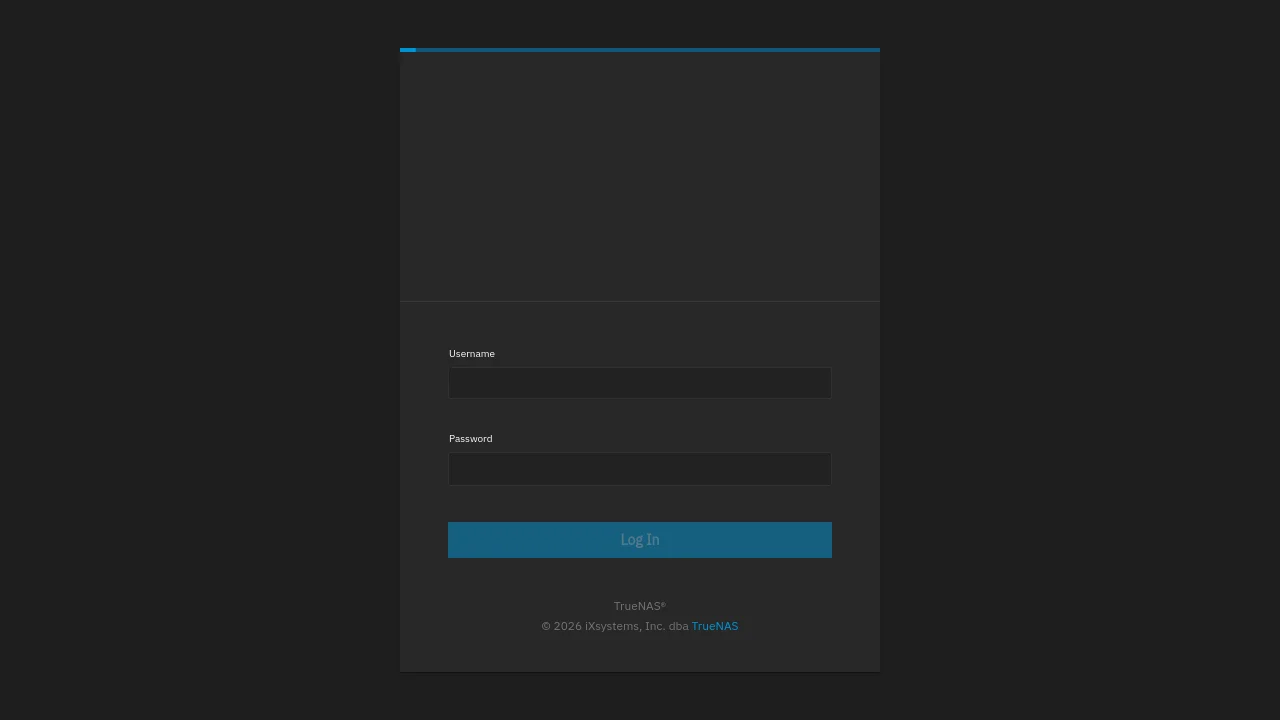
| Title: | No title found |
| Description: | No description found |
| ip_address | 69.48.202.244 |
| country | US  |
| network_name | Ionos Se |
| asn | AS8560 |
22/tcp | ssh | OpenSSH 9.2p1 Debian 2+deb12u10 |
80/tcp | http | Golang net/http server - |
443/tcp | https | Golang net/http server - |
| Software / Version | Category |
|---|---|
| Angular 20.1.7 | JavaScript frameworks |
| Zone.js | JavaScript frameworks |
| core-js 3.6.5 | JavaScript libraries |
| Marked | JavaScript libraries |
| Nginx | Web servers, Reverse proxies |
| Sentry | Issue trackers |
| PWA | Miscellaneous |
| Format | CMS |
| HSTS | Security |
| TypeScript | Programming languages |
Web Application Vulnerabilities
Evidence
| CVE | CVSS | EPSS Score | EPSS Percentile | Summary |
|---|---|---|---|---|
| CVE-2026-68945 | 8.8 | 0.00122 | 0.02239 | Angular is a development platform for building mobile and desktop web applications using TypeScript/JavaScript and other languages. Prior to 20.3.27, 21.2.19, and 22.0.2, HttpTransferCache comma-joins repeated request parameters, allowing semantically distinct HttpClient requests to use the same transfer-cache key and reuse a wrong backend response. This issue is fixed in versions 20.3.27, 21.2.19, and 22.0.2. |
| CVE-2026-54266 | 8.8 | 0.00127 | 0.02689 | Angular is a development platform for building mobile and desktop web applications using TypeScript/JavaScript and other languages. Prior to 22.0.1, 21.2.17, and 20.3.25, Angular's HttpTransferCache caches HTTP requests made during Server-Side Rendering (SSR) so that they can be reused during client-side hydration. This avoids repeating the same HTTP requests on the client. The cached responses are stored in TransferState using a cache key generated by hashing request properties (method, response type, mapped URL, serialized body, and sorted query parameters). The cache keys are generated using a weak 32-bit DJB2-like polynomial rolling hash. The 32-bit hash space is extremely small, allowing attackers to find hash collisions. An attacker can easily find a query parameter string (e.g., q=aaCAZMMM for a search request) that produces the exact same 32-bit hash as a sensitive endpoint (e.g., /api/user/profile). When a victim visits a crafted link containing the colliding parameter, the SSR process executes both the search request and the profile request. Due to the hash collision, the search response overwrites the profile response in the TransferState cache. This vulnerability is fixed in 22.0.1, 21.2.17, and 20.3.25. |
| CVE-2026-50168 | 8.8 | 0.00237 | 0.15029 | Angular is a development platform for building mobile and desktop web applications using TypeScript/JavaScript and other languages. Prior to 22.0.0-rc.2, 21.2.15, 20.3.22, and 19.2.23, an issue in the @angular/platform-server package allows remote attackers to bypass host allowlist constraints and direct server-side outgoing requests to arbitrary external endpoints. This occurs due to a parser differential between the strict WHATWG URL parser used for allowlist validation and the lenient Domino URL parser used to initialize the server emulated DOM. When a server-side request contains a malformed URL with a double port structure (e.g., http://evil.com:80:80/path), Node's strict URL.canParse(url) logic returns false and skips host check validation entirely. However, the same malformed URL is later accepted and parsed leniently by Domino's internal parser, which resolves the origin to http://evil.com:80. The Angular SSR HTTP request interceptor (relativeUrlsTransformerInterceptorFn) then resolves all relative backend HTTP requests against this adopted origin, executing the SSRF attack. This vulnerability is fixed in 22.0.0-rc.2, 21.2.15, 20.3.22, and 19.2.23. |
| CVE-2026-46417 | 8.8 | 0.00361 | 0.29909 | Angular is a development platform for building mobile and desktop web applications using TypeScript/JavaScript and other languages. Prior to 22.0.0-next.12, 21.2.13, 20.3.21, and 19.2.22, a Server-Side Request Forgery (SSRF) vulnerability exists in @angular/platform-server. The issue stems from how the server-side rendering (SSR) engine processes the request URL provided to the rendering entry points. When an absolute-form URL (e.g., http://evil.com) is passed to the rendering engine, the internal ServerPlatformLocation can be manipulated into adopting the attacker-controlled domain as the "current" hostname. Consequently, any relative HttpClient requests or PlatformLocation.hostname references are redirected to the attacker controlled server, potentially exposing internal APIs or metadata services. This vulnerability is fixed in 22.0.0-next.12, 21.2.13, 20.3.21, and 19.2.22. |
| CVE-2026-41423 | 8.7 | 0.00305 | 0.23413 | Angular is a development platform for building mobile and desktop web applications using TypeScript/JavaScript and other languages. Prior to versions 19.2.21, 20.3.19, 21.2.9, and 22.0.0-next.8, a Server-Side Request Forgery (SSRF) vulnerability exists in @angular/platform-server due to improper handling of URLs during Server-Side Rendering (SSR). When an attacker sends a request such as GET /\evil.com/ HTTP/1.1 the server engine (Express, etc.) passes the URL string to Angular’s rendering functions. Because the URL parser normalizes the backslash to a forward slash for HTTP/HTTPS schemes, the internal state of the application is hijacked to believe the current origin is evil.com. This misinterpretation tricks the application into treating the attacker’s domain as the local origin. Consequently, any relative HttpClient requests or PlatformLocation.hostname references are redirected to the attacker controlled server, potentially exposing internal APIs or metadata services. This issue has been patched in versions 19.2.21, 20.3.19, 21.2.9, and 22.0.0-next.8. |
Vulnerability description
Outdated or vulnerable software components include versions of server-side software that are no longer supported or have known, publicly disclosed vulnerabilities. Using outdated software significantly increases the attack surface of a system and may allow unauthorized access, data leaks, or service disruptions. Vulnerabilities in these components are often well-documented and actively exploited by attackers. Without security patches or vendor support, any weaknesses remain unmitigated, exposing the application to risks. In some cases, even after patching, the reported version may remain unchanged, requiring manual verification.
Risk description
The risk is that an attacker could search for an appropriate exploit (or create one himself) for any of these vulnerabilities and use it to attack the system. Since the vulnerabilities were discovered using only version-based testing, the risk level for this finding will not exceed 'high' severity. Critical risks will be assigned to vulnerabilities identified through accurate active testing methods.
Recommendation
In order to eliminate the risk of these vulnerabilities, we recommend you check the installed software version and upgrade to the latest version.
Classification
| CWE | CWE-1035 |
| OWASP Top 10 - 2017 | |
| OWASP Top 10 - 2021 |
Evidence
| URL | Evidence |
|---|---|
| https://olympus.bitnet.dev/ui/ | Response does not include the HTTP Content-Security-Policy security header or meta tag |
Vulnerability description
We noticed that the target application lacks the Content-Security-Policy (CSP) header in its HTTP responses. The CSP header is a security measure that instructs web browsers to enforce specific security rules, effectively preventing the exploitation of Cross-Site Scripting (XSS) vulnerabilities.
Risk description
The risk is that if the target application is vulnerable to XSS, lack of this header makes it easily exploitable by attackers.
Recommendation
Configure the Content-Security-Header to be sent with each HTTP response in order to apply the specific policies needed by the application.
Classification
| CWE | CWE-1021 |
| OWASP Top 10 - 2017 | |
| OWASP Top 10 - 2021 |
Evidence
| Software / Version | Category |
|---|---|
| Angular 20.1.7 | JavaScript frameworks |
| Zone.js | JavaScript frameworks |
| core-js 3.6.5 | JavaScript libraries |
| Marked | JavaScript libraries |
| Nginx | Web servers, Reverse proxies |
| Sentry | Issue trackers |
| PWA | Miscellaneous |
| Format | CMS |
| HSTS | Security |
| TypeScript | Programming languages |
Vulnerability description
We noticed that server software and technology details are exposed, potentially aiding attackers in tailoring specific exploits against identified systems and versions.
Risk description
The risk is that an attacker could use this information to mount specific attacks against the identified software type and version.
Recommendation
We recommend you to eliminate the information which permits the identification of software platform, technology, server and operating system: HTTP server headers, HTML meta information, etc.
Classification
| CWE | CWE-200 |
| OWASP Top 10 - 2017 | |
| OWASP Top 10 - 2021 |
Infrastructure Vulnerabilities
Evidence
| CVE | CVSS | EPSS Score | EPSS Percentile | CISA KEV | Summary |
|---|---|---|---|---|---|
| CVE-2026-68945 | 8.8 | 0.00122 | 0.02239 | No | Angular is a development platform for building mobile and desktop web applications using TypeScript/JavaScript and other languages. Prior to 20.3.27, 21.2.19, and 22.0.2, HttpTransferCache comma-joins repeated request parameters, allowing semantically distinct HttpClient requests to use the same transfer-cache key and reuse a wrong backend response. This issue is fixed in versions 20.3.27, 21.2.19, and 22.0.2. |
| CVE-2026-54266 | 8.8 | 0.00127 | 0.02689 | No | Angular is a development platform for building mobile and desktop web applications using TypeScript/JavaScript and other languages. Prior to 22.0.1, 21.2.17, and 20.3.25, Angular's HttpTransferCache caches HTTP requests made during Server-Side Rendering (SSR) so that they can be reused during client-side hydration. This avoids repeating the same HTTP requests on the client. The cached responses are stored in TransferState using a cache key generated by hashing request properties (method, response type, mapped URL, serialized body, and sorted query parameters). The cache keys are generated using a weak 32-bit DJB2-like polynomial rolling hash. The 32-bit hash space is extremely small, allowing attackers to find hash collisions. An attacker can easily find a query parameter string (e.g., q=aaCAZMMM for a search request) that produces the exact same 32-bit hash as a sensitive endpoint (e.g., /api/user/profile). When a victim visits a crafted link containing the colliding parameter, the SSR process executes both the search request and the profile request. Due to the hash collision, the search response overwrites the profile response in the TransferState cache. This vulnerability is fixed in 22.0.1, 21.2.17, and 20.3.25. |
| CVE-2026-50168 | 8.8 | 0.00237 | 0.15029 | No | Angular is a development platform for building mobile and desktop web applications using TypeScript/JavaScript and other languages. Prior to 22.0.0-rc.2, 21.2.15, 20.3.22, and 19.2.23, an issue in the @angular/platform-server package allows remote attackers to bypass host allowlist constraints and direct server-side outgoing requests to arbitrary external endpoints. This occurs due to a parser differential between the strict WHATWG URL parser used for allowlist validation and the lenient Domino URL parser used to initialize the server emulated DOM. When a server-side request contains a malformed URL with a double port structure (e.g., http://evil.com:80:80/path), Node's strict URL.canParse(url) logic returns false and skips host check validation entirely. However, the same malformed URL is later accepted and parsed leniently by Domino's internal parser, which resolves the origin to http://evil.com:80. The Angular SSR HTTP request interceptor (relativeUrlsTransformerInterceptorFn) then resolves all relative backend HTTP requests against this adopted origin, executing the SSRF attack. This vulnerability is fixed in 22.0.0-rc.2, 21.2.15, 20.3.22, and 19.2.23. |
| CVE-2026-46417 | 8.8 | 0.00361 | 0.29909 | No | Angular is a development platform for building mobile and desktop web applications using TypeScript/JavaScript and other languages. Prior to 22.0.0-next.12, 21.2.13, 20.3.21, and 19.2.22, a Server-Side Request Forgery (SSRF) vulnerability exists in @angular/platform-server. The issue stems from how the server-side rendering (SSR) engine processes the request URL provided to the rendering entry points. When an absolute-form URL (e.g., http://evil.com) is passed to the rendering engine, the internal ServerPlatformLocation can be manipulated into adopting the attacker-controlled domain as the "current" hostname. Consequently, any relative HttpClient requests or PlatformLocation.hostname references are redirected to the attacker controlled server, potentially exposing internal APIs or metadata services. This vulnerability is fixed in 22.0.0-next.12, 21.2.13, 20.3.21, and 19.2.22. |
| CVE-2026-41423 | 8.7 | 0.00305 | 0.23413 | No | Angular is a development platform for building mobile and desktop web applications using TypeScript/JavaScript and other languages. Prior to versions 19.2.21, 20.3.19, 21.2.9, and 22.0.0-next.8, a Server-Side Request Forgery (SSRF) vulnerability exists in @angular/platform-server due to improper handling of URLs during Server-Side Rendering (SSR). When an attacker sends a request such as GET /\evil.com/ HTTP/1.1 the server engine (Express, etc.) passes the URL string to Angular’s rendering functions. Because the URL parser normalizes the backslash to a forward slash for HTTP/HTTPS schemes, the internal state of the application is hijacked to believe the current origin is evil.com. This misinterpretation tricks the application into treating the attacker’s domain as the local origin. Consequently, any relative HttpClient requests or PlatformLocation.hostname references are redirected to the attacker controlled server, potentially exposing internal APIs or metadata services. This issue has been patched in versions 19.2.21, 20.3.19, 21.2.9, and 22.0.0-next.8. |
Vulnerability description
Vulnerabilities found for Angular 20.1.7
Risk description
These vulnerabilities expose the affected applications to the risk of unauthorized access to confidential data and possibly to denial of service attacks. An attacker could search for an appropriate exploit (or create one) for any of these vulnerabilities and use it to attack the system. Notes: - The vulnerabilities are identified based on the server's version.; - Only the first 5 vulnerabilities with the highest risk are shown for each port.; Since the vulnerabilities were discovered using only version-based testing, the risk level for this finding will not exceed "high" severity. Critical risks will be assigned to vulnerabilities identified through accurate active testing methods.
Recommendation
We recommend you to upgrade the affected software to the latest version in order to eliminate the risks imposed by these vulnerabilities.
Evidence
We found insecure DNS cookie usage on the following nameservers: ns29.domaincontrol.com, ns30.domaincontrol.com
Vulnerability description
We found that the server does not implement DNS Cookies or uses them insecurely. DNS Cookies help prevent DNS-based attacks, such as spoofing and amplification attacks.
Risk description
The risk exists because without DNS Cookies, the server is vulnerable to DNS spoofing and amplification attacks. Attackers can manipulate responses or use the server in distributed denial-of-service (DDoS) attacks, compromising network availability and security.
Recommendation
We recommend enabling DNS Cookies to prevent spoofed DNS responses. Ensure proper cookie validation is implemented to mitigate DNS amplification attacks. Regularly update DNS servers to support the latest DNS security features.
Evidence
| Software / Version | Category |
|---|---|
| Format | CMS |
| Sentry | Issue trackers |
| TypeScript | Programming languages |
| Nginx | Web servers, Reverse proxies |
| Zone.js | JavaScript frameworks |
| Angular 20.1.7 | JavaScript frameworks |
| Marked | JavaScript libraries |
| core-js 3.6.5 | JavaScript libraries |
| HSTS | Security |
| PWA | Miscellaneous |
Vulnerability description
We noticed that server software and technology details are exposed, potentially aiding attackers in tailoring specific exploits against identified systems and versions.
Risk description
The risk is that an attacker could use this information to mount specific attacks against the identified software type and version.
Recommendation
We recommend you to eliminate the information which permits the identification of software platform, technology, server and operating system: HTTP server headers, HTML meta information, etc.
Evidence
| Operating System | Accuracy |
|---|---|
| Linux 5.0 - 5.4 | 100% |
Vulnerability description
OS Detection
Evidence
| Domain Queried | DNS Record Type | Description | Value |
|---|---|---|---|
| olympus.bitnet.dev | A | IPv4 address | 69.48.202.244 |
| olympus.bitnet.dev | NS | Name server | ns29.domaincontrol.com |
| olympus.bitnet.dev | NS | Name server | ns30.domaincontrol.com |
| olympus.bitnet.dev | SOA | Start of Authority | ns29.domaincontrol.com. dns.jomax.net. 2026011201 28800 7200 604800 600 |
| olympus.bitnet.dev | CNAME | Canonical name | bitnet.dev |
Risk description
An initial step for an attacker aiming to learn about an organization involves conducting searches on its domain names to uncover DNS records associated with the organization. This strategy aims to amass comprehensive insights into the target domain, enabling the attacker to outline the organization's external digital landscape. This gathered intelligence may subsequently serve as a foundation for launching attacks, including those based on social engineering techniques. DNS records pointing to services or servers that are no longer in use can provide an attacker with an easy entry point into the network.
Recommendation
We recommend reviewing all DNS records associated with the domain and identifying and removing unused or obsolete records.