Vulnerability Scan Result

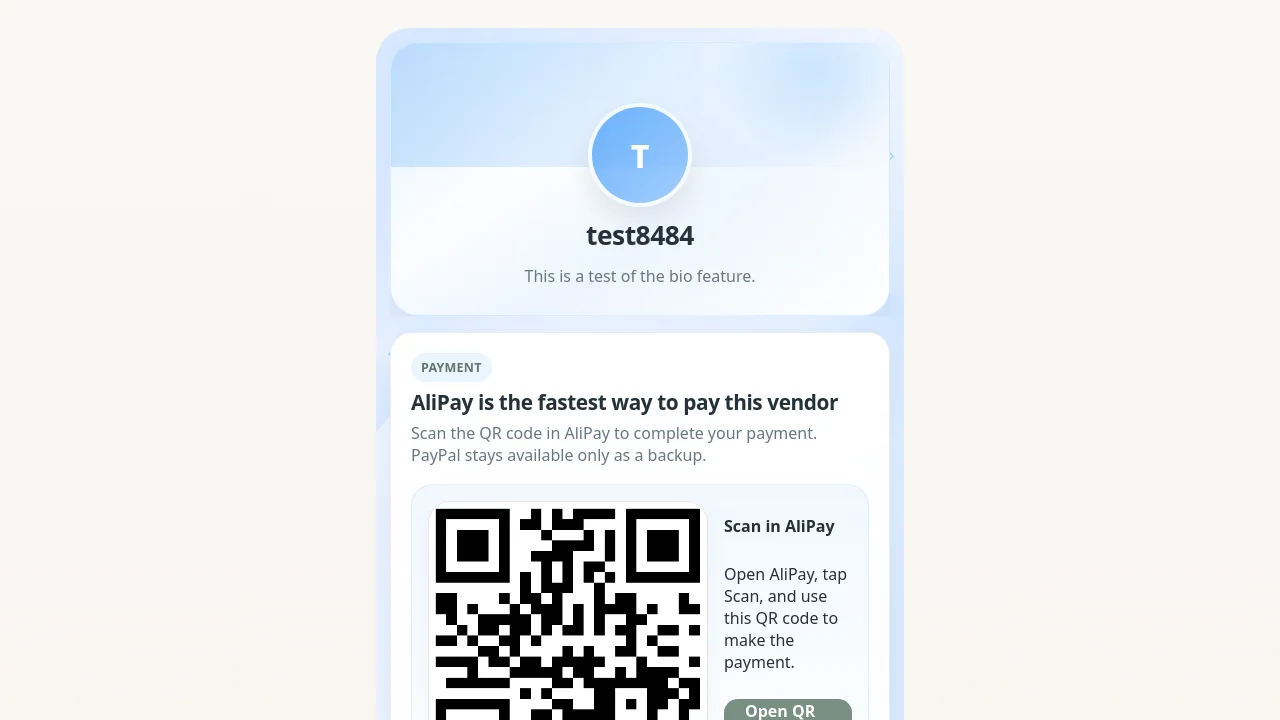
| Title: | test8484 |
| Description: | No description found |
| ip_address | 2.59.117.26 |
| country | TR  |
| network_name | PH Bilisim Teknolojileri Limited Sirketi |
| asn | AS210574 |
21/tcp | ftp | Pure-FTPd - |
25/tcp | smtp | - - |
53/tcp | domain | PowerDNS Authoritative Server 4.9.5 |
80/tcp | http | - - |
110/tcp | pop3 | Dovecot pop3d - |
111/tcp | rpcbind | - 2-4 |
143/tcp | imap | Dovecot imapd - |
443/tcp | https | - - |
465/tcp | smtp | Exim smtpd 4.99.1 |
587/tcp | smtp | Exim smtpd 4.99.1 |
993/tcp | imap | Dovecot imapd - |
995/tcp | pop3 | Dovecot pop3d - |
2078/tcp | https | cPanel httpd - |
2080/tcp | https | cPanel httpd - |
2082/tcp | http | OpenResty web app server 1.27.1.1 |
2083/tcp | https | nginx - |
2086/tcp | gnunet | - - |
2087/tcp | eli | - - |
| Software / Version | Category |
|---|---|
| PayPal | Payment processors |
Web Application Vulnerabilities
Evidence
| URL | Response URL | Evidence |
|---|---|---|
| http://testtt.luckydragon888.lol/ | http://testtt.luckydragon888.lol/ | Communication is made over unsecure, unencrypted HTTP. |
Vulnerability description
We noticed that the communication between the web browser and the server is done using the HTTP protocol, which transmits data unencrypted over the network.
Risk description
The risk is that an attacker who manages to intercept the communication at the network level can read and modify the data transmitted (including passwords, secret tokens, credit card information and other sensitive data).
Recommendation
We recommend you to reconfigure the web server to use HTTPS - which encrypts the communication between the web browser and the server.
Classification
| CWE | CWE-319 |
| OWASP Top 10 - 2017 | |
| OWASP Top 10 - 2021 |
Evidence
| URL | Cookie Name | Evidence |
|---|---|---|
| http://testtt.luckydragon888.lol/ | ldb_vendorboard | Set-Cookie: ldb_vendorboard=bb5cd2c2f61787758961719af393ee10 |
Vulnerability description
We found that a cookie has been set without the Secure flag, which means the browser will send it over an unencrypted channel (plain HTTP) if such a request is made. The root cause for this usually revolves around misconfigurations in the code or server settings.
Risk description
The risk exists that an attacker will intercept the clear-text communication between the browser and the server and he will steal the cookie of the user. If this is a session cookie, the attacker could gain unauthorized access to the victim's web session.
Recommendation
Whenever a cookie contains sensitive information or is a session token, then it should always be passed using an encrypted channel. Ensure that the secure flag is set for cookies containing such sensitive information.
Classification
| CWE | CWE-614 |
| OWASP Top 10 - 2017 | |
| OWASP Top 10 - 2021 |
Evidence
| URL | Cookie Name | Evidence |
|---|---|---|
| http://testtt.luckydragon888.lol/ | ldb_vendorboard | The server responded with Set-Cookie header(s) that does not specify the HttpOnly flag: Set-Cookie: ldb_vendorboard=bb5cd2c2f61787758961719af393ee10 |
Vulnerability description
We found that a cookie has been set without the HttpOnly flag, which means it can be accessed by potentially malicious JavaScript code running inside the web page. The root cause for this usually revolves around misconfigurations in the code or server settings.
Risk description
The risk is that an attacker who injects malicious JavaScript code on the page (e.g. by using an XSS attack) can access the cookie and can send it to another site. In case of a session cookie, this could lead to session hijacking.
Recommendation
Ensure that the HttpOnly flag is set for all cookies.
Classification
| CWE | CWE-1004 |
| OWASP Top 10 - 2017 | |
| OWASP Top 10 - 2021 |
Evidence
| URL | Evidence |
|---|---|
| http://testtt.luckydragon888.lol/ | Response does not include the HTTP Content-Security-Policy security header or meta tag |
Vulnerability description
We noticed that the target application lacks the Content-Security-Policy (CSP) header in its HTTP responses. The CSP header is a security measure that instructs web browsers to enforce specific security rules, effectively preventing the exploitation of Cross-Site Scripting (XSS) vulnerabilities.
Risk description
The risk is that if the target application is vulnerable to XSS, lack of this header makes it easily exploitable by attackers.
Recommendation
Configure the Content-Security-Header to be sent with each HTTP response in order to apply the specific policies needed by the application.
Classification
| CWE | CWE-1021 |
| OWASP Top 10 - 2017 | |
| OWASP Top 10 - 2021 |
Evidence
| Software / Version | Category |
|---|---|
| PayPal | Payment processors |
Vulnerability description
We noticed that server software and technology details are exposed, potentially aiding attackers in tailoring specific exploits against identified systems and versions.
Risk description
The risk is that an attacker could use this information to mount specific attacks against the identified software type and version.
Recommendation
We recommend you to eliminate the information which permits the identification of software platform, technology, server and operating system: HTTP server headers, HTML meta information, etc.
Classification
| CWE | CWE-200 |
| OWASP Top 10 - 2017 | |
| OWASP Top 10 - 2021 |
Evidence
| URL | Evidence |
|---|---|
| http://testtt.luckydragon888.lol/ | Response headers do not include the Referrer-Policy HTTP security header as well as the |
Vulnerability description
We noticed that the target application's server responses lack the Referrer-Policy HTTP header, which controls how much referrer information the browser will send with each request originated from the current web application.
Risk description
The risk is that if a user visits a web page (e.g. "http://example.com/pricing/") and clicks on a link from that page going to e.g. "https://www.google.com", the browser will send to Google the full originating URL in the `Referer` header, assuming the Referrer-Policy header is not set. The originating URL could be considered sensitive information and it could be used for user tracking.
Recommendation
The Referrer-Policy header should be configured on the server side to avoid user tracking and inadvertent information leakage. The value `no-referrer` of this header instructs the browser to omit the Referer header entirely.
Classification
| CWE | CWE-693 |
| OWASP Top 10 - 2017 | |
| OWASP Top 10 - 2021 |
Evidence
| URL | Evidence |
|---|---|
| http://testtt.luckydragon888.lol/ | Response headers do not include the X-Content-Type-Options HTTP security header |
Vulnerability description
We noticed that the target application's server responses lack the X-Content-Type-Options header. This header is particularly important for preventing Internet Explorer from reinterpreting the content of a web page (MIME-sniffing) and thus overriding the value of the Content-Type header.
Risk description
The risk is that lack of this header could make possible attacks such as Cross-Site Scripting or phishing in Internet Explorer browsers.
Recommendation
We recommend setting the X-Content-Type-Options header such as `X-Content-Type-Options: nosniff`.
Classification
| CWE | CWE-693 |
| OWASP Top 10 - 2017 | |
| OWASP Top 10 - 2021 |
Evidence
| URL | Method | Parameters | Evidence |
|---|---|---|---|
| http://testtt.luckydragon888.lol/ | GET | Headers: User-Agent=Mozilla/5.0 (Windows NT 10.0; Win64; x64) AppleWebKit/537.36 (KHTML, like Gecko) Chrome/108.0.0.0 Safari/537.36 | Email Address: test@yopmail.com |
Vulnerability description
We noticed that this web application exposes email addresses, which might be unintended. While not inherently a vulnerability, this information could be leveraged in social engineering or spam related activities.
Risk description
The risk is that exposed email addresses within the application could be accessed by unauthorized parties. This could lead to privacy violations, spam, phishing attacks, or other forms of misuse.
Recommendation
Compartmentalize the application to have 'safe' areas where trust boundaries can be unambiguously drawn. Do not allow email addresses to go outside of the trust boundary, and always be careful when interfacing with a compartment outside of the safe area.
Classification
| CWE | CWE-200 |
| OWASP Top 10 - 2017 | |
| OWASP Top 10 - 2021 |
Infrastructure Vulnerabilities
Evidence
| CVE | CVSS | EPSS Score | EPSS Percentile | CISA KEV | Summary |
|---|---|---|---|---|---|
| CVE-2026-33608 | 7.4 | 0.00007 | 0.00563 | No | An attacker can send a notify request that causes a new secondary domain to be added to the bind backend, but causes said backend to update its configuration to an invalid one, leading to the backend no longer able to run on the next restart, requiring manual operation to fix it. |
| CVE-2026-33610 | 5.9 | 0.0002 | 0.05511 | No | A rogue primary server may cause file descriptor exhaustion and eventually a denial of service, when a PowerDNS secondary server forwards a DNS update request to it. |
| CVE-2026-33609 | 5.3 | 0.00008 | 0.00807 | No | Incomplete escaping of LDAP queries when running with 8bit-dns enabled allows users to perform queries of internal domain subtrees. |
| CVE-2026-33260 | 5.3 | 0.00012 | 0.01605 | No | An attacker can send a web request that causes unlimited memory allocation in the internal web server, leading to a denial of service. The internal web server is disabled by default. |
| CVE-2026-33257 | 5.3 | 0.00012 | 0.01605 | No | An attacker can send a web request that causes unlimited memory allocation in the internal web server, leading to a denial of service. The internal web server is disabled by default. |
Vulnerability description
Vulnerabilities found for Powerdns Authoritative Server 4.9.5
Risk description
These vulnerabilities expose the affected applications to the risk of unauthorized access to confidential data and possibly to denial of service attacks. An attacker could search for an appropriate exploit (or create one) for any of these vulnerabilities and use it to attack the system. Notes: - The vulnerabilities are identified based on the server's version.; - Only the first 5 vulnerabilities with the highest risk are shown for each port.; Since the vulnerabilities were discovered using only version-based testing, the risk level for this finding will not exceed "high" severity. Critical risks will be assigned to vulnerabilities identified through accurate active testing methods.
Recommendation
We recommend you to upgrade the affected software to the latest version in order to eliminate the risks imposed by these vulnerabilities.
Evidence
We managed to detect a publicly accessible Post Office Protocol (POP3) service. Starting Nmap ( https://nmap.org ) at 2026-04-30 18:01 EEST Nmap scan report for testtt.luckydragon888.lol (2.59.117.26) Host is up (0.045s latency). rDNS record for 2.59.117.26: lin1.poyrazhosting.com.tr
PORT STATE SERVICE VERSION 995/tcp open ssl/pop3 Dovecot pop3d |_pop3-capabilities: CAPA USER UIDL RESP-CODES SASL(PLAIN LOGIN) AUTH-RESP-CODE TOP PIPELINING
Service detection performed. Please report any incorrect results at https://nmap.org/submit/ . Nmap done: 1 IP address (1 host up) scanned in 7.16 seconds
Vulnerability description
We found that the Post Office Protocol (POP3) service is publicly accessible and doesn’t include STARTTLS capability. Email clients use the Post Office Protocol (POP) to download emails for user accounts. Some POP servers are initially set up to operate over an unsecured protocol. When email clients download email content through this plaintext protocol, it can pose a substantial risk to the organization's network, especially depending on which user account is set to receive the emails.
Risk description
Exposing this service online can enable attackers to conduct man-in-the-middle attacks, thereby gaining access to sensitive user credentials and the contents of emails. Given that POP3 operates via a plaintext protocol, the entirety of the data exchanged between the client and server is left unencrypted. This critical information could then be leveraged in further attacks on the organization's network.
Recommendation
We recommend turning off POP3 access over the Internet and instead using a Virtual Private Network (VPN) that mandates two-factor authentication (2FA). If the POP3 service is essential for business purposes, we recommend limiting access only from designated IP addresses using a firewall. Furthermore, activating STARTTLS capability (switching the connection to a secure communication) or utilizing Secure POP3 (POP3S) is recommended, as this protocol employs encryption.
Evidence
We managed to detect a publicly accessible File Transfer Protocol (FTP) service. PORT STATE SERVICE VERSION 21/tcp open ftp Pure-FTPd
Vulnerability description
We found that the File Transfer Protocol (FTP) service is publicly accessible. The FTP enables client systems to connect to upload and download files. Nonetheless, FTP lacks encryption for the data exchanged between the server and the client, leaving all transferred data exposed in plaintext.
Risk description
Exposing this service online can enable attackers to execute man-in-the-middle attacks, capturing sensitive user credentials and the contents of files because FTP operates without encryption. The entirety of the communication between the client and the server remains unsecured in plaintext. This acquired information could further facilitate additional attacks within the network.
Recommendation
We recommend turning off FTP access over the Internet and instead using a Virtual Private Network (VPN) that mandates two-factor authentication (2FA). If the FTP service is essential for business purposes, we recommend limiting access only from designated IP addresses using a firewall. Furthermore, utilizing SFTP (Secure File Transfer Protocol) is recommended as this protocol employs encryption to secure data transfers.
Evidence
| Domain Queried | DNS Record Type | Description | Value |
|---|---|---|---|
| testtt.luckydragon888.lol | SPF | Sender Policy Framework | "v=spf1 +a +mx +ip4:2.59.117.26 ~all" |
Vulnerability description
We found that the Sender Policy Framework (SPF) record for the domain is configured with ~all (soft fail), which indicates that emails from unauthorized IP addresses are not explicitly denied. Instead, the recipient mail server is instructed to treat these messages with suspicion but may still accept them. This configuration may not provide enough protection against email spoofing and unauthorized email delivery, leaving the domain more vulnerable to impersonation attempts.
Risk description
The ~all directive in an SPF record allows unauthorized emails to pass through some email servers, even though they fail SPF verification. While such emails may be marked as suspicious or placed into a spam folder, not all mail servers handle soft fail conditions consistently. This creates a risk that malicious actors can spoof the domain to send phishing emails or other fraudulent communications, potentially causing damage to the organization's reputation and leading to successful social engineering attacks.
Recommendation
We recommend changing the SPF record's ~all (soft fail) directive to -all (hard fail). The -all setting tells recipient mail servers to reject emails from any IP addresses not listed in the SPF record, providing stronger protection against email spoofing. Ensure that all legitimate IP addresses and services that send emails on behalf of your domain are properly included in the SPF record before implementing this change.
Evidence
| Software / Version | Category |
|---|---|
| Basic | Security |
Vulnerability description
We noticed that server software and technology details are exposed, potentially aiding attackers in tailoring specific exploits against identified systems and versions.
Risk description
The risk is that an attacker could use this information to mount specific attacks against the identified software type and version.
Recommendation
We recommend you to eliminate the information which permits the identification of software platform, technology, server and operating system: HTTP server headers, HTML meta information, etc.
Evidence
| Operating System | Accuracy |
|---|---|
| Linux 5.1 | 95% |
Vulnerability description
OS Detection
Evidence
| Domain Queried | DNS Record Type | Description | Value |
|---|---|---|---|
| testtt.luckydragon888.lol | A | IPv4 address | 2.59.117.26 |
| testtt.luckydragon888.lol | SPF | Sender Policy Framework | "v=spf1 +a +mx +ip4:2.59.117.26 ~all" |
Risk description
An initial step for an attacker aiming to learn about an organization involves conducting searches on its domain names to uncover DNS records associated with the organization. This strategy aims to amass comprehensive insights into the target domain, enabling the attacker to outline the organization's external digital landscape. This gathered intelligence may subsequently serve as a foundation for launching attacks, including those based on social engineering techniques. DNS records pointing to services or servers that are no longer in use can provide an attacker with an easy entry point into the network.
Recommendation
We recommend reviewing all DNS records associated with the domain and identifying and removing unused or obsolete records.
Evidence
| Software / Version | Category |
|---|---|
| Nginx | Web servers, Reverse proxies |
| OpenResty 1.27.1.1 | Web servers |
Vulnerability description
We noticed that server software and technology details are exposed, potentially aiding attackers in tailoring specific exploits against identified systems and versions.
Risk description
The risk is that an attacker could use this information to mount specific attacks against the identified software type and version.
Recommendation
We recommend you to eliminate the information which permits the identification of software platform, technology, server and operating system: HTTP server headers, HTML meta information, etc.
Evidence
| Software / Version | Category |
|---|---|
| Basic | Security |
Vulnerability description
We noticed that server software and technology details are exposed, potentially aiding attackers in tailoring specific exploits against identified systems and versions.
Risk description
The risk is that an attacker could use this information to mount specific attacks against the identified software type and version.
Recommendation
We recommend you to eliminate the information which permits the identification of software platform, technology, server and operating system: HTTP server headers, HTML meta information, etc.
Evidence
| Software / Version | Category |
|---|---|
| Nginx | Web servers, Reverse proxies |
| OpenResty 1.27.1.1 | Web servers |
Vulnerability description
We noticed that server software and technology details are exposed, potentially aiding attackers in tailoring specific exploits against identified systems and versions.
Risk description
The risk is that an attacker could use this information to mount specific attacks against the identified software type and version.
Recommendation
We recommend you to eliminate the information which permits the identification of software platform, technology, server and operating system: HTTP server headers, HTML meta information, etc.