Vulnerability Scan Result

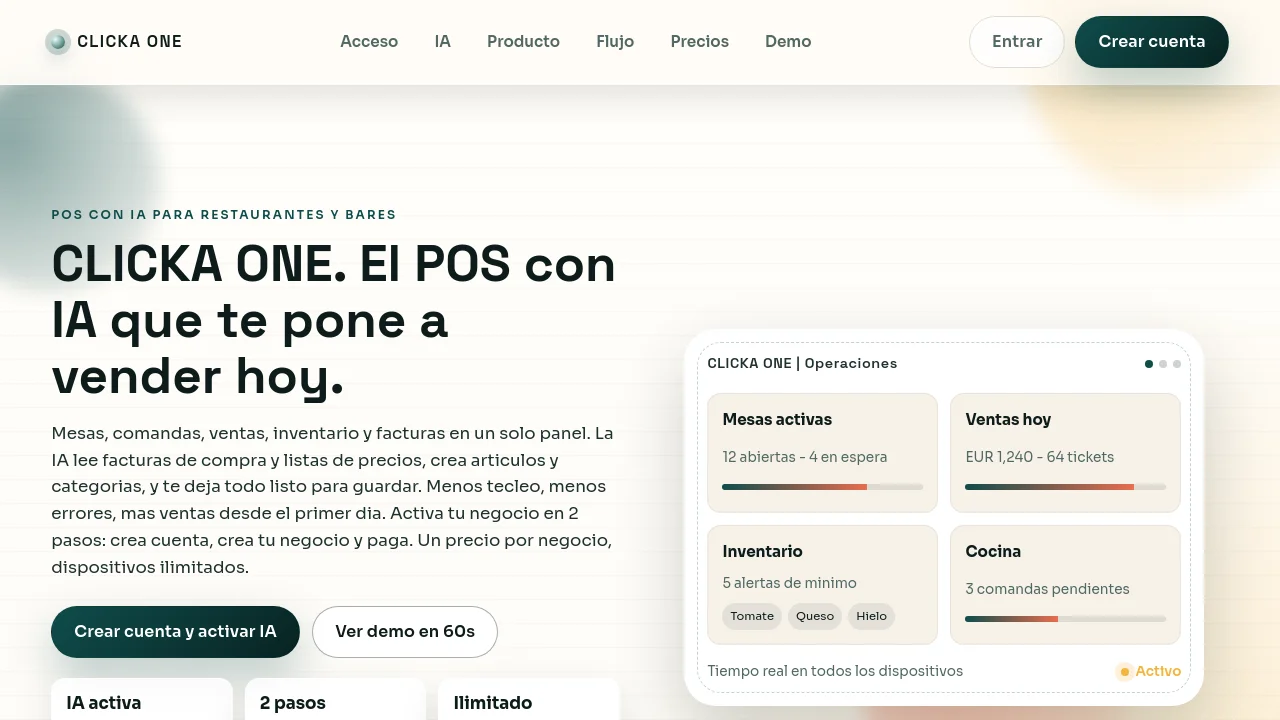
| Title: | CLICKA ONE | POS con IA en tiempo real |
| Description: | CLICKA ONE: POS con IA para restaurantes. Mesas en vivo, comandas, inventario y facturas con importacion inteligente en segundos. |
| ip_address | 199.36.158.100 |
| country | US  |
| network_name | Fastly, Inc. |
| asn | AS54113 |
80/tcp | http | Varnish - |
443/tcp | https | - - |
| Software / Version | Category |
|---|---|
| Firebase 8.6.8 | Databases, Development |
| Google Font API | Font scripts |
| Bootstrap | UI frameworks |
| HTTP/3 | Miscellaneous |
| Open Graph | Miscellaneous |
| reCAPTCHA | Security |
| HSTS | Security |
Web Application Vulnerabilities
Evidence
| URL | Method | Parameters | Evidence |
|---|---|---|---|
| https://clicka.one/ | GET | Headers: User-Agent=Mozilla/5.0 (Windows NT 10.0; Win64; x64) AppleWebKit/537.36 (KHTML, like Gecko) Chrome/108.0.0.0 Safari/537.36 | The following form sends inputs of type password plainly in the URL: ` |
Vulnerability description
We found a form which is submitted using a GET method and has inputs of the type password. The end result is that passwords are submitted in URLs.
Risk description
Passwords submitted in URLs have a higher chance of being leaked. The main reason is that URLs can be leaked in browser cross-site requests via the Referer header. Additionally, URLs are usually stored in all kinds of logs. If any access or error logs of the server were publicly accessible, an attacker could also harvest password from it.
Recommendation
You should submit passwords using POST rather than GET. This way sensitive data won't be shared to other locations via URLs.
Classification
| CWE | CWE-598 |
| OWASP Top 10 - 2017 | |
| OWASP Top 10 - 2021 |
Evidence
| URL | Evidence |
|---|---|
| https://clicka.one/ | Response headers include the HTTP Content-Security-Policy security header with the following security issues: |
Vulnerability description
We noticed that the Content-Security-Policy (CSP) header configured for the web application includes unsafe directives. The CSP header activates a protection mechanism implemented in web browsers which prevents exploitation of Cross-Site Scripting vulnerabilities (XSS) by restricting the sources from which content can be loaded or executed.
Risk description
For example, if the unsafe-inline directive is present in the CSP header, the execution of inline scripts and event handlers is allowed. This can be exploited by an attacker to execute arbitrary JavaScript code in the context of the vulnerable application.
Recommendation
Remove the unsafe values from the directives, adopt nonces or hashes for safer inclusion of inline scripts if they are needed, and explicitly define the sources from which scripts, styles, images or other resources can be loaded.
Classification
| CWE | CWE-1021 |
| OWASP Top 10 - 2017 | |
| OWASP Top 10 - 2021 |
Evidence
| Software / Version | Category |
|---|---|
| Firebase 8.6.8 | Databases, Development |
| Google Font API | Font scripts |
| Bootstrap | UI frameworks |
| HTTP/3 | Miscellaneous |
| Open Graph | Miscellaneous |
| reCAPTCHA | Security |
| HSTS | Security |
Vulnerability description
We noticed that server software and technology details are exposed, potentially aiding attackers in tailoring specific exploits against identified systems and versions.
Risk description
The risk is that an attacker could use this information to mount specific attacks against the identified software type and version.
Recommendation
We recommend you to eliminate the information which permits the identification of software platform, technology, server and operating system: HTTP server headers, HTML meta information, etc.
Classification
| CWE | CWE-200 |
| OWASP Top 10 - 2017 | |
| OWASP Top 10 - 2021 |
Evidence
| URL | Method | Parameters | Evidence |
|---|---|---|---|
| https://clicka.one/scripts | GET | Headers: User-Agent=Mozilla/5.0 (Windows NT 10.0; Win64; x64) AppleWebKit/537.36 (KHTML, like Gecko) Chrome/108.0.0.0 Safari/537.36 | Suspicious comment admin found in: |
Vulnerability description
We have discovered that the target application's code contains suspicious comments that may be related to potential bugs, incomplete functionality, or weaknesses. These comments often arise during development and testing phases but are inadvertently left in the code.
Risk description
The risk exists that attackers could analyze these comments to identify vulnerabilities or weaknesses in the application. While comments themselves do not directly lead to security breaches, they may guide attackers to focus their efforts on specific parts of the application, potentially uncovering and exploiting vulnerabilities.
Recommendation
Remove comments that suggest the presence of bugs, incomplete functionality, or weaknesses, before deploying the application.
Classification
| CWE | CWE-546 |
| OWASP Top 10 - 2017 | |
| OWASP Top 10 - 2021 |
Evidence
| URL | Method | Summary |
|---|---|---|
| https://clicka.one/ | OPTIONS | We did a HTTP OPTIONS request. The server responded with a 200 status code and the header: `Allow: GET, HEAD, OPTIONS` Request / Response |
Vulnerability description
We have noticed that the webserver responded with an Allow HTTP header when an OPTIONS HTTP request was sent. This method responds to requests by providing information about the methods available for the target resource.
Risk description
The only risk this might present nowadays is revealing debug HTTP methods that can be used on the server. This can present a danger if any of those methods can lead to sensitive information, like authentication information, secret keys.
Recommendation
We recommend that you check for unused HTTP methods or even better, disable the OPTIONS method. This can be done using your webserver configuration.
Classification
| CWE | CWE-16 |
| OWASP Top 10 - 2017 | |
| OWASP Top 10 - 2021 |
Evidence
| URL | Method | Parameters | Evidence |
|---|---|---|---|
| https://clicka.one/scripts | GET | Headers: User-Agent=Mozilla/5.0 (Windows NT 10.0; Win64; x64) AppleWebKit/537.36 (KHTML, like Gecko) Chrome/108.0.0.0 Safari/537.36 | Email Address: asesor@ejemplo.com |
Vulnerability description
We noticed that this web application exposes email addresses, which might be unintended. While not inherently a vulnerability, this information could be leveraged in social engineering or spam related activities.
Risk description
The risk is that exposed email addresses within the application could be accessed by unauthorized parties. This could lead to privacy violations, spam, phishing attacks, or other forms of misuse.
Recommendation
Compartmentalize the application to have 'safe' areas where trust boundaries can be unambiguously drawn. Do not allow email addresses to go outside of the trust boundary, and always be careful when interfacing with a compartment outside of the safe area.
Classification
| CWE | CWE-200 |
| OWASP Top 10 - 2017 | |
| OWASP Top 10 - 2021 |
Evidence
| URL | Evidence |
|---|---|
| https://clicka.one/registro |
|
Vulnerability description
We have discovered that the target application presents a login interface that could be a potential target for attacks. While login interfaces are standard for user authentication, they can become vulnerabilities if not properly secured.
Risk description
The risk is that an attacker could use this interface to mount brute force attacks against known passwords and usernames combinations leaked throughout the web.
Recommendation
Ensure each interface is not bypassable using common knowledge of the application or leaked credentials using occasional password audits.
Classification
| CWE | CWE-287 |
| OWASP Top 10 - 2017 | |
| OWASP Top 10 - 2021 |
Infrastructure Vulnerabilities
Evidence
We found insecure DNS cookie usage on the following nameservers: curitiba.ns.porkbun.com, fortaleza.ns.porkbun.com, maceio.ns.porkbun.com, salvador.ns.porkbun.com
Vulnerability description
We found that the server does not implement DNS Cookies or uses them insecurely. DNS Cookies help prevent DNS-based attacks, such as spoofing and amplification attacks.
Risk description
The risk exists because without DNS Cookies, the server is vulnerable to DNS spoofing and amplification attacks. Attackers can manipulate responses or use the server in distributed denial-of-service (DDoS) attacks, compromising network availability and security.
Recommendation
We recommend enabling DNS Cookies to prevent spoofed DNS responses. Ensure proper cookie validation is implemented to mitigate DNS amplification attacks. Regularly update DNS servers to support the latest DNS security features.
Evidence
| Domain Queried | DNS Record Type | Description | Value |
|---|---|---|---|
| clicka.one | A | IPv4 address | 199.36.158.100 |
| clicka.one | NS | Name server | curitiba.ns.porkbun.com |
| clicka.one | NS | Name server | fortaleza.ns.porkbun.com |
| clicka.one | NS | Name server | maceio.ns.porkbun.com |
| clicka.one | NS | Name server | salvador.ns.porkbun.com |
| clicka.one | SOA | Start of Authority | curitiba.ns.porkbun.com. dns.cloudflare.com. 2394937534 10000 2400 604800 1800 |
| clicka.one | TXT | Text record | "hosting-site=pos3-91835" |
Risk description
An initial step for an attacker aiming to learn about an organization involves conducting searches on its domain names to uncover DNS records associated with the organization. This strategy aims to amass comprehensive insights into the target domain, enabling the attacker to outline the organization's external digital landscape. This gathered intelligence may subsequently serve as a foundation for launching attacks, including those based on social engineering techniques. DNS records pointing to services or servers that are no longer in use can provide an attacker with an easy entry point into the network.
Recommendation
We recommend reviewing all DNS records associated with the domain and identifying and removing unused or obsolete records.
Evidence
| Operating System | Accuracy |
|---|---|
| Crestron XPanel control system | 90% |
Vulnerability description
OS Detection
Evidence
| Software / Version | Category |
|---|---|
| Firebase 8.6.8 | Databases, Development |
| Bootstrap | UI frameworks |
| reCAPTCHA | Security |
| HSTS | Security |
| HTTP/3 | Miscellaneous |
Vulnerability description
We noticed that server software and technology details are exposed, potentially aiding attackers in tailoring specific exploits against identified systems and versions.
Risk description
The risk is that an attacker could use this information to mount specific attacks against the identified software type and version.
Recommendation
We recommend you to eliminate the information which permits the identification of software platform, technology, server and operating system: HTTP server headers, HTML meta information, etc.