Vulnerability Scan Result

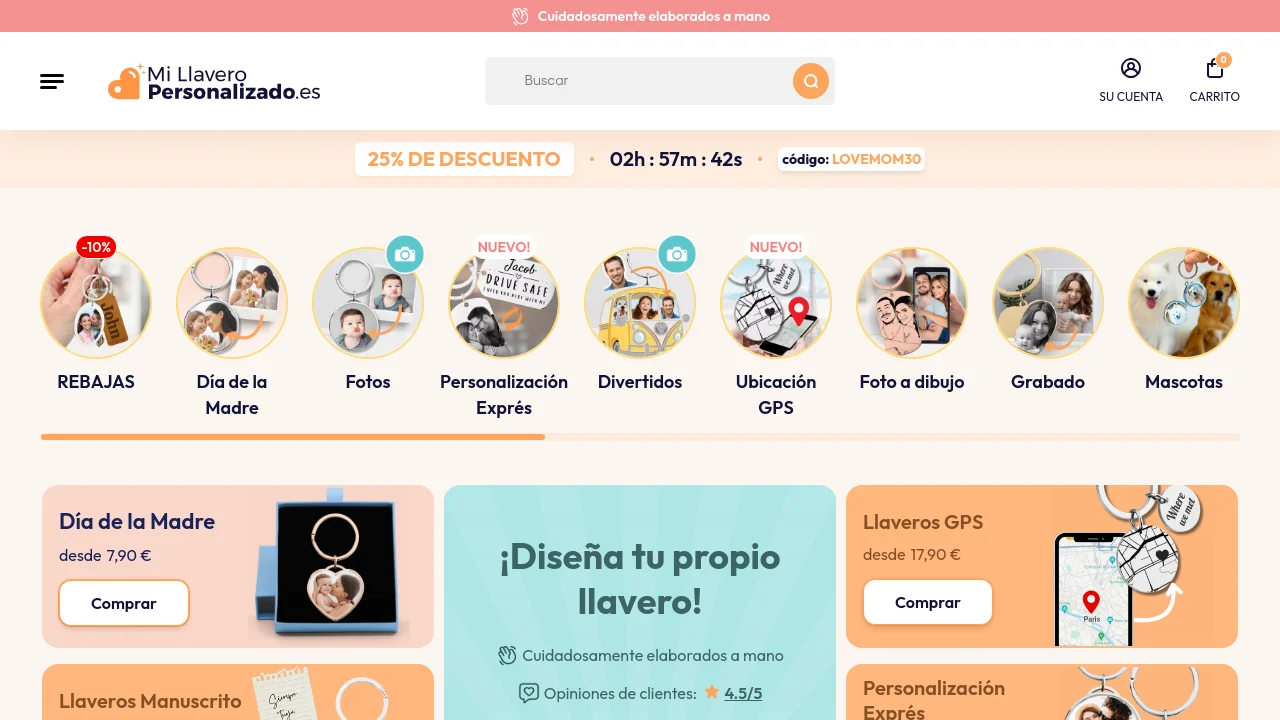
| Title: | Llaveros con grabados personalizables | Millaveropersonalizado.es |
| Description: | Llaveros personalizados número 1. Personaliza tu llavero con una imagen, texto o diseño, grabado láser gratuito y garantía de por vida. Gran variedad de formas y colores. |
| ip_address | 57.128.94.39 |
| country | FR  |
| network_name | Ovh Sas |
| asn | AS16276 |
80/tcp | http | Apache httpd - |
443/tcp | https | Apache httpd - |
| Software / Version | Category |
|---|---|
| Facebook Pixel 2.9.313 | Analytics |
| FancyBox 2.1.5 | JavaScript libraries |
| core-js 3.32.2 | JavaScript libraries |
| Google Analytics | Analytics |
| Apache HTTP Server | Web servers |
| jQuery 3.4.1 | JavaScript libraries |
| jQuery UI 1.10.3 | JavaScript libraries |
| Konva.js 9.3.22 | JavaScript graphics |
| MySQL | Databases |
| Open Graph | Miscellaneous |
| PHP | Programming languages |
| DoubleClick Floodlight | Advertising |
| Swiper | JavaScript libraries |
| WordPress | CMS, Blogs |
| reCAPTCHA | Security |
| Google Tag Manager | Tag managers |
| PrestaShop | Ecommerce |
| HSTS | Security |
Web Application Vulnerabilities
Evidence
| CVE | CVSS | EPSS Score | EPSS Percentile | Summary |
|---|---|---|---|---|
| CVE-2020-11023 | 6.9 | 0.59045 | 0.98242 | In jQuery versions greater than or equal to 1.0.3 and before 3.5.0, passing HTML containing <option> elements from untrusted sources - even after sanitizing it - to one of jQuery's DOM manipulation methods (i.e. .html(), .append(), and others) may execute untrusted code. This problem is patched in jQuery 3.5.0. |
| CVE-2020-11022 | 6.9 | 0.02456 | 0.8528 | In jQuery starting with 1.12.0 and before 3.5.0, passing HTML from untrusted sources - even after sanitizing it - to one of jQuery's DOM manipulation methods (i.e. .html(), .append(), and others) may execute untrusted code. This problem is patched in jQuery 3.5.0. |
Vulnerability description
Outdated or vulnerable software components include versions of server-side software that are no longer supported or have known, publicly disclosed vulnerabilities. Using outdated software significantly increases the attack surface of a system and may allow unauthorized access, data leaks, or service disruptions. Vulnerabilities in these components are often well-documented and actively exploited by attackers. Without security patches or vendor support, any weaknesses remain unmitigated, exposing the application to risks. In some cases, even after patching, the reported version may remain unchanged, requiring manual verification.
Risk description
The risk is that an attacker could search for an appropriate exploit (or create one himself) for any of these vulnerabilities and use it to attack the system. Since the vulnerabilities were discovered using only version-based testing, the risk level for this finding will not exceed 'high' severity. Critical risks will be assigned to vulnerabilities identified through accurate active testing methods.
Recommendation
In order to eliminate the risk of these vulnerabilities, we recommend you check the installed software version and upgrade to the latest version.
Classification
| CWE | CWE-1035 |
| OWASP Top 10 - 2017 | |
| OWASP Top 10 - 2021 |
Evidence
| CVE | CVSS | EPSS Score | EPSS Percentile | Summary |
|---|---|---|---|---|
| CVE-2021-41184 | 6.5 | 0.25367 | 0.96233 | jQuery-UI is the official jQuery user interface library. Prior to version 1.13.0, accepting the value of the `of` option of the `.position()` util from untrusted sources may execute untrusted code. The issue is fixed in jQuery UI 1.13.0. Any string value passed to the `of` option is now treated as a CSS selector. A workaround is to not accept the value of the `of` option from untrusted sources. |
| CVE-2021-41183 | 6.5 | 0.02921 | 0.86448 | jQuery-UI is the official jQuery user interface library. Prior to version 1.13.0, accepting the value of various `*Text` options of the Datepicker widget from untrusted sources may execute untrusted code. The issue is fixed in jQuery UI 1.13.0. The values passed to various `*Text` options are now always treated as pure text, not HTML. A workaround is to not accept the value of the `*Text` options from untrusted sources. |
| CVE-2021-41182 | 6.5 | 0.27509 | 0.96445 | jQuery-UI is the official jQuery user interface library. Prior to version 1.13.0, accepting the value of the `altField` option of the Datepicker widget from untrusted sources may execute untrusted code. The issue is fixed in jQuery UI 1.13.0. Any string value passed to the `altField` option is now treated as a CSS selector. A workaround is to not accept the value of the `altField` option from untrusted sources. |
| CVE-2022-31160 | 6.1 | 0.10183 | 0.93157 | jQuery UI is a curated set of user interface interactions, effects, widgets, and themes built on top of jQuery. Versions prior to 1.13.2 are potentially vulnerable to cross-site scripting. Initializing a checkboxradio widget on an input enclosed within a label makes that parent label contents considered as the input label. Calling `.checkboxradio( "refresh" )` on such a widget and the initial HTML contained encoded HTML entities will make them erroneously get decoded. This can lead to potentially executing JavaScript code. The bug has been patched in jQuery UI 1.13.2. To remediate the issue, someone who can change the initial HTML can wrap all the non-input contents of the `label` in a `span`. |
| CVE-2016-7103 | 6.1 | 0.01397 | 0.80492 | Cross-site scripting (XSS) vulnerability in jQuery UI before 1.12.0 might allow remote attackers to inject arbitrary web script or HTML via the closeText parameter of the dialog function. |
Vulnerability description
Outdated or vulnerable software components include versions of server-side software that are no longer supported or have known, publicly disclosed vulnerabilities. Using outdated software significantly increases the attack surface of a system and may allow unauthorized access, data leaks, or service disruptions. Vulnerabilities in these components are often well-documented and actively exploited by attackers. Without security patches or vendor support, any weaknesses remain unmitigated, exposing the application to risks. In some cases, even after patching, the reported version may remain unchanged, requiring manual verification.
Risk description
The risk is that an attacker could search for an appropriate exploit (or create one himself) for any of these vulnerabilities and use it to attack the system. Since the vulnerabilities were discovered using only version-based testing, the risk level for this finding will not exceed 'high' severity. Critical risks will be assigned to vulnerabilities identified through accurate active testing methods.
Recommendation
In order to eliminate the risk of these vulnerabilities, we recommend you check the installed software version and upgrade to the latest version.
Classification
| CWE | CWE-1035 |
| OWASP Top 10 - 2017 | |
| OWASP Top 10 - 2021 |
Evidence
| URL | Cookie Name | Evidence |
|---|---|---|
| https://www.millaveropersonalizado.es/llavero/llavero-personalizado-de-lujo-con-foto-en-forma-de-corazon-303-205.html | prtmt_e, prtmt_a, prtmt_ex, evc_205 | The server responded with Set-Cookie header(s) that does not specify the HttpOnly flag: Set-Cookie: prtmt_e=Vmlld0NvbnRlbnRfMTc3NzkyODU1MF8xMzc1ZmUwOGM1YmI0OWIzZGU1ODA3NDQ2ZWNlYzg4Zg%3D%3D Set-Cookie: prtmt_a=QWRkVG9DYXJ0XzE3Nzc5Mjg1NTBfMTM3NWZlMDhjNWJiNDliM2RlNTgwNzQ0NmVjZWM4OGY%3D Set-Cookie: prtmt_ex=1375fe08c5bb49b3de5807446ecec88f Set-Cookie: evc_205=1 |
Vulnerability description
We found that a cookie has been set without the HttpOnly flag, which means it can be accessed by potentially malicious JavaScript code running inside the web page. The root cause for this usually revolves around misconfigurations in the code or server settings.
Risk description
The risk is that an attacker who injects malicious JavaScript code on the page (e.g. by using an XSS attack) can access the cookie and can send it to another site. In case of a session cookie, this could lead to session hijacking.
Recommendation
Ensure that the HttpOnly flag is set for all cookies.
Classification
| CWE | CWE-1004 |
| OWASP Top 10 - 2017 | |
| OWASP Top 10 - 2021 |
Evidence
| URL | Cookie Name | Evidence |
|---|---|---|
| https://www.millaveropersonalizado.es/ | PrestaShop-0a33ce5bdaf3538ce0cb506fd55c8e1c | Set-Cookie: PrestaShop-0a33ce5bdaf3538ce0cb506fd55c8e1c=def50200a3dab61fa58b7cf0b165170b801733ee63efe2b6cedbf9c264a9ab95dd588b76dd74d99739e769a46136729a2e9b4fcc38586014dfebbd93a0c0be010693521ed93391d555c3fa5f1a051787141d736c85deff154a10f3a4340cd65de3137950270c518fa64873c2bea73aebaadf59522be04dc6182507e31c3bfa0ed3716c335b69503592f591694477791a2d591f41dd965cbed1ad413e0a3d5d81bb8386c8be2b31f1299b753c2ac94059dfe390b525157d1190b9c01bcaa5f611e395321df4ea88e41e736ab8718c8aef2343425ce14745560527 |
Vulnerability description
We found that a cookie has been set without the Secure flag, which means the browser will send it over an unencrypted channel (plain HTTP) if such a request is made. The root cause for this usually revolves around misconfigurations in the code or server settings.
Risk description
The risk exists that an attacker will intercept the clear-text communication between the browser and the server and he will steal the cookie of the user. If this is a session cookie, the attacker could gain unauthorized access to the victim's web session.
Recommendation
Whenever a cookie contains sensitive information or is a session token, then it should always be passed using an encrypted channel. Ensure that the secure flag is set for cookies containing such sensitive information.
Classification
| CWE | CWE-614 |
| OWASP Top 10 - 2017 | |
| OWASP Top 10 - 2021 |
Evidence
| URL | Evidence |
|---|---|
| https://www.millaveropersonalizado.es/ | Response does not include the HTTP Content-Security-Policy security header or meta tag |
Vulnerability description
We noticed that the target application lacks the Content-Security-Policy (CSP) header in its HTTP responses. The CSP header is a security measure that instructs web browsers to enforce specific security rules, effectively preventing the exploitation of Cross-Site Scripting (XSS) vulnerabilities.
Risk description
The risk is that if the target application is vulnerable to XSS, lack of this header makes it easily exploitable by attackers.
Recommendation
Configure the Content-Security-Header to be sent with each HTTP response in order to apply the specific policies needed by the application.
Classification
| CWE | CWE-1021 |
| OWASP Top 10 - 2017 | |
| OWASP Top 10 - 2021 |
Evidence
| Software / Version | Category |
|---|---|
| Facebook Pixel 2.9.313 | Analytics |
| FancyBox 2.1.5 | JavaScript libraries |
| core-js 3.32.2 | JavaScript libraries |
| Google Analytics | Analytics |
| Apache HTTP Server | Web servers |
| jQuery 3.4.1 | JavaScript libraries |
| jQuery UI 1.10.3 | JavaScript libraries |
| Konva.js 9.3.22 | JavaScript graphics |
| MySQL | Databases |
| Open Graph | Miscellaneous |
| PHP | Programming languages |
| DoubleClick Floodlight | Advertising |
| Swiper | JavaScript libraries |
| WordPress | CMS, Blogs |
| reCAPTCHA | Security |
| Google Tag Manager | Tag managers |
| PrestaShop | Ecommerce |
| HSTS | Security |
Vulnerability description
We noticed that server software and technology details are exposed, potentially aiding attackers in tailoring specific exploits against identified systems and versions.
Risk description
The risk is that an attacker could use this information to mount specific attacks against the identified software type and version.
Recommendation
We recommend you to eliminate the information which permits the identification of software platform, technology, server and operating system: HTTP server headers, HTML meta information, etc.
Classification
| CWE | CWE-200 |
| OWASP Top 10 - 2017 | |
| OWASP Top 10 - 2021 |
Evidence
Vulnerability description
We found the robots.txt on the target server. This file instructs web crawlers what URLs and endpoints of the web application they can visit and crawl. Website administrators often misuse this file while attempting to hide some web pages from the users.
Risk description
There is no particular security risk in having a robots.txt file. However, it's important to note that adding endpoints in it should not be considered a security measure, as this file can be directly accessed and read by anyone.
Recommendation
We recommend you to manually review the entries from robots.txt and remove the ones which lead to sensitive locations in the website (ex. administration panels, configuration files, etc).
Evidence
| URL | Evidence |
|---|---|
| https://www.millaveropersonalizado.es/ | Response headers do not include the Referrer-Policy HTTP security header as well as the |
Vulnerability description
We noticed that the target application's server responses lack the Referrer-Policy HTTP header, which controls how much referrer information the browser will send with each request originated from the current web application.
Risk description
The risk is that if a user visits a web page (e.g. "http://example.com/pricing/") and clicks on a link from that page going to e.g. "https://www.google.com", the browser will send to Google the full originating URL in the `Referer` header, assuming the Referrer-Policy header is not set. The originating URL could be considered sensitive information and it could be used for user tracking.
Recommendation
The Referrer-Policy header should be configured on the server side to avoid user tracking and inadvertent information leakage. The value `no-referrer` of this header instructs the browser to omit the Referer header entirely.
Classification
| CWE | CWE-693 |
| OWASP Top 10 - 2017 | |
| OWASP Top 10 - 2021 |
Evidence
| URL | Method | Parameters | Evidence |
|---|---|---|---|
| https://www.millaveropersonalizado.es/llavero/llavero-personalizado-de-lujo-con-foto-en-forma-de-corazon-303-205.html | GET | Headers: User-Agent=Mozilla/5.0 (Windows NT 10.0; Win64; x64) AppleWebKit/537.36 (KHTML, like Gecko) Chrome/108.0.0.0 Safari/537.36 Cookies: PHPSESSID=dhrs06innbldunnd56qv7u2bme PrestaShop-0a33ce5bdaf3538ce0cb506fd55c8e1c=def5020036510a59b965fb8f2f4224e5b3e8bc6cb6b959484e4b2a41f5648... | The following form allows file upload: ` |
Vulnerability description
We found the file upload functionality in the web application. While this is not a security issue by itself, it may represent a first step in an attack involving storing data on the target server.
Risk description
The risk is that an attacker might use the file upload functionality for path traversal, persistent XSS, transmission of malware or denial of service, if such vulnerabilities are present.
Recommendation
Use a server-generated filename, inspect the content of uploaded files, enforce a whitelist of non-executable file types and a size limit, and reject attempts to upload archive formats such as ZIP.
Classification
| CWE | CWE-434 |
| OWASP Top 10 - 2017 | |
| OWASP Top 10 - 2021 |
Infrastructure Vulnerabilities
Evidence
| Operating System | Accuracy |
|---|---|
| Linux 2.6.32 | 94% |
Vulnerability description
OS Detection
Evidence
| Software / Version | Category |
|---|---|
| WordPress | CMS, Blogs |
| PrestaShop | Ecommerce |
| MySQL | Databases |
| PHP | Programming languages |
| Apache HTTP Server | Web servers |
| reCAPTCHA | Security |
| jQuery UI | JavaScript libraries |
| jQuery | JavaScript libraries |
| Google Tag Manager | Tag managers |
| Google Analytics | Analytics |
| FancyBox | JavaScript libraries |
| Facebook Pixel 2.9.313 | Analytics |
| DoubleClick Floodlight | Advertising |
| HSTS | Security |
Vulnerability description
We noticed that server software and technology details are exposed, potentially aiding attackers in tailoring specific exploits against identified systems and versions.
Risk description
The risk is that an attacker could use this information to mount specific attacks against the identified software type and version.
Recommendation
We recommend you to eliminate the information which permits the identification of software platform, technology, server and operating system: HTTP server headers, HTML meta information, etc.
Evidence
| Domain Queried | DNS Record Type | Description | Value |
|---|---|---|---|
| www.millaveropersonalizado.es | A | IPv4 address | 57.128.94.39 |
Risk description
An initial step for an attacker aiming to learn about an organization involves conducting searches on its domain names to uncover DNS records associated with the organization. This strategy aims to amass comprehensive insights into the target domain, enabling the attacker to outline the organization's external digital landscape. This gathered intelligence may subsequently serve as a foundation for launching attacks, including those based on social engineering techniques. DNS records pointing to services or servers that are no longer in use can provide an attacker with an easy entry point into the network.
Recommendation
We recommend reviewing all DNS records associated with the domain and identifying and removing unused or obsolete records.