Vulnerability Scan Result

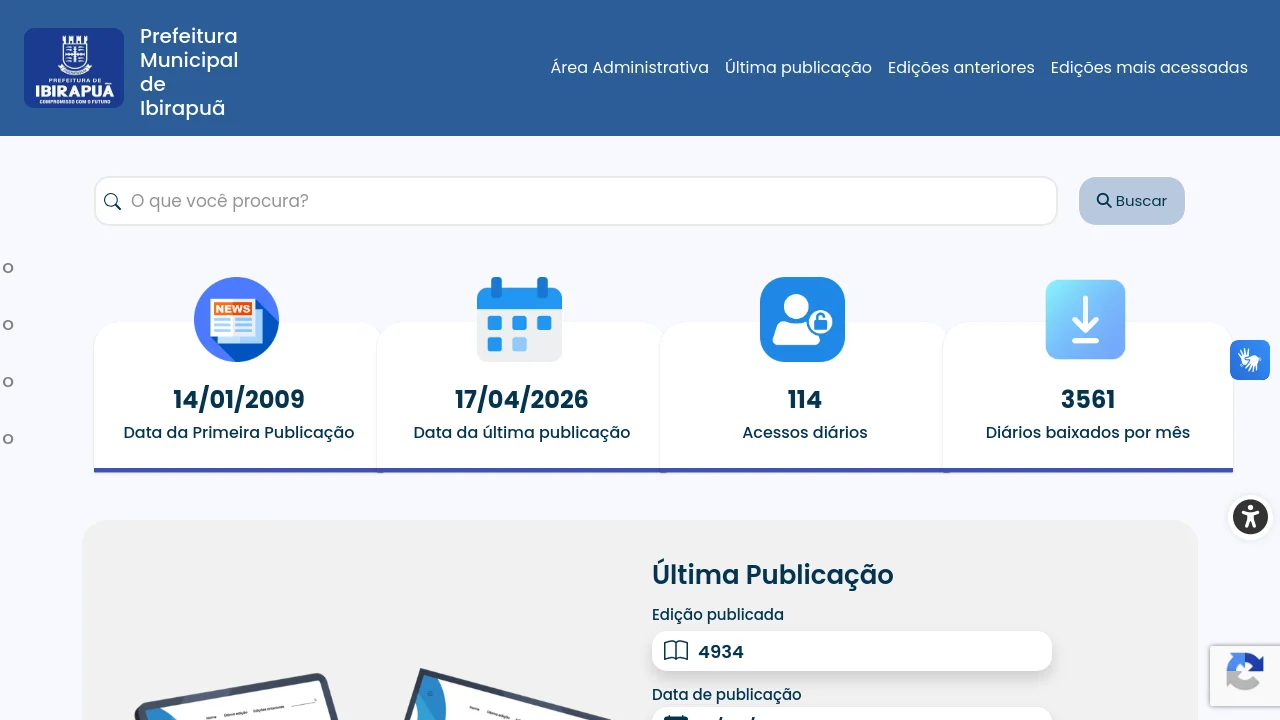
| Title: | Diário Oficial |
| Description: | No description found |
| ip_address | 136.248.95.240 |
| country | BR  |
| network_name | Oracle Corporation |
| asn | AS31898 |
80/tcp | http | Apache httpd 2.4.62 |
443/tcp | https | Apache httpd 2.4.62 |
| Software / Version | Category |
|---|---|
| Angular 16.2.12 | JavaScript frameworks |
| Font Awesome | Font scripts |
| Google Font API | Font scripts |
| Bootstrap 5.3.3 | UI frameworks |
| Zone.js | JavaScript frameworks |
| Apache HTTP Server 2.4.62 | Web servers |
| jQuery 3.6.0 | JavaScript libraries |
| MySQL | Databases |
| Open Graph | Miscellaneous |
| OpenSSL 3.2.2 | Web server extensions |
| PHP | Programming languages |
| Popper | Miscellaneous |
| WordPress | CMS, Blogs |
| reCAPTCHA | Security |
| jsDelivr | CDN |
| TypeScript | Programming languages |
Web Application Vulnerabilities
Evidence
| CVE | CVSS | EPSS Score | EPSS Percentile | Summary |
|---|---|---|---|---|
| CVE-2026-22610 | 8.5 | 0.00016 | 0.03603 | Angular is a development platform for building mobile and desktop web applications using TypeScript/JavaScript and other languages. Prior to versions 19.2.18, 20.3.16, 21.0.7, and 21.1.0-rc.0, a cross-site scripting (XSS) vulnerability has been identified in the Angular Template Compiler. The vulnerability exists because Angular’s internal sanitization schema fails to recognize the href and xlink:href attributes of SVG <script> elements as a Resource URL context. This issue has been patched in versions 19.2.18, 20.3.16, 21.0.7, and 21.1.0-rc.0. |
| CVE-2025-66412 | 8.5 | 0.00052 | 0.16142 | Angular is a development platform for building mobile and desktop web applications using TypeScript/JavaScript and other languages. Prior to 21.0.2, 20.3.15, and 19.2.17, A Stored Cross-Site Scripting (XSS) vulnerability has been identified in the Angular Template Compiler. It occurs because the compiler's internal security schema is incomplete, allowing attackers to bypass Angular's built-in security sanitization. Specifically, the schema fails to classify certain URL-holding attributes (e.g., those that could contain javascript: URLs) as requiring strict URL security, enabling the injection of malicious scripts. This vulnerability is fixed in 21.0.2, 20.3.15, and 19.2.17. |
| CVE-2026-27970 | 7.6 | 0.00048 | 0.14604 | Angular is a development platform for building mobile and desktop web applications using TypeScript/JavaScript and other languages. Versions prior to 21.2.0, 21.1.16, 20.3.17, and 19.2.19 have a cross-Site scripting vulnerability in the Angular internationalization (i18n) pipeline. In ICU messages (International Components for Unicode), HTML from translated content was not properly sanitized and could execute arbitrary JavaScript. Angular i18n typically involves three steps, extracting all messages from an application in the source language, sending the messages to be translated, and then merging their translations back into the final source code. Translations are frequently handled by contracts with specific partner companies, and involve sending the source messages to a separate contractor before receiving final translations for display to the end user. If the returned translations have malicious content, it could be rendered into the application and execute arbitrary JavaScript. When successfully exploited, this vulnerability allows for execution of attacker controlled JavaScript in the application origin. Depending on the nature of the application being exploited this could lead to credential exfiltration and/or page vandalism. Several preconditions apply to the attack. The attacker must compromise the translation file (xliff, xtb, etc.). Unlike most XSS vulnerabilities, this issue is not exploitable by arbitrary users. An attacker must first compromise an application's translation file before they can escalate privileges into the Angular application client. The victim application must use Angular i18n, use one or more ICU messages, render an ICU message, and not defend against XSS via a safe content security policy. Versions 21.2.0, 21.1.6, 20.3.17, and 19.2.19 patch the issue. Until the patch is applied, developers should consider reviewing and verifying translated content received from untrusted third parties before incorporating it in an Angular application, enabling strict CSP controls to block unauthorized JavaScript from executing on the page, and enabling Trusted Types to enforce proper HTML sanitization. |
Vulnerability description
Outdated or vulnerable software components include versions of server-side software that are no longer supported or have known, publicly disclosed vulnerabilities. Using outdated software significantly increases the attack surface of a system and may allow unauthorized access, data leaks, or service disruptions. Vulnerabilities in these components are often well-documented and actively exploited by attackers. Without security patches or vendor support, any weaknesses remain unmitigated, exposing the application to risks. In some cases, even after patching, the reported version may remain unchanged, requiring manual verification.
Risk description
The risk is that an attacker could search for an appropriate exploit (or create one himself) for any of these vulnerabilities and use it to attack the system. Since the vulnerabilities were discovered using only version-based testing, the risk level for this finding will not exceed 'high' severity. Critical risks will be assigned to vulnerabilities identified through accurate active testing methods.
Recommendation
In order to eliminate the risk of these vulnerabilities, we recommend you check the installed software version and upgrade to the latest version.
Classification
| CWE | CWE-1035 |
| OWASP Top 10 - 2017 | |
| OWASP Top 10 - 2021 |
Evidence
| CVE | CVSS | EPSS Score | EPSS Percentile | Summary |
|---|---|---|---|---|
| CVE-2025-23048 | 9.1 | 0.00032 | 0.09278 | In some mod_ssl configurations on Apache HTTP Server 2.4.35 through to 2.4.63, an access control bypass by trusted clients is possible using TLS 1.3 session resumption. Configurations are affected when mod_ssl is configured for multiple virtual hosts, with each restricted to a different set of trusted client certificates (for example with a different SSLCACertificateFile/Path setting). In such a case, a client trusted to access one virtual host may be able to access another virtual host, if SSLStrictSNIVHostCheck is not enabled in either virtual host. |
| CVE-2025-58098 | 8.3 | 0.00031 | 0.08612 | Apache HTTP Server 2.4.65 and earlier with Server Side Includes (SSI) enabled and mod_cgid (but not mod_cgi) passes the shell-escaped query string to #exec cmd="..." directives. This issue affects Apache HTTP Server before 2.4.66. Users are recommended to upgrade to version 2.4.66, which fixes the issue. |
| CVE-2025-59775 | 7.5 | 0.00071 | 0.2175 | Server-Side Request Forgery (SSRF) vulnerability in Apache HTTP Server on Windows with AllowEncodedSlashes On and MergeSlashes Off allows to potentially leak NTLM hashes to a malicious server via SSRF and malicious requests or content Users are recommended to upgrade to version 2.4.66, which fixes the issue. |
| CVE-2025-55753 | 7.5 | 0.00104 | 0.28289 | An integer overflow in the case of failed ACME certificate renewal leads, after a number of failures (~30 days in default configurations), to the backoff timer becoming 0. Attempts to renew the certificate then are repeated without delays until it succeeds. This issue affects Apache HTTP Server: from 2.4.30 before 2.4.66. Users are recommended to upgrade to version 2.4.66, which fixes the issue. |
| CVE-2025-53020 | 7.5 | 0.01211 | 0.7902 | Late Release of Memory after Effective Lifetime vulnerability in Apache HTTP Server. This issue affects Apache HTTP Server: from 2.4.17 up to 2.4.63. Users are recommended to upgrade to version 2.4.64, which fixes the issue. |
Vulnerability description
Outdated or vulnerable software components include versions of server-side software that are no longer supported or have known, publicly disclosed vulnerabilities. Using outdated software significantly increases the attack surface of a system and may allow unauthorized access, data leaks, or service disruptions. Vulnerabilities in these components are often well-documented and actively exploited by attackers. Without security patches or vendor support, any weaknesses remain unmitigated, exposing the application to risks. In some cases, even after patching, the reported version may remain unchanged, requiring manual verification.
Risk description
The risk is that an attacker could search for an appropriate exploit (or create one himself) for any of these vulnerabilities and use it to attack the system. Since the vulnerabilities were discovered using only version-based testing, the risk level for this finding will not exceed 'high' severity. Critical risks will be assigned to vulnerabilities identified through accurate active testing methods.
Recommendation
In order to eliminate the risk of these vulnerabilities, we recommend you check the installed software version and upgrade to the latest version.
Classification
| CWE | CWE-1035 |
| OWASP Top 10 - 2017 | |
| OWASP Top 10 - 2021 |
Evidence
| Software / Version | Category |
|---|---|
| Angular 16.2.12 | JavaScript frameworks |
| Font Awesome | Font scripts |
| Google Font API | Font scripts |
| Bootstrap 5.3.3 | UI frameworks |
| Zone.js | JavaScript frameworks |
| Apache HTTP Server 2.4.62 | Web servers |
| jQuery 3.6.0 | JavaScript libraries |
| MySQL | Databases |
| Open Graph | Miscellaneous |
| OpenSSL 3.2.2 | Web server extensions |
| PHP | Programming languages |
| Popper | Miscellaneous |
| WordPress | CMS, Blogs |
| reCAPTCHA | Security |
| jsDelivr | CDN |
| TypeScript | Programming languages |
Vulnerability description
We noticed that server software and technology details are exposed, potentially aiding attackers in tailoring specific exploits against identified systems and versions.
Risk description
The risk is that an attacker could use this information to mount specific attacks against the identified software type and version.
Recommendation
We recommend you to eliminate the information which permits the identification of software platform, technology, server and operating system: HTTP server headers, HTML meta information, etc.
Classification
| CWE | CWE-200 |
| OWASP Top 10 - 2017 | |
| OWASP Top 10 - 2021 |
Evidence
| URL | Evidence |
|---|---|
| https://diario.ibirapua.ba.gov.br/ | Response headers do not include the HTTP Strict-Transport-Security header |
Vulnerability description
We noticed that the target application lacks the HTTP Strict-Transport-Security header in its responses. This security header is crucial as it instructs browsers to only establish secure (HTTPS) connections with the web server and reject any HTTP connections.
Risk description
The risk is that lack of this header permits an attacker to force a victim user to initiate a clear-text HTTP connection to the server, thus opening the possibility to eavesdrop on the network traffic and extract sensitive information (e.g. session cookies).
Recommendation
The Strict-Transport-Security HTTP header should be sent with each HTTPS response. The syntax is as follows: `Strict-Transport-Security: max-age=<seconds>[; includeSubDomains]` The parameter `max-age` gives the time frame for requirement of HTTPS in seconds and should be chosen quite high, e.g. several months. A value below 7776000 is considered as too low by this scanner check. The flag `includeSubDomains` defines that the policy applies also for sub domains of the sender of the response.
Classification
| CWE | CWE-693 |
| OWASP Top 10 - 2017 | |
| OWASP Top 10 - 2021 |
Evidence
| URL | Method | Summary |
|---|---|---|
| https://diario.ibirapua.ba.gov.br/?canary=javlugpwgj | TRACE | We injected a random query parameter inside a HTTP TRACE request. The server responded with a 200 OK HTTP status code and we found the random value reflected in the body of the response. |
Vulnerability description
We have noticed that the webserver responded with a 200 OK HTTP status when a TRACE/TRACK HTTP request was sent. Originally intended for debugging purposes, these methods respond to requests by echoing back the contents of the request received.
Risk description
The only risk this might present nowadays is revealing HTTP headers that have been appended by intermediate proxy servers on the way to the destination. This can present a danger if any of those headers contain sensitive information like authentication information, secret keys.
Recommendation
Generally, it is good practice to disable unused functionality to minimize your attack surface. We recommend that you disable unused HTTP methods, or even better, allow only the ones that you know are used. This can be done using your webserver configuration.
Classification
| CWE | CWE-16 |
| OWASP Top 10 - 2017 | |
| OWASP Top 10 - 2021 |
Evidence
| URL | Evidence |
|---|---|
| https://diario.ibirapua.ba.gov.br/ | Response does not include the HTTP Content-Security-Policy security header or meta tag |
Vulnerability description
We noticed that the target application lacks the Content-Security-Policy (CSP) header in its HTTP responses. The CSP header is a security measure that instructs web browsers to enforce specific security rules, effectively preventing the exploitation of Cross-Site Scripting (XSS) vulnerabilities.
Risk description
The risk is that if the target application is vulnerable to XSS, lack of this header makes it easily exploitable by attackers.
Recommendation
Configure the Content-Security-Header to be sent with each HTTP response in order to apply the specific policies needed by the application.
Classification
| CWE | CWE-1021 |
| OWASP Top 10 - 2017 | |
| OWASP Top 10 - 2021 |
Evidence
Vulnerability description
We found the robots.txt on the target server. This file instructs web crawlers what URLs and endpoints of the web application they can visit and crawl. Website administrators often misuse this file while attempting to hide some web pages from the users.
Risk description
There is no particular security risk in having a robots.txt file. However, it's important to note that adding endpoints in it should not be considered a security measure, as this file can be directly accessed and read by anyone.
Recommendation
We recommend you to manually review the entries from robots.txt and remove the ones which lead to sensitive locations in the website (ex. administration panels, configuration files, etc).
Vulnerability description
We have noticed that the server is missing the security.txt file, which is considered a good practice for web security. It provides a standardized way for security researchers and the public to report security vulnerabilities or concerns by outlining the preferred method of contact and reporting procedures.
Risk description
There is no particular risk in not having a security.txt file for your server. However, this file is important because it offers a designated channel for reporting vulnerabilities and security issues.
Recommendation
We recommend you to implement the security.txt file according to the standard, in order to allow researchers or users report any security issues they find, improving the defensive mechanisms of your server.
Classification
| CWE | CWE-1188 |
| OWASP Top 10 - 2017 | |
| OWASP Top 10 - 2021 |
Evidence
| URL | Method | Summary |
|---|---|---|
| https://diario.ibirapua.ba.gov.br/ | OPTIONS | We did a HTTP OPTIONS request. The server responded with a 200 status code and the header: `Allow: OPTIONS,HEAD,GET,POST,TRACE` Request / Response |
Vulnerability description
We have noticed that the webserver responded with an Allow HTTP header when an OPTIONS HTTP request was sent. This method responds to requests by providing information about the methods available for the target resource.
Risk description
The only risk this might present nowadays is revealing debug HTTP methods that can be used on the server. This can present a danger if any of those methods can lead to sensitive information, like authentication information, secret keys.
Recommendation
We recommend that you check for unused HTTP methods or even better, disable the OPTIONS method. This can be done using your webserver configuration.
Classification
| CWE | CWE-16 |
| OWASP Top 10 - 2017 | |
| OWASP Top 10 - 2021 |
Infrastructure Vulnerabilities
Evidence
| CVE | CVSS | EPSS Score | EPSS Percentile | CISA KEV | Summary |
|---|---|---|---|---|---|
| CVE-2025-23048 | 9.1 | 0.00032 | 0.09278 | No | In some mod_ssl configurations on Apache HTTP Server 2.4.35 through to 2.4.63, an access control bypass by trusted clients is possible using TLS 1.3 session resumption. Configurations are affected when mod_ssl is configured for multiple virtual hosts, with each restricted to a different set of trusted client certificates (for example with a different SSLCACertificateFile/Path setting). In such a case, a client trusted to access one virtual host may be able to access another virtual host, if SSLStrictSNIVHostCheck is not enabled in either virtual host. |
| CVE-2025-58098 | 8.3 | 0.00031 | 0.08612 | No | Apache HTTP Server 2.4.65 and earlier with Server Side Includes (SSI) enabled and mod_cgid (but not mod_cgi) passes the shell-escaped query string to #exec cmd="..." directives. This issue affects Apache HTTP Server before 2.4.66. Users are recommended to upgrade to version 2.4.66, which fixes the issue. |
| CVE-2025-59775 | 7.5 | 0.00071 | 0.2175 | No | Server-Side Request Forgery (SSRF) vulnerability in Apache HTTP Server on Windows with AllowEncodedSlashes On and MergeSlashes Off allows to potentially leak NTLM hashes to a malicious server via SSRF and malicious requests or content Users are recommended to upgrade to version 2.4.66, which fixes the issue. |
| CVE-2025-55753 | 7.5 | 0.00104 | 0.28289 | No | An integer overflow in the case of failed ACME certificate renewal leads, after a number of failures (~30 days in default configurations), to the backoff timer becoming 0. Attempts to renew the certificate then are repeated without delays until it succeeds. This issue affects Apache HTTP Server: from 2.4.30 before 2.4.66. Users are recommended to upgrade to version 2.4.66, which fixes the issue. |
| CVE-2025-53020 | 7.5 | 0.01211 | 0.7902 | No | Late Release of Memory after Effective Lifetime vulnerability in Apache HTTP Server. This issue affects Apache HTTP Server: from 2.4.17 up to 2.4.63. Users are recommended to upgrade to version 2.4.64, which fixes the issue. |
Vulnerability description
Vulnerabilities found for Apache HTTP Server 2.4.62
Risk description
These vulnerabilities expose the affected applications to the risk of unauthorized access to confidential data and possibly to denial of service attacks. An attacker could search for an appropriate exploit (or create one) for any of these vulnerabilities and use it to attack the system. Notes: - The vulnerabilities are identified based on the server's version.; - Only the first 5 vulnerabilities with the highest risk are shown for each port.; Since the vulnerabilities were discovered using only version-based testing, the risk level for this finding will not exceed "high" severity. Critical risks will be assigned to vulnerabilities identified through accurate active testing methods.
Recommendation
We recommend you to upgrade the affected software to the latest version in order to eliminate the risks imposed by these vulnerabilities.
Evidence
We managed to detect that OpenSSL has reached the End-of-Life (EOL).
Version detected: 3.2.2 End-of-life date: 2025-11-23 Latest version for the cycle: 3.2.6 This release cycle (3.2) doesn't have long-term-support (LTS). The cycle was released on 2023-11-23 and its latest release date was 2025-09-30.
Risk description
Using end-of-life (EOL) software poses significant security risks for organizations. EOL software no longer receives updates, including critical security patches. This creates a vulnerability landscape where known and potentially new security flaws remain unaddressed, making the software an attractive target for malicious actors. Attackers can exploit these vulnerabilities to gain unauthorized access, disrupt services, or steal sensitive data. Moreover, without updates, compatibility issues arise with newer technologies, leading to operational inefficiencies and increased potential for system failures. Additionally, regulatory and compliance risks accompany the use of EOL software. Many industries have strict data protection regulations that require up-to-date software to ensure the highest security standards. Non-compliance can result in hefty fines and legal consequences. Organizations also risk damaging their reputation if a breach occurs due to outdated software, eroding customer trust and potentially leading to a loss of business. Therefore, continuing to use EOL software undermines both security posture and business integrity, necessitating timely upgrades and proactive risk management strategies.
Recommendation
To mitigate the risks associated with end-of-life (EOL) software, it's crucial to take proactive steps. Start by identifying any EOL software currently in use within your organization. Once identified, prioritize upgrading or replacing these applications with supported versions that receive regular updates and security patches. This not only helps close security gaps but also ensures better compatibility with newer technologies, enhancing overall system efficiency and reliability.Additionally, develop a comprehensive software lifecycle management plan. This plan should include regular audits to identify upcoming EOL dates and a schedule for timely updates or replacements. Train your IT staff and users about the importance of keeping software up to date and the risks associated with using outdated versions. By maintaining a proactive approach to software management, you can significantly reduce security risks, ensure compliance with industry regulations, and protect your organization's reputation and customer trust.
Evidence
| Domain Queried | DNS Record Type | Description | Value |
|---|---|---|---|
| diario.ibirapua.ba.gov.br | A | IPv4 address | 136.248.95.240 |
Risk description
An initial step for an attacker aiming to learn about an organization involves conducting searches on its domain names to uncover DNS records associated with the organization. This strategy aims to amass comprehensive insights into the target domain, enabling the attacker to outline the organization's external digital landscape. This gathered intelligence may subsequently serve as a foundation for launching attacks, including those based on social engineering techniques. DNS records pointing to services or servers that are no longer in use can provide an attacker with an easy entry point into the network.
Recommendation
We recommend reviewing all DNS records associated with the domain and identifying and removing unused or obsolete records.
Evidence
| Operating System | Accuracy |
|---|---|
| Linux 3.1 - 3.2 | 93% |
Vulnerability description
OS Detection
Evidence
| Software / Version | Category |
|---|---|
| WordPress | CMS, Blogs |
| MySQL | Databases |
| PHP | Programming languages |
| Bootstrap 5.3.3 | UI frameworks |
| OpenSSL 3.2.2 | Web server extensions |
| Apache HTTP Server 2.4.62 | Web servers |
| reCAPTCHA | Security |
Vulnerability description
We noticed that server software and technology details are exposed, potentially aiding attackers in tailoring specific exploits against identified systems and versions.
Risk description
The risk is that an attacker could use this information to mount specific attacks against the identified software type and version.
Recommendation
We recommend you to eliminate the information which permits the identification of software platform, technology, server and operating system: HTTP server headers, HTML meta information, etc.