Vulnerability Scan Result

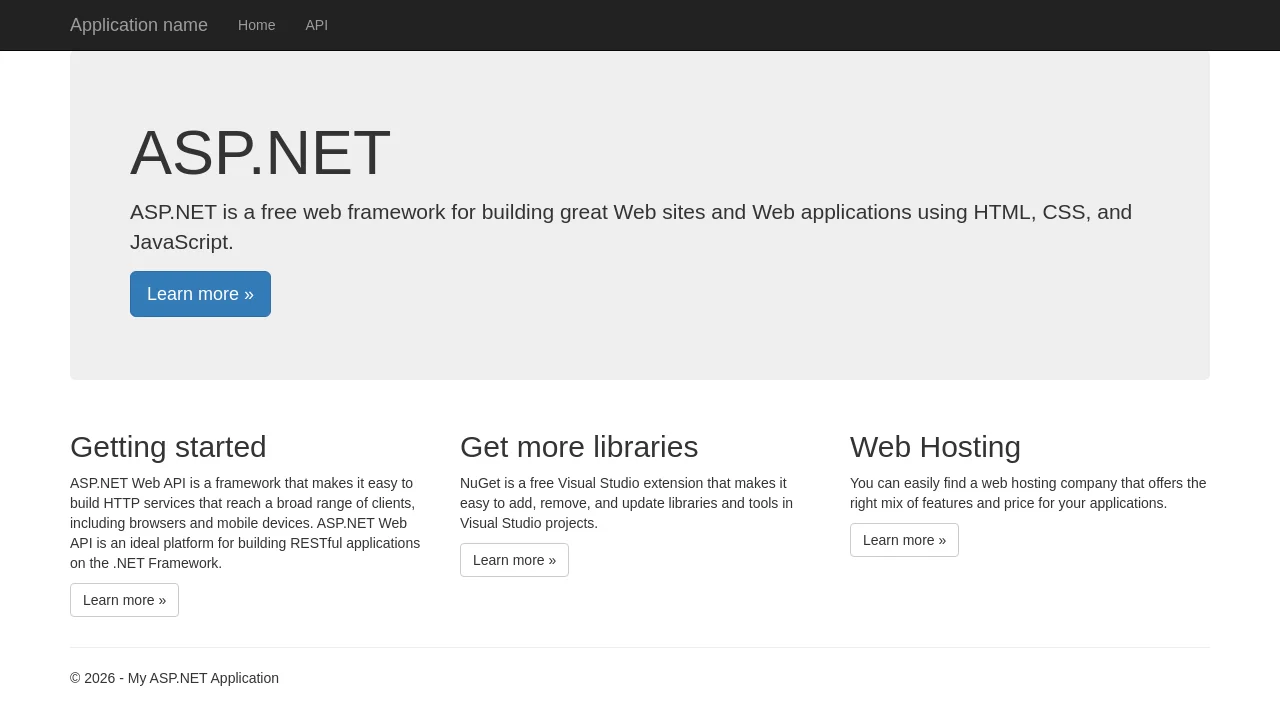
| Title: | Home Page |
| Description: | No description found |
| ip_address | 45.113.224.150 |
| country | IN  |
| network_name | Comtel Networks Private Limited |
| asn | AS146943 |
21/tcp | ftp | Microsoft ftpd - |
53/tcp | domain | Simple DNS Plus - |
80/tcp | http | Microsoft IIS httpd 10 |
135/tcp | msrpc | Microsoft Windows RPC - |
139/tcp | netbios-ssn | Microsoft Windows netbios-ssn - |
443/tcp | https | - - |
445/tcp | microsoft-ds | - - |
5357/tcp | http | Microsoft HTTPAPI httpd 2 |
5985/tcp | http | Microsoft HTTPAPI httpd 2 |
| Software / Version | Category |
|---|---|
| Bootstrap 3.4.1 | UI frameworks |
| jQuery 3.4.1 | JavaScript libraries |
| Windows Server | Operating systems |
| Modernizr 2.8.3 | JavaScript libraries |
| Microsoft ASP.NET 4.0.30319 | Web frameworks |
| IIS 10.0 | Web servers |
Web Application Vulnerabilities
Evidence
| CVE | CVSS | EPSS Score | EPSS Percentile | Summary |
|---|---|---|---|---|
| CVE-2020-11023 | 6.9 | 0.42137 | 0.97452 | In jQuery versions greater than or equal to 1.0.3 and before 3.5.0, passing HTML containing <option> elements from untrusted sources - even after sanitizing it - to one of jQuery's DOM manipulation methods (i.e. .html(), .append(), and others) may execute untrusted code. This problem is patched in jQuery 3.5.0. |
| CVE-2020-11022 | 6.9 | 0.03538 | 0.87688 | In jQuery starting with 1.12.0 and before 3.5.0, passing HTML from untrusted sources - even after sanitizing it - to one of jQuery's DOM manipulation methods (i.e. .html(), .append(), and others) may execute untrusted code. This problem is patched in jQuery 3.5.0. |
Vulnerability description
Outdated or vulnerable software components include versions of server-side software that are no longer supported or have known, publicly disclosed vulnerabilities. Using outdated software significantly increases the attack surface of a system and may allow unauthorized access, data leaks, or service disruptions. Vulnerabilities in these components are often well-documented and actively exploited by attackers. Without security patches or vendor support, any weaknesses remain unmitigated, exposing the application to risks. In some cases, even after patching, the reported version may remain unchanged, requiring manual verification.
Risk description
The risk is that an attacker could search for an appropriate exploit (or create one himself) for any of these vulnerabilities and use it to attack the system. Since the vulnerabilities were discovered using only version-based testing, the risk level for this finding will not exceed 'high' severity. Critical risks will be assigned to vulnerabilities identified through accurate active testing methods.
Recommendation
In order to eliminate the risk of these vulnerabilities, we recommend you check the installed software version and upgrade to the latest version.
Classification
| CWE | CWE-1035 |
| OWASP Top 10 - 2017 | |
| OWASP Top 10 - 2021 |
Evidence
| URL | Response URL | Evidence |
|---|---|---|
| http://api.sahibganjdigitallibrary.com/ | http://api.sahibganjdigitallibrary.com/ | Communication is made over unsecure, unencrypted HTTP. |
Vulnerability description
We noticed that the communication between the web browser and the server is done using the HTTP protocol, which transmits data unencrypted over the network.
Risk description
The risk is that an attacker who manages to intercept the communication at the network level can read and modify the data transmitted (including passwords, secret tokens, credit card information and other sensitive data).
Recommendation
We recommend you to reconfigure the web server to use HTTPS - which encrypts the communication between the web browser and the server.
Classification
| CWE | CWE-319 |
| OWASP Top 10 - 2017 | |
| OWASP Top 10 - 2021 |
Evidence
| CVE | CVSS | EPSS Score | EPSS Percentile | Summary |
|---|---|---|---|---|
| CVE-2024-6484 | 6.4 | 0.00049 | 0.15167 | A vulnerability has been identified in Bootstrap that exposes users to Cross-Site Scripting (XSS) attacks. The issue is present in the carousel component, where the data-slide and data-slide-to attributes can be exploited through the href attribute of an <a> tag due to inadequate sanitization. This vulnerability could potentially enable attackers to execute arbitrary JavaScript within the victim's browser. |
Vulnerability description
Outdated or vulnerable software components include versions of server-side software that are no longer supported or have known, publicly disclosed vulnerabilities. Using outdated software significantly increases the attack surface of a system and may allow unauthorized access, data leaks, or service disruptions. Vulnerabilities in these components are often well-documented and actively exploited by attackers. Without security patches or vendor support, any weaknesses remain unmitigated, exposing the application to risks. In some cases, even after patching, the reported version may remain unchanged, requiring manual verification.
Risk description
The risk is that an attacker could search for an appropriate exploit (or create one himself) for any of these vulnerabilities and use it to attack the system. Since the vulnerabilities were discovered using only version-based testing, the risk level for this finding will not exceed 'high' severity. Critical risks will be assigned to vulnerabilities identified through accurate active testing methods.
Recommendation
In order to eliminate the risk of these vulnerabilities, we recommend you check the installed software version and upgrade to the latest version.
Classification
| CWE | CWE-1035 |
| OWASP Top 10 - 2017 | |
| OWASP Top 10 - 2021 |
Evidence
| URL | Evidence |
|---|---|
| http://api.sahibganjdigitallibrary.com/ | Response does not include the HTTP Content-Security-Policy security header or meta tag |
Vulnerability description
We noticed that the target application lacks the Content-Security-Policy (CSP) header in its HTTP responses. The CSP header is a security measure that instructs web browsers to enforce specific security rules, effectively preventing the exploitation of Cross-Site Scripting (XSS) vulnerabilities.
Risk description
The risk is that if the target application is vulnerable to XSS, lack of this header makes it easily exploitable by attackers.
Recommendation
Configure the Content-Security-Header to be sent with each HTTP response in order to apply the specific policies needed by the application.
Classification
| CWE | CWE-1021 |
| OWASP Top 10 - 2017 | |
| OWASP Top 10 - 2021 |
Evidence
| Software / Version | Category |
|---|---|
| Bootstrap 3.4.1 | UI frameworks |
| jQuery 3.4.1 | JavaScript libraries |
| Windows Server | Operating systems |
| Modernizr 2.8.3 | JavaScript libraries |
| Microsoft ASP.NET 4.0.30319 | Web frameworks |
| IIS 10.0 | Web servers |
Vulnerability description
We noticed that server software and technology details are exposed, potentially aiding attackers in tailoring specific exploits against identified systems and versions.
Risk description
The risk is that an attacker could use this information to mount specific attacks against the identified software type and version.
Recommendation
We recommend you to eliminate the information which permits the identification of software platform, technology, server and operating system: HTTP server headers, HTML meta information, etc.
Classification
| CWE | CWE-200 |
| OWASP Top 10 - 2017 | |
| OWASP Top 10 - 2021 |
Evidence
| URL | Evidence |
|---|---|
| http://api.sahibganjdigitallibrary.com/ | Response headers do not include the Referrer-Policy HTTP security header as well as the |
Vulnerability description
We noticed that the target application's server responses lack the Referrer-Policy HTTP header, which controls how much referrer information the browser will send with each request originated from the current web application.
Risk description
The risk is that if a user visits a web page (e.g. "http://example.com/pricing/") and clicks on a link from that page going to e.g. "https://www.google.com", the browser will send to Google the full originating URL in the `Referer` header, assuming the Referrer-Policy header is not set. The originating URL could be considered sensitive information and it could be used for user tracking.
Recommendation
The Referrer-Policy header should be configured on the server side to avoid user tracking and inadvertent information leakage. The value `no-referrer` of this header instructs the browser to omit the Referer header entirely.
Classification
| CWE | CWE-693 |
| OWASP Top 10 - 2017 | |
| OWASP Top 10 - 2021 |
Evidence
| URL | Evidence |
|---|---|
| http://api.sahibganjdigitallibrary.com/ | Response headers do not include the X-Content-Type-Options HTTP security header |
Vulnerability description
We noticed that the target application's server responses lack the X-Content-Type-Options header. This header is particularly important for preventing Internet Explorer from reinterpreting the content of a web page (MIME-sniffing) and thus overriding the value of the Content-Type header.
Risk description
The risk is that lack of this header could make possible attacks such as Cross-Site Scripting or phishing in Internet Explorer browsers.
Recommendation
We recommend setting the X-Content-Type-Options header such as `X-Content-Type-Options: nosniff`.
Classification
| CWE | CWE-693 |
| OWASP Top 10 - 2017 | |
| OWASP Top 10 - 2021 |
Vulnerability description
We have noticed that the server is missing the security.txt file, which is considered a good practice for web security. It provides a standardized way for security researchers and the public to report security vulnerabilities or concerns by outlining the preferred method of contact and reporting procedures.
Risk description
There is no particular risk in not having a security.txt file for your server. However, this file is important because it offers a designated channel for reporting vulnerabilities and security issues.
Recommendation
We recommend you to implement the security.txt file according to the standard, in order to allow researchers or users report any security issues they find, improving the defensive mechanisms of your server.
Classification
| CWE | CWE-1188 |
| OWASP Top 10 - 2017 | |
| OWASP Top 10 - 2021 |
Evidence
| URL | Method | Parameters | Evidence |
|---|---|---|---|
| http://api.sahibganjdigitallibrary.com/Content | GET | Headers: User-Agent=Mozilla/5.0 (Windows NT 10.0; Win64; x64) AppleWebKit/537.36 (KHTML, like Gecko) Chrome/108.0.0.0 Safari/537.36 | Possible API endpoint found at |
Vulnerability description
We found API endpoints while crawling the given web application.
Risk description
These endpoints may represent an attack surface for malicious actors interested in API-specific vulnerabilities.
Recommendation
Use the API Scanner to perform a more thorough vulnerability check for these endpoints, if an API specification is present.
Infrastructure Vulnerabilities
Evidence
We managed to detect a publicly accessible Windows Remote Management (WinRM) service. PORT STATE SERVICE VERSION 5985/tcp open http Microsoft HTTPAPI httpd 2.0
Vulnerability description
We found that the Windows Remote Management (WinRM) service is publicly accessible. Network administrators often use remote administration protocols to control devices like servers and other essential systems. However, allowing these services to be accessible from the Internet can increase security risks, creating potential opportunities for attacks on the organization. Also, it operates in cleartext, making all traffic communicated through this protocol vulnerable to interception in its unencrypted form.
Risk description
Exposing this service online can enable attackers to launch authentication attacks, like guessing login credentials, and potentially gaining unauthorized access. Also, any vulnerabilities in the WinRM service or the underlying Windows OS can be exploited by attackers to gain access or elevate privileges. Given the high privilege level of WinRM, exploiting such vulnerabilities can lead to full system compromise This could also lead to the exposure of sensitive data such as user credentials and other sensitive information depending on the device being managed remotely since it uses a cleartext transfer of data. If an attacker intercepts these credentials, they might gain unauthorized access to the device.
Recommendation
We recommend turning off WinRM access over the Internet and instead using a Virtual Private Network (VPN) that mandates two-factor authentication (2FA). If the WinRM service is essential for business purposes, we recommend limiting access only from designated IP addresses using a firewall. Furthermore, utilizing HTTPS with WinRM (port 5986) is recommended as this protocol employs encryption.
Evidence
We managed to detect a publicly accessible Windows Server Message Blocks (SMB) service. PORT STATE SERVICE VERSION 139/tcp open netbios-ssn Microsoft Windows netbios-ssn
Vulnerability description
We found that the Windows Server Message Blocks (SMB) service is publicly accessible. The Server Message Block (SMB) protocol facilitates services like file and print sharing on systems. Older SMB protocol versions operate through NetBIOS to enable application-layer networking for devices within Windows operating systems, including communication with printers and serial ports.
Risk description
Exposing this service online can enable attackers to launch authentication attacks, like guessing login credentials, potentially gaining unauthorized access. Attackers might use publicly available employee information for brute-force attacks. Vulnerabilities, such as unpatched software or protocol flaws, could also be exploited. An example is MS17-010 (EternalBlue) vulnerability. Additionally, integration with Active Directory Domain Services could allow attackers to move laterally across the network, accessing more systems and sensitive data.
Recommendation
We recommend turning off SMB access over the Internet and instead using a Virtual Private Network (VPN) that mandates two-factor authentication (2FA). Avoid permitting direct user authentication to Active Directory over the Internet to prevent attackers from engaging in password guessing or causing the lockout of legitimate domain user accounts. If the SMB service is essential for business purposes, we recommend limiting access only from designated IP addresses using a firewall.
Evidence
We managed to detect a publicly accessible File Transfer Protocol (FTP) service. PORT STATE SERVICE VERSION 21/tcp open ftp Microsoft ftpd
Vulnerability description
We found that the File Transfer Protocol (FTP) service is publicly accessible. The FTP enables client systems to connect to upload and download files. Nonetheless, FTP lacks encryption for the data exchanged between the server and the client, leaving all transferred data exposed in plaintext.
Risk description
Exposing this service online can enable attackers to execute man-in-the-middle attacks, capturing sensitive user credentials and the contents of files because FTP operates without encryption. The entirety of the communication between the client and the server remains unsecured in plaintext. This acquired information could further facilitate additional attacks within the network.
Recommendation
We recommend turning off FTP access over the Internet and instead using a Virtual Private Network (VPN) that mandates two-factor authentication (2FA). If the FTP service is essential for business purposes, we recommend limiting access only from designated IP addresses using a firewall. Furthermore, utilizing SFTP (Secure File Transfer Protocol) is recommended as this protocol employs encryption to secure data transfers.
Evidence
We managed to detect a publicly accessible Remote Procedure Call (RPC) service. PORT STATE SERVICE VERSION 135/tcp open msrpc Microsoft Windows RPC
Vulnerability description
We found that the Windows Remote Procedure Call (RPC) service is publicly accessible. RPC is a protocol that one program can use to request a service from a program located on another computer in a network.
Risk description
Exposing this service online can enable attackers to launch attacks, including unauthorized access, remote code execution, information disclosure, denial of service (DoS), and potential lateral movement within the network.
Recommendation
We recommend turning off RPC access over the Internet and instead using a Virtual Private Network (VPN) that mandates two-factor authentication (2FA). If the RPC service is essential for business purposes, we recommend limiting access only from designated IP addresses using a firewall.
Evidence
| Domain Queried | DNS Record Type | Description | Value |
|---|---|---|---|
| api.sahibganjdigitallibrary.com | A | IPv4 address | 45.113.224.150 |
| api.sahibganjdigitallibrary.com | NS | Name server | ns2.yourdomain.com |
| api.sahibganjdigitallibrary.com | NS | Name server | ns1.yourdomain.com |
| api.sahibganjdigitallibrary.com | SOA | Start of Authority | ns1.yourdomain.com. hostmaster.api.sahibganjdigitallibrary.com. 2026021701 3600 600 1209600 86400 |
Risk description
An initial step for an attacker aiming to learn about an organization involves conducting searches on its domain names to uncover DNS records associated with the organization. This strategy aims to amass comprehensive insights into the target domain, enabling the attacker to outline the organization's external digital landscape. This gathered intelligence may subsequently serve as a foundation for launching attacks, including those based on social engineering techniques. DNS records pointing to services or servers that are no longer in use can provide an attacker with an easy entry point into the network.
Recommendation
We recommend reviewing all DNS records associated with the domain and identifying and removing unused or obsolete records.
Evidence
| Operating System | Accuracy |
|---|---|
| Microsoft Windows Server 2012 R2 | 88% |
Vulnerability description
OS Detection
Evidence
| Software / Version | Category |
|---|---|
| Microsoft HTTPAPI 2.0 | Web servers |
Vulnerability description
We noticed that server software and technology details are exposed, potentially aiding attackers in tailoring specific exploits against identified systems and versions.
Risk description
The risk is that an attacker could use this information to mount specific attacks against the identified software type and version.
Recommendation
We recommend you to eliminate the information which permits the identification of software platform, technology, server and operating system: HTTP server headers, HTML meta information, etc.
Evidence
| Software / Version | Category |
|---|---|
| Windows Server | Operating systems |
| Microsoft ASP.NET 4.0.30319 | Web frameworks |
| IIS 10.0 | Web servers |
| jQuery | JavaScript libraries |
Vulnerability description
We noticed that server software and technology details are exposed, potentially aiding attackers in tailoring specific exploits against identified systems and versions.
Risk description
The risk is that an attacker could use this information to mount specific attacks against the identified software type and version.
Recommendation
We recommend you to eliminate the information which permits the identification of software platform, technology, server and operating system: HTTP server headers, HTML meta information, etc.
Evidence
| Software / Version | Category |
|---|---|
| Microsoft HTTPAPI 2.0 | Web servers |
Vulnerability description
We noticed that server software and technology details are exposed, potentially aiding attackers in tailoring specific exploits against identified systems and versions.
Risk description
The risk is that an attacker could use this information to mount specific attacks against the identified software type and version.
Recommendation
We recommend you to eliminate the information which permits the identification of software platform, technology, server and operating system: HTTP server headers, HTML meta information, etc.
Evidence
| Software / Version | Category |
|---|---|
| Windows Server | Operating systems |
| Microsoft ASP.NET 4.0.30319 | Web frameworks |
| IIS 10.0 | Web servers |
| jQuery | JavaScript libraries |
Vulnerability description
We noticed that server software and technology details are exposed, potentially aiding attackers in tailoring specific exploits against identified systems and versions.
Risk description
The risk is that an attacker could use this information to mount specific attacks against the identified software type and version.
Recommendation
We recommend you to eliminate the information which permits the identification of software platform, technology, server and operating system: HTTP server headers, HTML meta information, etc.