Vulnerability Scan Result

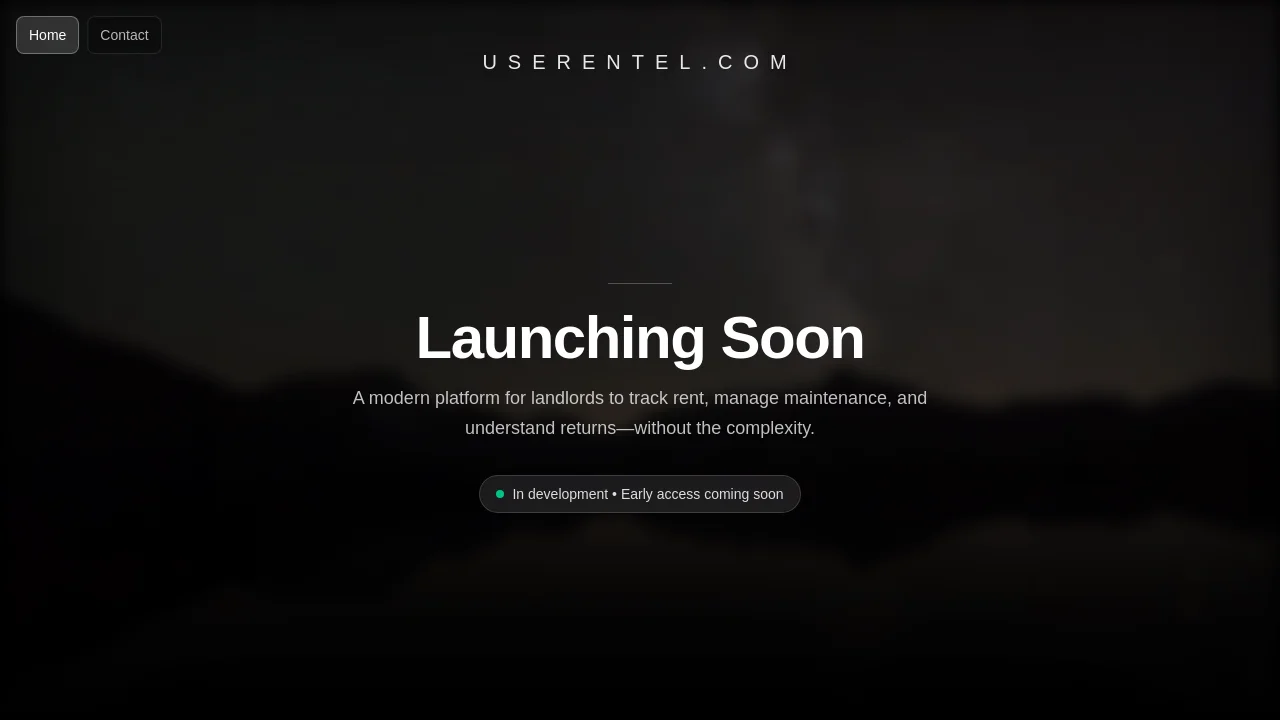
| Title: | RENTEL |
| Description: | RENTEL — modern tools for landlords. Launching soon. |
| ip_address | 216.198.79.1 |
| country | US  |
| network_name | Amazon.com, Inc. |
| asn | AS16509 |
80/tcp | http | Vercel - |
443/tcp | https | Vercel - |
| Software / Version | Category |
|---|---|
| Next.js 16.1.6 | JavaScript frameworks, Web frameworks, Web servers, Static site generator |
| Next.js App Router | JavaScript frameworks, Web servers |
| Turbopack | Development |
| React | JavaScript frameworks |
| Vercel | PaaS |
| Webpack | Miscellaneous |
| Priority Hints | Performance |
| HSTS | Security |
Web Application Vulnerabilities
Evidence
| CVE | CVSS | EPSS Score | EPSS Percentile | Summary |
|---|---|---|---|---|
| CVE-2026-27980 | 6.9 | 0.00022 | 0.06221 | Next.js is a React framework for building full-stack web applications. Starting in version 10.0.0 and prior to version 16.1.7, the default Next.js image optimization disk cache (`/_next/image`) did not have a configurable upper bound, allowing unbounded cache growth. An attacker could generate many unique image-optimization variants and exhaust disk space, causing denial of service. This is fixed in version 16.1.7 by adding an LRU-backed disk cache with `images.maximumDiskCacheSize`, including eviction of least-recently-used entries when the limit is exceeded. Setting `maximumDiskCacheSize: 0` disables disk caching. If upgrading is not immediately possible, periodically clean `.next/cache/images` and/or reduce variant cardinality (e.g., tighten values for `images.localPatterns`, `images.remotePatterns`, and `images.qualities`). |
| CVE-2026-27979 | 6.9 | 0.00019 | 0.05366 | Next.js is a React framework for building full-stack web applications. Starting in version 16.0.1 and prior to version 16.1.7, a request containing the `next-resume: 1` header (corresponding with a PPR resume request) would buffer request bodies without consistently enforcing `maxPostponedStateSize` in certain setups. The previous mitigation protected minimal-mode deployments, but equivalent non-minimal deployments remained vulnerable to the same unbounded postponed resume-body buffering behavior. In applications using the App Router with Partial Prerendering capability enabled (via `experimental.ppr` or `cacheComponents`), an attacker could send oversized `next-resume` POST payloads that were buffered without consistent size enforcement in non-minimal deployments, causing excessive memory usage and potential denial of service. This is fixed in version 16.1.7 by enforcing size limits across all postponed-body buffering paths and erroring when limits are exceeded. If upgrading is not immediately possible, block requests containing the `next-resume` header, as this is never valid to be sent from an untrusted client. |
| CVE-2026-29057 | 6.3 | 0.00031 | 0.09014 | Next.js is a React framework for building full-stack web applications. Starting in version 9.5.0 and prior to versions 15.5.13 and 16.1.7, when Next.js rewrites proxy traffic to an external backend, a crafted `DELETE`/`OPTIONS` request using `Transfer-Encoding: chunked` could trigger request boundary disagreement between the proxy and backend. This could allow request smuggling through rewritten routes. An attacker could smuggle a second request to unintended backend routes (for example, internal/admin endpoints), bypassing assumptions that only the configured rewrite destination/path is reachable. This does not impact applications hosted on providers that handle rewrites at the CDN level, such as Vercel. The vulnerability originated in an upstream library vendored by Next.js. It is fixed in Next.js 15.5.13 and 16.1.7 by updating that dependency’s behavior so `content-length: 0` is added only when both `content-length` and `transfer-encoding` are absent, and `transfer-encoding` is no longer removed in that code path. If upgrading is not immediately possible, block chunked `DELETE`/`OPTIONS` requests on rewritten routes at the edge/proxy, and/or enforce authentication/authorization on backend routes. |
| CVE-2026-27978 | 5.3 | 0.00008 | 0.00702 | Next.js is a React framework for building full-stack web applications. Starting in version 16.0.1 and prior to version 16.1.7, `origin: null` was treated as a "missing" origin during Server Action CSRF validation. As a result, requests from opaque contexts (such as sandboxed iframes) could bypass origin verification instead of being validated as cross-origin requests. An attacker could induce a victim browser to submit Server Actions from a sandboxed context, potentially executing state-changing actions with victim credentials (CSRF). This is fixed in version 16.1.7 by treating `'null'` as an explicit origin value and enforcing host/origin checks unless `'null'` is explicitly allowlisted in `experimental.serverActions.allowedOrigins`. If upgrading is not immediately possible, add CSRF tokens for sensitive Server Actions, prefer `SameSite=Strict` on sensitive auth cookies, and/or do not allow `'null'` in `serverActions.allowedOrigins` unless intentionally required and additionally protected. |
| CVE-2026-27977 | 2.3 | 0.00007 | 0.00486 | Next.js is a React framework for building full-stack web applications. Starting in version 16.0.1 and prior to version 16.1.7, in `next dev`, cross-site protection for internal websocket endpoints could treat `Origin: null` as a bypass case even if `allowedDevOrigins` is configured, allowing privacy-sensitive/opaque contexts (for example sandboxed documents) to connect unexpectedly. If a dev server is reachable from attacker-controlled content, an attacker may be able to connect to the HMR websocket channel and interact with dev websocket traffic. This affects development mode only. Apps without a configured `allowedDevOrigins` still allow connections from any origin. The issue is fixed in version 16.1.7 by validating `Origin: null` through the same cross-site origin-allowance checks used for other origins. If upgrading is not immediately possible, do not expose `next dev` to untrusted networks and/or block websocket upgrades to `/_next/webpack-hmr` when `Origin` is `null` at the proxy. |
Vulnerability description
Outdated or vulnerable software components include versions of server-side software that are no longer supported or have known, publicly disclosed vulnerabilities. Using outdated software significantly increases the attack surface of a system and may allow unauthorized access, data leaks, or service disruptions. Vulnerabilities in these components are often well-documented and actively exploited by attackers. Without security patches or vendor support, any weaknesses remain unmitigated, exposing the application to risks. In some cases, even after patching, the reported version may remain unchanged, requiring manual verification.
Risk description
The risk is that an attacker could search for an appropriate exploit (or create one himself) for any of these vulnerabilities and use it to attack the system. Since the vulnerabilities were discovered using only version-based testing, the risk level for this finding will not exceed 'high' severity. Critical risks will be assigned to vulnerabilities identified through accurate active testing methods.
Recommendation
In order to eliminate the risk of these vulnerabilities, we recommend you check the installed software version and upgrade to the latest version.
Classification
| CWE | CWE-1035 |
| OWASP Top 10 - 2017 | |
| OWASP Top 10 - 2021 |
Evidence
| URL | Evidence |
|---|---|
| https://userentel.com/ | Response does not include the HTTP Content-Security-Policy security header or meta tag |
Vulnerability description
We noticed that the target application lacks the Content-Security-Policy (CSP) header in its HTTP responses. The CSP header is a security measure that instructs web browsers to enforce specific security rules, effectively preventing the exploitation of Cross-Site Scripting (XSS) vulnerabilities.
Risk description
The risk is that if the target application is vulnerable to XSS, lack of this header makes it easily exploitable by attackers.
Recommendation
Configure the Content-Security-Header to be sent with each HTTP response in order to apply the specific policies needed by the application.
Classification
| CWE | CWE-1021 |
| OWASP Top 10 - 2017 | |
| OWASP Top 10 - 2021 |
Evidence
| URL | Evidence |
|---|---|
| https://userentel.com/ | Response headers do not include the X-Content-Type-Options HTTP security header |
Vulnerability description
We noticed that the target application's server responses lack the X-Content-Type-Options header. This header is particularly important for preventing Internet Explorer from reinterpreting the content of a web page (MIME-sniffing) and thus overriding the value of the Content-Type header.
Risk description
The risk is that lack of this header could make possible attacks such as Cross-Site Scripting or phishing in Internet Explorer browsers.
Recommendation
We recommend setting the X-Content-Type-Options header such as `X-Content-Type-Options: nosniff`.
Classification
| CWE | CWE-693 |
| OWASP Top 10 - 2017 | |
| OWASP Top 10 - 2021 |
Evidence
| Software / Version | Category |
|---|---|
| Next.js 16.1.6 | JavaScript frameworks, Web frameworks, Web servers, Static site generator |
| Next.js App Router | JavaScript frameworks, Web servers |
| Turbopack | Development |
| React | JavaScript frameworks |
| Vercel | PaaS |
| Webpack | Miscellaneous |
| Priority Hints | Performance |
| HSTS | Security |
Vulnerability description
We noticed that server software and technology details are exposed, potentially aiding attackers in tailoring specific exploits against identified systems and versions.
Risk description
The risk is that an attacker could use this information to mount specific attacks against the identified software type and version.
Recommendation
We recommend you to eliminate the information which permits the identification of software platform, technology, server and operating system: HTTP server headers, HTML meta information, etc.
Classification
| CWE | CWE-200 |
| OWASP Top 10 - 2017 | |
| OWASP Top 10 - 2021 |
Evidence
| URL | Evidence |
|---|---|
| https://userentel.com/ | Response headers do not include the Referrer-Policy HTTP security header as well as the |
Vulnerability description
We noticed that the target application's server responses lack the Referrer-Policy HTTP header, which controls how much referrer information the browser will send with each request originated from the current web application.
Risk description
The risk is that if a user visits a web page (e.g. "http://example.com/pricing/") and clicks on a link from that page going to e.g. "https://www.google.com", the browser will send to Google the full originating URL in the `Referer` header, assuming the Referrer-Policy header is not set. The originating URL could be considered sensitive information and it could be used for user tracking.
Recommendation
The Referrer-Policy header should be configured on the server side to avoid user tracking and inadvertent information leakage. The value `no-referrer` of this header instructs the browser to omit the Referer header entirely.
Classification
| CWE | CWE-693 |
| OWASP Top 10 - 2017 | |
| OWASP Top 10 - 2021 |
Vulnerability description
We have noticed that the server is missing the security.txt file, which is considered a good practice for web security. It provides a standardized way for security researchers and the public to report security vulnerabilities or concerns by outlining the preferred method of contact and reporting procedures.
Risk description
There is no particular risk in not having a security.txt file for your server. However, this file is important because it offers a designated channel for reporting vulnerabilities and security issues.
Recommendation
We recommend you to implement the security.txt file according to the standard, in order to allow researchers or users report any security issues they find, improving the defensive mechanisms of your server.
Classification
| CWE | CWE-1188 |
| OWASP Top 10 - 2017 | |
| OWASP Top 10 - 2021 |
Infrastructure Vulnerabilities
Evidence
We found insecure DNS cookie usage on the following nameservers: ns43.domaincontrol.com, ns44.domaincontrol.com
Vulnerability description
We found that the server does not implement DNS Cookies or uses them insecurely. DNS Cookies help prevent DNS-based attacks, such as spoofing and amplification attacks.
Risk description
The risk exists because without DNS Cookies, the server is vulnerable to DNS spoofing and amplification attacks. Attackers can manipulate responses or use the server in distributed denial-of-service (DDoS) attacks, compromising network availability and security.
Recommendation
We recommend enabling DNS Cookies to prevent spoofed DNS responses. Ensure proper cookie validation is implemented to mitigate DNS amplification attacks. Regularly update DNS servers to support the latest DNS security features.
Evidence
| Domain Queried | DNS Record Type | Description | Value |
|---|---|---|---|
| _dmarc.userentel.com | TXT | Text record | "v=DMARC1; p=quarantine; adkim=r; aspf=r; rua=mailto:dmarc_rua@onsecureserver.net;" |
Vulnerability description
We found that the DMARC record for the domain is not configured with sp policy, meaning that no policy is enforced for subdomains. When a DMARC record does not include a subdomain policy (sp directive), subdomains are not explicitly covered by the main domain's DMARC policy. This means that emails sent from subdomains (e.g., sub.example.com) may not be subject to the same DMARC enforcement as the main domain (example.com). As a result, attackers could potentially spoof emails from subdomains without being blocked or flagged, even if the main domain has a strict DMARC policy.
Risk description
Without a subdomain policy (sp directive) in the DMARC record, subdomains are not protected by the same DMARC enforcement as the main domain, leaving them vulnerable to spoofing attacks. This inconsistency can be exploited by attackers to send phishing emails from subdomains, undermining the organization’s overall email security.
Recommendation
To mitigate the risk, we recommend configuring the DMARC record with a subdomain policy by adding the sp=reject or sp=quarantine directive. This will extend DMARC enforcement to all subdomains, preventing spoofing attempts and maintaining consistent security across both the main domain and its subdomains.
Evidence
| Domain Queried | DNS Record Type | Description | Value |
|---|---|---|---|
| _dmarc.userentel.com | TXT | Text record | "v=DMARC1; p=quarantine; adkim=r; aspf=r; rua=mailto:dmarc_rua@onsecureserver.net;" |
Vulnerability description
We found that the target uses p=quarantine in the DMARC policy. When a DMARC policy is set to p=quarantine, emails that fail DMARC validation are delivered but placed in the recipient’s spam or junk folder. Although it offers some protection, this policy is less strict than p=reject, which blocks such emails entirely.
Risk description
While emails failing DMARC validation are sent to the spam folder, users may still retrieve them from there, leading to a higher risk of phishing and spoofing attacks succeeding. Moreover, less strict enforcement may allow more fraudulent emails to reach user inboxes if misclassified.
Recommendation
We recommend considering moving to a stricter policy, such as p=reject, where emails that fail DMARC validation are completely rejected rather than delivered to spam folders. This reduces the risk of users interacting with potentially malicious emails.
Evidence
We checked 2056 selectors but found no DKIM records.
Vulnerability description
We found that no DKIM record was configured. When a DKIM (DomainKeys Identified Mail) record is not present for a domain, it means that outgoing emails from that domain are not cryptographically signed. DKIM is a critical component of email authentication, allowing recipients to verify that an email was genuinely sent from an authorized server and that the message has not been altered in transit. The absence of a DKIM record leaves the domain vulnerable to email spoofing and phishing attacks, as attackers can send fraudulent emails that appear to originate from the domain without any cryptographic verification.
Risk description
Without a DKIM record, recipients have no way of verifying the integrity or authenticity of emails sent from the domain. This increases the likelihood of phishing and spoofing attacks, where malicious actors impersonate the domain to send fraudulent emails. This can lead to significant security incidents, such as credential theft, financial fraud, or the distribution of malware. Additionally, many email providers use DKIM as part of their spam and reputation filters, meaning that emails from a domain without DKIM may be flagged as spam or rejected, impacting the deliverability and reputation of legitimate emails.
Recommendation
We recommend implementing DKIM for your domain to enhance email security and protect your brand from email-based attacks. Generate a DKIM key pair (public and private keys), publish the public key in the DNS under the appropriate selector, and configure your email servers to sign outgoing messages using the private key. Ensure that the DKIM key length is at least 1024 bits to prevent cryptographic attacks. Regularly monitor DKIM signatures to ensure the system is functioning correctly and update keys periodically to maintain security.
Evidence
| Domain Queried | DNS Record Type | Description | Value |
|---|---|---|---|
| _dmarc.userentel.com | TXT | Text record | "v=DMARC1; p=quarantine; adkim=r; aspf=r; rua=mailto:dmarc_rua@onsecureserver.net;" |
Vulnerability description
We found that the DMARC record for the domain is not configured with ruf tag. A missing ruf (forensic reporting) tag in a DMARC record indicates that the domain owner has not enabled the collection of detailed failure reports. Forensic reports provide valuable insights into specific instances where emails fail DMARC authentication. Without the ruf tag, the domain administrator loses the ability to receive and analyze these reports, making it difficult to investigate individual email failures or identify targeted phishing or spoofing attacks that may be exploiting weaknesses in the email authentication setup.
Risk description
Without forensic reports (ruf), domain owners have limited visibility into the specifics of failed DMARC validation. This means potential malicious activity, such as email spoofing or phishing attempts, might go unnoticed until they result in more significant security breaches or reputational damage. Forensic reports allow for quick response to email abuses by providing detailed information about the failure, including the header information of the emails involved. The absence of this data hampers an organization's ability to identify and mitigate threats targeting its domain, increasing the risk of ongoing spoofing and fraud.
Recommendation
We recommend configuring the ruf tag in the DMARC record. This tag specifies where forensic reports should be sent, providing the domain owner with detailed data on DMARC validation failures. Forensic reports allow administrators to analyze why certain emails failed authentication, making it easier to fine-tune DMARC policies or address potential vulnerabilities. Ensure that the ruf email address belongs to a secure and trusted location capable of handling sensitive email data.
Evidence
| Software / Version | Category |
|---|---|
| Vercel | PaaS |
| HSTS | Security |
Vulnerability description
We noticed that server software and technology details are exposed, potentially aiding attackers in tailoring specific exploits against identified systems and versions.
Risk description
The risk is that an attacker could use this information to mount specific attacks against the identified software type and version.
Recommendation
We recommend you to eliminate the information which permits the identification of software platform, technology, server and operating system: HTTP server headers, HTML meta information, etc.
Evidence
| Domain Queried | DNS Record Type | Description | Value |
|---|---|---|---|
| userentel.com | A | IPv4 address | 216.198.79.1 |
| userentel.com | NS | Name server | ns43.domaincontrol.com |
| userentel.com | NS | Name server | ns44.domaincontrol.com |
| userentel.com | MX | Mail server | 0 userentel-com.mail.protection.outlook.com |
| userentel.com | SOA | Start of Authority | ns43.domaincontrol.com. dns.jomax.net. 2026022801 28800 7200 604800 600 |
| userentel.com | TXT | Text record | "v=verifydomain MS=2354024" |
| userentel.com | SPF | Sender Policy Framework | "v=spf1 include:spf.protection.outlook.com -all" |
| _dmarc.userentel.com | TXT | Text record | "v=DMARC1; p=quarantine; adkim=r; aspf=r; rua=mailto:dmarc_rua@onsecureserver.net;" |
Risk description
An initial step for an attacker aiming to learn about an organization involves conducting searches on its domain names to uncover DNS records associated with the organization. This strategy aims to amass comprehensive insights into the target domain, enabling the attacker to outline the organization's external digital landscape. This gathered intelligence may subsequently serve as a foundation for launching attacks, including those based on social engineering techniques. DNS records pointing to services or servers that are no longer in use can provide an attacker with an easy entry point into the network.
Recommendation
We recommend reviewing all DNS records associated with the domain and identifying and removing unused or obsolete records.
Evidence
| Operating System | Accuracy |
|---|---|
| Android 5.0.1 | 90% |
Vulnerability description
OS Detection
Evidence
| Domain Queried | DNS Record Type | Description | Value |
|---|---|---|---|
| userentel.com | SPF | Sender Policy Framework | "v=spf1 include:spf.protection.outlook.com -all" |