Vulnerability Scan Result

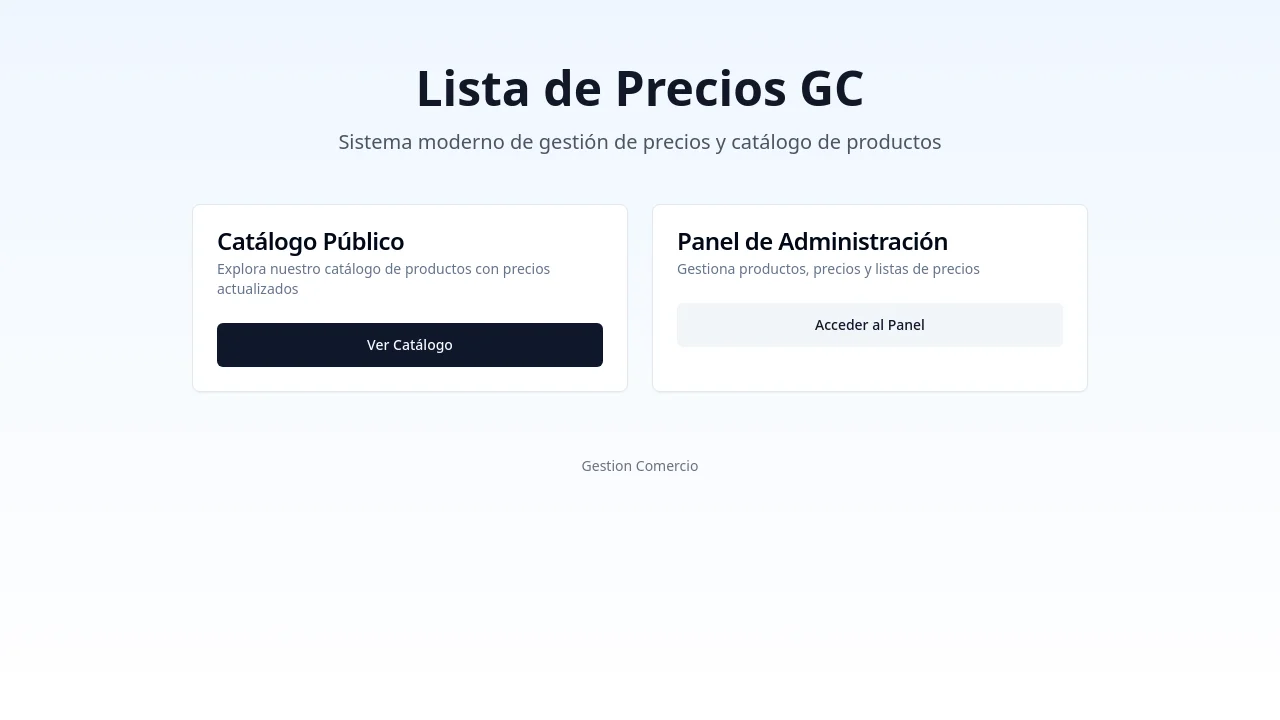
| Title: | Lista de Precios GC |
| Description: | Sistema de gestión de precios y catálogo de productos |
| ip_address | 190.57.246.107 |
| country | AR  |
| network_name | Gigared S.A. |
| asn | AS20207 |
80/tcp | http | OpenResty web app server - |
81/tcp | http | OpenResty web app server - |
443/tcp | https | openresty - |
3306/tcp | mysql | MySQL - |
3389/tcp | ms-wbt-server | Microsoft Terminal Services - |
5004/tcp | avt-profile-1 | - - |
5051/tcp | ssh | OpenSSH 9.6p1 Ubuntu 3ubuntu13.14 |
5432/tcp | postgresql | PostgreSQL DB 9.6.0 or later |
8008/tcp | http | pve-api-daemon/3.0 - |
| Software / Version | Category |
|---|---|
| Lucide | Font scripts |
| Next.js 14.2.33 | JavaScript frameworks, Web frameworks, Web servers, Static site generator |
| Next.js App Router | JavaScript frameworks, Web servers |
| Nginx | Web servers, Reverse proxies |
| OpenResty | Web servers |
| React | JavaScript frameworks |
| Webpack | Miscellaneous |
| Priority Hints | Performance |
| HSTS | Security |
Web Application Vulnerabilities
Evidence
| CVE | CVSS | EPSS Score | EPSS Percentile | Summary |
|---|---|---|---|---|
| CVE-2025-55184 | 7.5 | 0.36988 | 0.97178 | A pre-authentication denial of service vulnerability exists in React Server Components versions 19.0.0, 19.0.1 19.1.0, 19.1.1, 19.1.2, 19.2.0 and 19.2.1, including the following packages: react-server-dom-parcel, react-server-dom-turbopack, and react-server-dom-webpack. The vulnerable code unsafely deserializes payloads from HTTP requests to Server Function endpoints, which can cause an infinite loop that hangs the server process and may prevent future HTTP requests from being served. |
| CVE-2026-27980 | 6.9 | 0.00022 | 0.06242 | Next.js is a React framework for building full-stack web applications. Starting in version 10.0.0 and prior to version 16.1.7, the default Next.js image optimization disk cache (`/_next/image`) did not have a configurable upper bound, allowing unbounded cache growth. An attacker could generate many unique image-optimization variants and exhaust disk space, causing denial of service. This is fixed in version 16.1.7 by adding an LRU-backed disk cache with `images.maximumDiskCacheSize`, including eviction of least-recently-used entries when the limit is exceeded. Setting `maximumDiskCacheSize: 0` disables disk caching. If upgrading is not immediately possible, periodically clean `.next/cache/images` and/or reduce variant cardinality (e.g., tighten values for `images.localPatterns`, `images.remotePatterns`, and `images.qualities`). |
| CVE-2026-29057 | 6.3 | 0.00031 | 0.08972 | Next.js is a React framework for building full-stack web applications. Starting in version 9.5.0 and prior to versions 15.5.13 and 16.1.7, when Next.js rewrites proxy traffic to an external backend, a crafted `DELETE`/`OPTIONS` request using `Transfer-Encoding: chunked` could trigger request boundary disagreement between the proxy and backend. This could allow request smuggling through rewritten routes. An attacker could smuggle a second request to unintended backend routes (for example, internal/admin endpoints), bypassing assumptions that only the configured rewrite destination/path is reachable. This does not impact applications hosted on providers that handle rewrites at the CDN level, such as Vercel. The vulnerability originated in an upstream library vendored by Next.js. It is fixed in Next.js 15.5.13 and 16.1.7 by updating that dependency’s behavior so `content-length: 0` is added only when both `content-length` and `transfer-encoding` are absent, and `transfer-encoding` is no longer removed in that code path. If upgrading is not immediately possible, block chunked `DELETE`/`OPTIONS` requests on rewritten routes at the edge/proxy, and/or enforce authentication/authorization on backend routes. |
| CVE-2025-59471 | 5.9 | 0.00027 | 0.07677 | A denial of service vulnerability exists in self-hosted Next.js applications that have `remotePatterns` configured for the Image Optimizer. The image optimization endpoint (`/_next/image`) loads external images entirely into memory without enforcing a maximum size limit, allowing an attacker to cause out-of-memory conditions by requesting optimization of arbitrarily large images. This vulnerability requires that `remotePatterns` is configured to allow image optimization from external domains and that the attacker can serve or control a large image on an allowed domain. Strongly consider upgrading to 15.5.10 or 16.1.5 to reduce risk and prevent availability issues in Next applications. |
Vulnerability description
Outdated or vulnerable software components include versions of server-side software that are no longer supported or have known, publicly disclosed vulnerabilities. Using outdated software significantly increases the attack surface of a system and may allow unauthorized access, data leaks, or service disruptions. Vulnerabilities in these components are often well-documented and actively exploited by attackers. Without security patches or vendor support, any weaknesses remain unmitigated, exposing the application to risks. In some cases, even after patching, the reported version may remain unchanged, requiring manual verification.
Risk description
The risk is that an attacker could search for an appropriate exploit (or create one himself) for any of these vulnerabilities and use it to attack the system. Since the vulnerabilities were discovered using only version-based testing, the risk level for this finding will not exceed 'high' severity. Critical risks will be assigned to vulnerabilities identified through accurate active testing methods.
Recommendation
In order to eliminate the risk of these vulnerabilities, we recommend you check the installed software version and upgrade to the latest version.
Classification
| CWE | CWE-1035 |
| OWASP Top 10 - 2017 | |
| OWASP Top 10 - 2021 |
Evidence
| Software / Version | Category |
|---|---|
| Lucide | Font scripts |
| Next.js 14.2.33 | JavaScript frameworks, Web frameworks, Web servers, Static site generator |
| Next.js App Router | JavaScript frameworks, Web servers |
| Nginx | Web servers, Reverse proxies |
| OpenResty | Web servers |
| React | JavaScript frameworks |
| Webpack | Miscellaneous |
| Priority Hints | Performance |
| HSTS | Security |
Vulnerability description
We noticed that server software and technology details are exposed, potentially aiding attackers in tailoring specific exploits against identified systems and versions.
Risk description
The risk is that an attacker could use this information to mount specific attacks against the identified software type and version.
Recommendation
We recommend you to eliminate the information which permits the identification of software platform, technology, server and operating system: HTTP server headers, HTML meta information, etc.
Classification
| CWE | CWE-200 |
| OWASP Top 10 - 2017 | |
| OWASP Top 10 - 2021 |
Evidence
| URL | Method | Parameters | Evidence |
|---|---|---|---|
| https://presupuestos.gestioncomercio.com/admin | GET | Headers: User-Agent=Mozilla/5.0 (Windows NT 10.0; Win64; x64) AppleWebKit/537.36 (KHTML, like Gecko) Chrome/108.0.0.0 Safari/537.36 | The following form sends inputs of type password plainly in the URL: ` |
| https://presupuestos.gestioncomercio.com/login | GET | Headers: User-Agent=Mozilla/5.0 (Windows NT 10.0; Win64; x64) AppleWebKit/537.36 (KHTML, like Gecko) Chrome/108.0.0.0 Safari/537.36 | The following form sends inputs of type password plainly in the URL: ` |
Vulnerability description
We found a form which is submitted using a GET method and has inputs of the type password. The end result is that passwords are submitted in URLs.
Risk description
Passwords submitted in URLs have a higher chance of being leaked. The main reason is that URLs can be leaked in browser cross-site requests via the Referer header. Additionally, URLs are usually stored in all kinds of logs. If any access or error logs of the server were publicly accessible, an attacker could also harvest password from it.
Recommendation
You should submit passwords using POST rather than GET. This way sensitive data won't be shared to other locations via URLs.
Classification
| CWE | CWE-598 |
| OWASP Top 10 - 2017 | |
| OWASP Top 10 - 2021 |
Evidence
| URL | Evidence |
|---|---|
| https://presupuestos.gestioncomercio.com/ | Response headers include the HTTP Content-Security-Policy security header with the following security issues: |
Vulnerability description
We noticed that the Content-Security-Policy (CSP) header configured for the web application includes unsafe directives. The CSP header activates a protection mechanism implemented in web browsers which prevents exploitation of Cross-Site Scripting vulnerabilities (XSS) by restricting the sources from which content can be loaded or executed.
Risk description
For example, if the unsafe-inline directive is present in the CSP header, the execution of inline scripts and event handlers is allowed. This can be exploited by an attacker to execute arbitrary JavaScript code in the context of the vulnerable application.
Recommendation
Remove the unsafe values from the directives, adopt nonces or hashes for safer inclusion of inline scripts if they are needed, and explicitly define the sources from which scripts, styles, images or other resources can be loaded.
Classification
| CWE | CWE-1021 |
| OWASP Top 10 - 2017 | |
| OWASP Top 10 - 2021 |
Vulnerability description
We have noticed that the server is missing the security.txt file, which is considered a good practice for web security. It provides a standardized way for security researchers and the public to report security vulnerabilities or concerns by outlining the preferred method of contact and reporting procedures.
Risk description
There is no particular risk in not having a security.txt file for your server. However, this file is important because it offers a designated channel for reporting vulnerabilities and security issues.
Recommendation
We recommend you to implement the security.txt file according to the standard, in order to allow researchers or users report any security issues they find, improving the defensive mechanisms of your server.
Classification
| CWE | CWE-1188 |
| OWASP Top 10 - 2017 | |
| OWASP Top 10 - 2021 |
Evidence
| URL | Evidence |
|---|---|
| https://presupuestos.gestioncomercio.com/admin |
|
Vulnerability description
We have discovered that the target application presents a login interface that could be a potential target for attacks. While login interfaces are standard for user authentication, they can become vulnerabilities if not properly secured.
Risk description
The risk is that an attacker could use this interface to mount brute force attacks against known passwords and usernames combinations leaked throughout the web.
Recommendation
Ensure each interface is not bypassable using common knowledge of the application or leaked credentials using occasional password audits.
Classification
| CWE | CWE-287 |
| OWASP Top 10 - 2017 | |
| OWASP Top 10 - 2021 |
Evidence
| URL | Method | Parameters | Evidence |
|---|---|---|---|
| https://presupuestos.gestioncomercio.com/api/uploads/bundles | GET | Headers: User-Agent=Mozilla/5.0 (Windows NT 10.0; Win64; x64) AppleWebKit/537.36 (KHTML, like Gecko) Chrome/108.0.0.0 Safari/537.36 | Possible API endpoint found at |
| https://presupuestos.gestioncomercio.com/api/uploads/bundles/4ba10b4f-8d6f-4b94-8c33-caf84f8c733a | GET | Headers: User-Agent=Mozilla/5.0 (Windows NT 10.0; Win64; x64) AppleWebKit/537.36 (KHTML, like Gecko) Chrome/108.0.0.0 Safari/537.36 | Possible API endpoint found at |
| https://presupuestos.gestioncomercio.com/api/uploads/products/069bb05d-07e5-4597-a222-a1b747e09ad2 | GET | Headers: User-Agent=Mozilla/5.0 (Windows NT 10.0; Win64; x64) AppleWebKit/537.36 (KHTML, like Gecko) Chrome/108.0.0.0 Safari/537.36 | Possible API endpoint found at |
| https://presupuestos.gestioncomercio.com/api/uploads/products/67c7a7c3-c999-4164-998c-fd9c9a78c175 | GET | Headers: User-Agent=Mozilla/5.0 (Windows NT 10.0; Win64; x64) AppleWebKit/537.36 (KHTML, like Gecko) Chrome/108.0.0.0 Safari/537.36 | Possible API endpoint found at |
Vulnerability description
We found API endpoints while crawling the given web application.
Risk description
These endpoints may represent an attack surface for malicious actors interested in API-specific vulnerabilities.
Recommendation
Use the API Scanner to perform a more thorough vulnerability check for these endpoints, if an API specification is present.
Infrastructure Vulnerabilities
Evidence
We managed to detect a publicly accessible Remote Desktop Protocol (RDP) service. PORT STATE SERVICE VERSION 3389/tcp open ms-wbt-server Microsoft Terminal Services
Vulnerability description
We found that the Remote Desktop Protocol (RDP) service is publicly accessible. Attackers often look for the Remote Desktop Protocol service due to its capability to provide remote access and control of a server, usually one that operates on the Microsoft Windows operating system.
Risk description
Exposing this service online can enable attackers to launch authentication attacks, like guessing login credentials, potentially gaining unauthorized access. Attackers might use publicly available employee information for brute-force attacks. Vulnerabilities, such as unpatched software or protocol flaws, could also be exploited. An example is CVE-2019-0708 (Bluekeep) vulnerability. Additionally, integration with Active Directory Domain Services could allow attackers to move laterally across the network, accessing more systems and sensitive data.
Recommendation
We recommend turning off Remote Desktop Protocol access over the Internet and instead using a Virtual Private Network (VPN) that mandates two-factor authentication (2FA). Avoid permitting direct user authentication to Active Directory over the Internet to prevent attackers from engaging in password guessing or causing the lockout of legitimate domain user accounts. If the Remote Desktop Protocol service is essential for business purposes, limiting access to designated IP addresses is recommended.
Evidence
We managed to detect a publicly accessible PostgreSQL service. PORT STATE SERVICE VERSION 5432/tcp open postgresql PostgreSQL DB 9.6.0 or later
Vulnerability description
We found that the PostgreSQL service is publicly accessible. This service often holds critical organizational data, making it a potential prime target for determined attackers.
Risk description
The risk exists that an attacker exploits this issue by launching a password-based attack on the PostgreSQL service. If an attacker identifies a correct set of login details, they could gain access to the database and start enumerating, potentially revealing confidential information. Moreover, such vulnerabilities could lead to other forms of attacks, including privilege escalation, allowing attackers to run system commands and move laterally to other systems in the internal network.
Recommendation
We recommend ensuring that the PostgreSQL service is not publicly accessible. The PostgreSQL service should be safeguarded behind a firewall or made available only to users connected through a Virtual Private Network (VPN) server. However, if the PostgreSQL service is required to be directly accessible over the Internet, we recommend reconfiguring it such that it is accessible only from known IP addresses.
Evidence
We managed to detect a publicly accessible MySQL service. PORT STATE SERVICE VERSION 3306/tcp open mysql MySQL
Vulnerability description
We identified that the MySQL service is publicly accessible. MySQL serves as a common database for numerous web applications and services for data storage, making it a potential prime target for determined attackers.
Risk description
The risk exists that an attacker exploits this issue by launching a password-based attack on the MySQL service. Furthermore, they could exploit zero-day vulnerabilities to obtain remote access to the MySQL database server, thereby gaining complete control over its operating system and associated services. Such an attack could lead to the exposure of confidential or sensitive information.
Recommendation
We recommend turning off public Internet access to MySQL and opting for a Virtual Private Network (VPN) that enforces two-factor authentication (2FA). Avoid enabling direct user authentication to the MySQL service via the Internet, as this could enable attackers to engage in password-guessing and potentially initiate attacks leading to complete control. However, if the MySQL service is required to be directly accessible over the Internet, we recommend reconfiguring it to be accessible only from known IP addresses.
Evidence
We managed to detect a publicly accessible SSH service. Starting Nmap ( https://nmap.org ) at 2026-05-04 06:15 EEST Nmap scan report for presupuestos.gestioncomercio.com (190.57.246.107) Host is up (0.23s latency).
PORT STATE SERVICE VERSION 5051/tcp open ssh OpenSSH 9.6p1 Ubuntu 3ubuntu13.14 (Ubuntu Linux; protocol 2.0) | ssh-auth-methods: | Supported authentication methods: | publickey |_ password Service Info: OS: Linux; CPE: cpe:/o:linux:linux_kernel
Service detection performed. Please report any incorrect results at https://nmap.org/submit/ . Nmap done: 1 IP address (1 host up) scanned in 3.40 seconds
Vulnerability description
We found that the SSH service with username/password authentication is publicly accessible. Network administrators often use remote administration protocols to control devices like switches, routers, and other essential systems. However, allowing these services to be accessible via the Internet can increase security risks, creating potential opportunities for attacks on the organization.
Risk description
Exposing this service online with username/password authentication can enable attackers to launch authentication attacks, like guessing login credentials, and potentially gaining unauthorized access. Vulnerabilities, such as unpatched software, protocol flaws, or backdoors could also be exploited. An example is the CVE-2024-3094 (XZ Utils Backdoor) vulnerability.
Recommendation
We recommend turning off SSH with username/password authentication access over the Internet and instead using a Virtual Private Network (VPN) that mandates two-factor authentication (2FA). If the SSH service is essential for business purposes, we recommend limiting access only from designated IP addresses using a firewall. Furthermore, it is advisable to utilize SSH Public Key Authentication since it employs a key pair to verify the identity of a user or process.
Evidence
| Software / Version | Category |
|---|---|
| Nginx | Web servers, Reverse proxies |
| OpenResty | Web servers |
| HSTS | Security |
Vulnerability description
We noticed that server software and technology details are exposed, potentially aiding attackers in tailoring specific exploits against identified systems and versions.
Risk description
The risk is that an attacker could use this information to mount specific attacks against the identified software type and version.
Recommendation
We recommend you to eliminate the information which permits the identification of software platform, technology, server and operating system: HTTP server headers, HTML meta information, etc.
Evidence
| Domain Queried | DNS Record Type | Description | Value |
|---|---|---|---|
| presupuestos.gestioncomercio.com | A | IPv4 address | 190.57.246.107 |
Risk description
An initial step for an attacker aiming to learn about an organization involves conducting searches on its domain names to uncover DNS records associated with the organization. This strategy aims to amass comprehensive insights into the target domain, enabling the attacker to outline the organization's external digital landscape. This gathered intelligence may subsequently serve as a foundation for launching attacks, including those based on social engineering techniques. DNS records pointing to services or servers that are no longer in use can provide an attacker with an easy entry point into the network.
Recommendation
We recommend reviewing all DNS records associated with the domain and identifying and removing unused or obsolete records.
Evidence
| Software / Version | Category |
|---|---|
| Nginx | Web servers, Reverse proxies |
| OpenResty | Web servers |
Vulnerability description
We noticed that server software and technology details are exposed, potentially aiding attackers in tailoring specific exploits against identified systems and versions.
Risk description
The risk is that an attacker could use this information to mount specific attacks against the identified software type and version.
Recommendation
We recommend you to eliminate the information which permits the identification of software platform, technology, server and operating system: HTTP server headers, HTML meta information, etc.
Evidence
| Operating System | Accuracy |
|---|---|
| Windows | 100% |
Vulnerability description
OS Detection