Vulnerability Scan Result

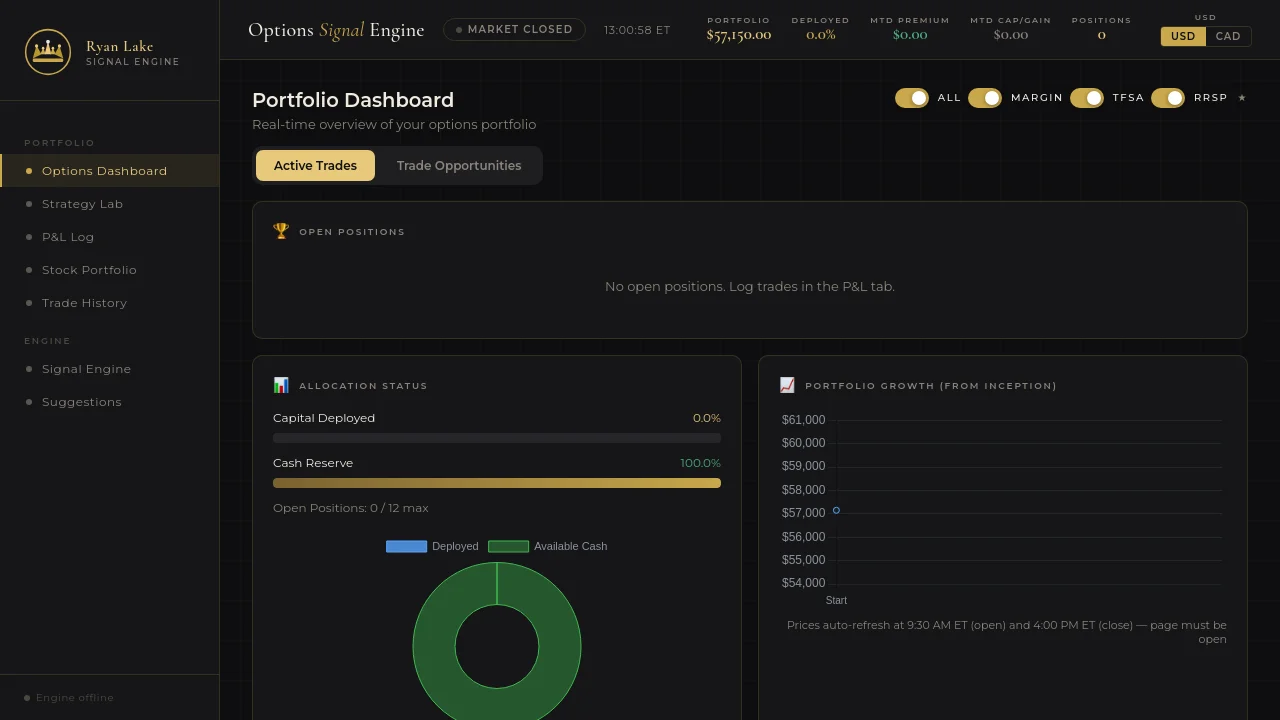
| Title: | Options Calculator Pro — Ryan Lake |
| Description: | No description found |
| ip_address | 138.197.165.134 |
| country | CA  |
| network_name | DigitalOcean |
| asn | AS14061 |
22/tcp | ssh | OpenSSH 9.6p1 Ubuntu 3ubuntu13.15 |
80/tcp | http | Caddy httpd - |
443/tcp | https | - - |
5000/tcp | http | - - |
| Software / Version | Category |
|---|---|
| Caddy | Web servers |
| cdnjs | CDN |
| Google Font API | Font scripts |
| Flask 3.1.8 | Web frameworks, Web servers |
| Go | Programming languages |
| HTTP/3 | Miscellaneous |
| Python 3.12.3 | Programming languages |
| Chart.js 4.4.0 | JavaScript graphics |
| Cloudflare | CDN |
Web Application Vulnerabilities
Evidence
| CVE | CVSS | EPSS Score | EPSS Percentile | Summary |
|---|---|---|---|---|
| CVE-2024-7592 | 7.5 | 0.01018 | 0.77233 | There is a LOW severity vulnerability affecting CPython, specifically the 'http.cookies' standard library module. When parsing cookies that contained backslashes for quoted characters in the cookie value, the parser would use an algorithm with quadratic complexity, resulting in excess CPU resources being used while parsing the value. |
| CVE-2024-6232 | 7.5 | 0.04022 | 0.8848 | There is a MEDIUM severity vulnerability affecting CPython. Regular expressions that allowed excessive backtracking during tarfile.TarFile header parsing are vulnerable to ReDoS via specifically-crafted tar archives. |
| CVE-2026-4519 | 7 | 0.00024 | 0.06395 | The webbrowser.open() API would accept leading dashes in the URL which could be handled as command line options for certain web browsers. New behavior rejects leading dashes. Users are recommended to sanitize URLs prior to passing to webbrowser.open(). |
| CVE-2025-13836 | 6.3 | 0.00196 | 0.41594 | When reading an HTTP response from a server, if no read amount is specified, the default behavior will be to use Content-Length. This allows a malicious server to cause the client to read large amounts of data into memory, potentially causing OOM or other DoS. |
| CVE-2025-12781 | 6.3 | 0.00018 | 0.04672 | When passing data to the b64decode(), standard_b64decode(), and urlsafe_b64decode() functions in the "base64" module the characters "+/" will always be accepted, regardless of the value of "altchars" parameter, typically used to establish an "alternative base64 alphabet" such as the URL safe alphabet. This behavior matches what is recommended in earlier base64 RFCs, but newer RFCs now recommend either dropping characters outside the specified base64 alphabet or raising an error. The old behavior has the possibility of causing data integrity issues. This behavior can only be insecure if your application uses an alternate base64 alphabet (without "+/"). If your application does not use the "altchars" parameter or the urlsafe_b64decode() function, then your application does not use an alternative base64 alphabet. The attached patches DOES NOT make the base64-decode behavior raise an error, as this would be a change in behavior and break existing programs. Instead, the patch deprecates the behavior which will be replaced with the newly recommended behavior in a future version of Python. Users are recommended to mitigate by verifying user-controlled inputs match the base64 alphabet they are expecting or verify that their application would not be affected if the b64decode() functions accepted "+" or "/" outside of altchars. |
Vulnerability description
Outdated or vulnerable software components include versions of server-side software that are no longer supported or have known, publicly disclosed vulnerabilities. Using outdated software significantly increases the attack surface of a system and may allow unauthorized access, data leaks, or service disruptions. Vulnerabilities in these components are often well-documented and actively exploited by attackers. Without security patches or vendor support, any weaknesses remain unmitigated, exposing the application to risks. In some cases, even after patching, the reported version may remain unchanged, requiring manual verification.
Risk description
The risk is that an attacker could search for an appropriate exploit (or create one himself) for any of these vulnerabilities and use it to attack the system. Since the vulnerabilities were discovered using only version-based testing, the risk level for this finding will not exceed 'high' severity. Critical risks will be assigned to vulnerabilities identified through accurate active testing methods.
Recommendation
In order to eliminate the risk of these vulnerabilities, we recommend you check the installed software version and upgrade to the latest version.
Classification
| CWE | CWE-1035 |
| OWASP Top 10 - 2017 | |
| OWASP Top 10 - 2021 |
Evidence
| URL | Evidence |
|---|---|
| https://138-197-165-134.nip.io/ | Response does not include the HTTP Content-Security-Policy security header or meta tag |
Vulnerability description
We noticed that the target application lacks the Content-Security-Policy (CSP) header in its HTTP responses. The CSP header is a security measure that instructs web browsers to enforce specific security rules, effectively preventing the exploitation of Cross-Site Scripting (XSS) vulnerabilities.
Risk description
The risk is that if the target application is vulnerable to XSS, lack of this header makes it easily exploitable by attackers.
Recommendation
Configure the Content-Security-Header to be sent with each HTTP response in order to apply the specific policies needed by the application.
Classification
| CWE | CWE-1021 |
| OWASP Top 10 - 2017 | |
| OWASP Top 10 - 2021 |
Evidence
| Software / Version | Category |
|---|---|
| Caddy | Web servers |
| cdnjs | CDN |
| Google Font API | Font scripts |
| Flask 3.1.8 | Web frameworks, Web servers |
| Go | Programming languages |
| HTTP/3 | Miscellaneous |
| Python 3.12.3 | Programming languages |
| Chart.js 4.4.0 | JavaScript graphics |
| Cloudflare | CDN |
Vulnerability description
We noticed that server software and technology details are exposed, potentially aiding attackers in tailoring specific exploits against identified systems and versions.
Risk description
The risk is that an attacker could use this information to mount specific attacks against the identified software type and version.
Recommendation
We recommend you to eliminate the information which permits the identification of software platform, technology, server and operating system: HTTP server headers, HTML meta information, etc.
Classification
| CWE | CWE-200 |
| OWASP Top 10 - 2017 | |
| OWASP Top 10 - 2021 |
Evidence
| URL | Evidence |
|---|---|
| https://138-197-165-134.nip.io/ | Response headers do not include the Referrer-Policy HTTP security header as well as the |
Vulnerability description
We noticed that the target application's server responses lack the Referrer-Policy HTTP header, which controls how much referrer information the browser will send with each request originated from the current web application.
Risk description
The risk is that if a user visits a web page (e.g. "http://example.com/pricing/") and clicks on a link from that page going to e.g. "https://www.google.com", the browser will send to Google the full originating URL in the `Referer` header, assuming the Referrer-Policy header is not set. The originating URL could be considered sensitive information and it could be used for user tracking.
Recommendation
The Referrer-Policy header should be configured on the server side to avoid user tracking and inadvertent information leakage. The value `no-referrer` of this header instructs the browser to omit the Referer header entirely.
Classification
| CWE | CWE-693 |
| OWASP Top 10 - 2017 | |
| OWASP Top 10 - 2021 |
Evidence
| URL | Evidence |
|---|---|
| https://138-197-165-134.nip.io/ | Response headers do not include the X-Content-Type-Options HTTP security header |
Vulnerability description
We noticed that the target application's server responses lack the X-Content-Type-Options header. This header is particularly important for preventing Internet Explorer from reinterpreting the content of a web page (MIME-sniffing) and thus overriding the value of the Content-Type header.
Risk description
The risk is that lack of this header could make possible attacks such as Cross-Site Scripting or phishing in Internet Explorer browsers.
Recommendation
We recommend setting the X-Content-Type-Options header such as `X-Content-Type-Options: nosniff`.
Classification
| CWE | CWE-693 |
| OWASP Top 10 - 2017 | |
| OWASP Top 10 - 2021 |
Evidence
| URL | Evidence |
|---|---|
| https://138-197-165-134.nip.io/ | Response headers do not include the HTTP Strict-Transport-Security header |
Vulnerability description
We noticed that the target application lacks the HTTP Strict-Transport-Security header in its responses. This security header is crucial as it instructs browsers to only establish secure (HTTPS) connections with the web server and reject any HTTP connections.
Risk description
The risk is that lack of this header permits an attacker to force a victim user to initiate a clear-text HTTP connection to the server, thus opening the possibility to eavesdrop on the network traffic and extract sensitive information (e.g. session cookies).
Recommendation
The Strict-Transport-Security HTTP header should be sent with each HTTPS response. The syntax is as follows: `Strict-Transport-Security: max-age=<seconds>[; includeSubDomains]` The parameter `max-age` gives the time frame for requirement of HTTPS in seconds and should be chosen quite high, e.g. several months. A value below 7776000 is considered as too low by this scanner check. The flag `includeSubDomains` defines that the policy applies also for sub domains of the sender of the response.
Classification
| CWE | CWE-693 |
| OWASP Top 10 - 2017 | |
| OWASP Top 10 - 2021 |
Evidence
| URL | Method | Summary |
|---|---|---|
| https://138-197-165-134.nip.io/ | OPTIONS | We did a HTTP OPTIONS request. The server responded with a 405 status code and the header: `Allow: GET, HEAD` Request / Response |
Vulnerability description
We have noticed that the webserver responded with an Allow HTTP header when an OPTIONS HTTP request was sent. This method responds to requests by providing information about the methods available for the target resource.
Risk description
The only risk this might present nowadays is revealing debug HTTP methods that can be used on the server. This can present a danger if any of those methods can lead to sensitive information, like authentication information, secret keys.
Recommendation
We recommend that you check for unused HTTP methods or even better, disable the OPTIONS method. This can be done using your webserver configuration.
Classification
| CWE | CWE-16 |
| OWASP Top 10 - 2017 | |
| OWASP Top 10 - 2021 |
Infrastructure Vulnerabilities
Evidence
| CVE | CVSS | EPSS Score | EPSS Percentile | CISA KEV | Summary |
|---|---|---|---|---|---|
| CVE-2024-7592 | 7.5 | 0.01018 | 0.77233 | No | There is a LOW severity vulnerability affecting CPython, specifically the 'http.cookies' standard library module. When parsing cookies that contained backslashes for quoted characters in the cookie value, the parser would use an algorithm with quadratic complexity, resulting in excess CPU resources being used while parsing the value. |
| CVE-2024-6232 | 7.5 | 0.04022 | 0.8848 | No | There is a MEDIUM severity vulnerability affecting CPython. Regular expressions that allowed excessive backtracking during tarfile.TarFile header parsing are vulnerable to ReDoS via specifically-crafted tar archives. |
| CVE-2026-4519 | 7 | 0.00024 | 0.06395 | No | The webbrowser.open() API would accept leading dashes in the URL which could be handled as command line options for certain web browsers. New behavior rejects leading dashes. Users are recommended to sanitize URLs prior to passing to webbrowser.open(). |
| CVE-2025-13836 | 6.3 | 0.00196 | 0.41594 | No | When reading an HTTP response from a server, if no read amount is specified, the default behavior will be to use Content-Length. This allows a malicious server to cause the client to read large amounts of data into memory, potentially causing OOM or other DoS. |
| CVE-2025-12781 | 6.3 | 0.00018 | 0.04672 | No | When passing data to the b64decode(), standard_b64decode(), and urlsafe_b64decode() functions in the "base64" module the characters "+/" will always be accepted, regardless of the value of "altchars" parameter, typically used to establish an "alternative base64 alphabet" such as the URL safe alphabet. This behavior matches what is recommended in earlier base64 RFCs, but newer RFCs now recommend either dropping characters outside the specified base64 alphabet or raising an error. The old behavior has the possibility of causing data integrity issues. This behavior can only be insecure if your application uses an alternate base64 alphabet (without "+/"). If your application does not use the "altchars" parameter or the urlsafe_b64decode() function, then your application does not use an alternative base64 alphabet. The attached patches DOES NOT make the base64-decode behavior raise an error, as this would be a change in behavior and break existing programs. Instead, the patch deprecates the behavior which will be replaced with the newly recommended behavior in a future version of Python. Users are recommended to mitigate by verifying user-controlled inputs match the base64 alphabet they are expecting or verify that their application would not be affected if the b64decode() functions accepted "+" or "/" outside of altchars. |
Vulnerability description
Vulnerabilities found for Python 3.12.3
Risk description
These vulnerabilities expose the affected applications to the risk of unauthorized access to confidential data and possibly to denial of service attacks. An attacker could search for an appropriate exploit (or create one) for any of these vulnerabilities and use it to attack the system. Notes: - The vulnerabilities are identified based on the server's version.; - Only the first 5 vulnerabilities with the highest risk are shown for each port.; Since the vulnerabilities were discovered using only version-based testing, the risk level for this finding will not exceed "high" severity. Critical risks will be assigned to vulnerabilities identified through accurate active testing methods.
Recommendation
We recommend you to upgrade the affected software to the latest version in order to eliminate the risks imposed by these vulnerabilities.
Evidence
| CVE | CVSS | EPSS Score | EPSS Percentile | CISA KEV | Summary |
|---|---|---|---|---|---|
| CVE-2024-7592 | 7.5 | 0.01018 | 0.77233 | No | There is a LOW severity vulnerability affecting CPython, specifically the 'http.cookies' standard library module. When parsing cookies that contained backslashes for quoted characters in the cookie value, the parser would use an algorithm with quadratic complexity, resulting in excess CPU resources being used while parsing the value. |
| CVE-2024-6232 | 7.5 | 0.04022 | 0.8848 | No | There is a MEDIUM severity vulnerability affecting CPython. Regular expressions that allowed excessive backtracking during tarfile.TarFile header parsing are vulnerable to ReDoS via specifically-crafted tar archives. |
| CVE-2026-4519 | 7 | 0.00024 | 0.06395 | No | The webbrowser.open() API would accept leading dashes in the URL which could be handled as command line options for certain web browsers. New behavior rejects leading dashes. Users are recommended to sanitize URLs prior to passing to webbrowser.open(). |
| CVE-2025-13836 | 6.3 | 0.00196 | 0.41594 | No | When reading an HTTP response from a server, if no read amount is specified, the default behavior will be to use Content-Length. This allows a malicious server to cause the client to read large amounts of data into memory, potentially causing OOM or other DoS. |
| CVE-2025-12781 | 6.3 | 0.00018 | 0.04672 | No | When passing data to the b64decode(), standard_b64decode(), and urlsafe_b64decode() functions in the "base64" module the characters "+/" will always be accepted, regardless of the value of "altchars" parameter, typically used to establish an "alternative base64 alphabet" such as the URL safe alphabet. This behavior matches what is recommended in earlier base64 RFCs, but newer RFCs now recommend either dropping characters outside the specified base64 alphabet or raising an error. The old behavior has the possibility of causing data integrity issues. This behavior can only be insecure if your application uses an alternate base64 alphabet (without "+/"). If your application does not use the "altchars" parameter or the urlsafe_b64decode() function, then your application does not use an alternative base64 alphabet. The attached patches DOES NOT make the base64-decode behavior raise an error, as this would be a change in behavior and break existing programs. Instead, the patch deprecates the behavior which will be replaced with the newly recommended behavior in a future version of Python. Users are recommended to mitigate by verifying user-controlled inputs match the base64 alphabet they are expecting or verify that their application would not be affected if the b64decode() functions accepted "+" or "/" outside of altchars. |
Vulnerability description
Vulnerabilities found for Python 3.12.3
Risk description
These vulnerabilities expose the affected applications to the risk of unauthorized access to confidential data and possibly to denial of service attacks. An attacker could search for an appropriate exploit (or create one) for any of these vulnerabilities and use it to attack the system. Notes: - The vulnerabilities are identified based on the server's version.; - Only the first 5 vulnerabilities with the highest risk are shown for each port.; Since the vulnerabilities were discovered using only version-based testing, the risk level for this finding will not exceed "high" severity. Critical risks will be assigned to vulnerabilities identified through accurate active testing methods.
Recommendation
We recommend you to upgrade the affected software to the latest version in order to eliminate the risks imposed by these vulnerabilities.
Evidence
We managed to detect a publicly accessible SSH service. Starting Nmap ( https://nmap.org ) at 2026-04-18 20:03 EEST Nmap scan report for 138-197-165-134.nip.io (138.197.165.134) Host is up (0.12s latency).
PORT STATE SERVICE VERSION 22/tcp open ssh OpenSSH 9.6p1 Ubuntu 3ubuntu13.15 (Ubuntu Linux; protocol 2.0) | ssh-auth-methods: | Supported authentication methods: | publickey |_ password Service Info: OS: Linux; CPE: cpe:/o:linux:linux_kernel
Service detection performed. Please report any incorrect results at https://nmap.org/submit/ . Nmap done: 1 IP address (1 host up) scanned in 2.10 seconds
Vulnerability description
We found that the SSH service with username/password authentication is publicly accessible. Network administrators often use remote administration protocols to control devices like switches, routers, and other essential systems. However, allowing these services to be accessible via the Internet can increase security risks, creating potential opportunities for attacks on the organization.
Risk description
Exposing this service online with username/password authentication can enable attackers to launch authentication attacks, like guessing login credentials, and potentially gaining unauthorized access. Vulnerabilities, such as unpatched software, protocol flaws, or backdoors could also be exploited. An example is the CVE-2024-3094 (XZ Utils Backdoor) vulnerability.
Recommendation
We recommend turning off SSH with username/password authentication access over the Internet and instead using a Virtual Private Network (VPN) that mandates two-factor authentication (2FA). If the SSH service is essential for business purposes, we recommend limiting access only from designated IP addresses using a firewall. Furthermore, it is advisable to utilize SSH Public Key Authentication since it employs a key pair to verify the identity of a user or process.
Evidence
We found insecure EDNS configuration on the following nameservers: ns-do-sg.sslip.io, ns-hetzner.sslip.io, ns-ovh.sslip.io ns-do-sg.sslip.io:
ns-hetzner.sslip.io:
ns-ovh.sslip.io:
Vulnerability description
We found that the server does not properly implement EDNS (Extension Mechanisms for DNS). EDNS allows larger DNS packets and supports modern features such as DNSSEC.
Risk description
The risk exists because improper or missing EDNS support can lead to truncated responses, degraded DNS performance, and compatibility issues with DNSSEC. This exposes users to risks such as incomplete DNS resolution and failed DNSSEC validation.
Recommendation
We recommend ensuring the proper implementation of EDNS on the DNS server. Update the DNS server software to support EDNS fully, including modern features like DNSSEC. Regularly test DNS configurations to ensure compliance and performance.
Evidence
We found insecure DNS cookie usage on the following nameservers: ns-do-sg.sslip.io, ns-hetzner.sslip.io, ns-ovh.sslip.io
Vulnerability description
We found that the server does not implement DNS Cookies or uses them insecurely. DNS Cookies help prevent DNS-based attacks, such as spoofing and amplification attacks.
Risk description
The risk exists because without DNS Cookies, the server is vulnerable to DNS spoofing and amplification attacks. Attackers can manipulate responses or use the server in distributed denial-of-service (DDoS) attacks, compromising network availability and security.
Recommendation
We recommend enabling DNS Cookies to prevent spoofed DNS responses. Ensure proper cookie validation is implemented to mitigate DNS amplification attacks. Regularly update DNS servers to support the latest DNS security features.
Evidence
| Domain Queried | DNS Record Type | Description | Value |
|---|---|---|---|
| 138-197-165-134.nip.io | A | IPv4 address | 138.197.165.134 |
| 138-197-165-134.nip.io | NS | Name server | ns-do-sg.sslip.io |
| 138-197-165-134.nip.io | NS | Name server | ns-hetzner.sslip.io |
| 138-197-165-134.nip.io | NS | Name server | ns-ovh.sslip.io |
| 138-197-165-134.nip.io | MX | Mail server | 0 138-197-165-134.nip.io |
| 138-197-165-134.nip.io | SOA | Start of Authority | 138-197-165-134.nip.io. briancunnie.gmail.com. 20251225 900 900 1800 180 |
Risk description
An initial step for an attacker aiming to learn about an organization involves conducting searches on its domain names to uncover DNS records associated with the organization. This strategy aims to amass comprehensive insights into the target domain, enabling the attacker to outline the organization's external digital landscape. This gathered intelligence may subsequently serve as a foundation for launching attacks, including those based on social engineering techniques. DNS records pointing to services or servers that are no longer in use can provide an attacker with an easy entry point into the network.
Recommendation
We recommend reviewing all DNS records associated with the domain and identifying and removing unused or obsolete records.
Evidence
| Software / Version | Category |
|---|---|
| Python 3.12.3 | Programming languages |
| Chart.js 4.4.0 | JavaScript graphics |
| Flask 3.1.8 | Web frameworks, Web servers |
| Cloudflare | CDN |
| cdnjs | CDN |
Vulnerability description
We noticed that server software and technology details are exposed, potentially aiding attackers in tailoring specific exploits against identified systems and versions.
Risk description
The risk is that an attacker could use this information to mount specific attacks against the identified software type and version.
Recommendation
We recommend you to eliminate the information which permits the identification of software platform, technology, server and operating system: HTTP server headers, HTML meta information, etc.
Evidence
| Operating System | Accuracy |
|---|---|
| Linux 4.15 - 5.6 | 100% |
Vulnerability description
OS Detection
Evidence
| Software / Version | Category |
|---|---|
| Go | Programming languages |
| Python 3.12.3 | Programming languages |
| Chart.js 4.4.0 | JavaScript graphics |
| Caddy | Web servers |
| Flask 3.1.8 | Web frameworks, Web servers |
| Cloudflare | CDN |
| cdnjs | CDN |
| HTTP/3 | Miscellaneous |
Vulnerability description
We noticed that server software and technology details are exposed, potentially aiding attackers in tailoring specific exploits against identified systems and versions.
Risk description
The risk is that an attacker could use this information to mount specific attacks against the identified software type and version.
Recommendation
We recommend you to eliminate the information which permits the identification of software platform, technology, server and operating system: HTTP server headers, HTML meta information, etc.