Vulnerability Scan Result

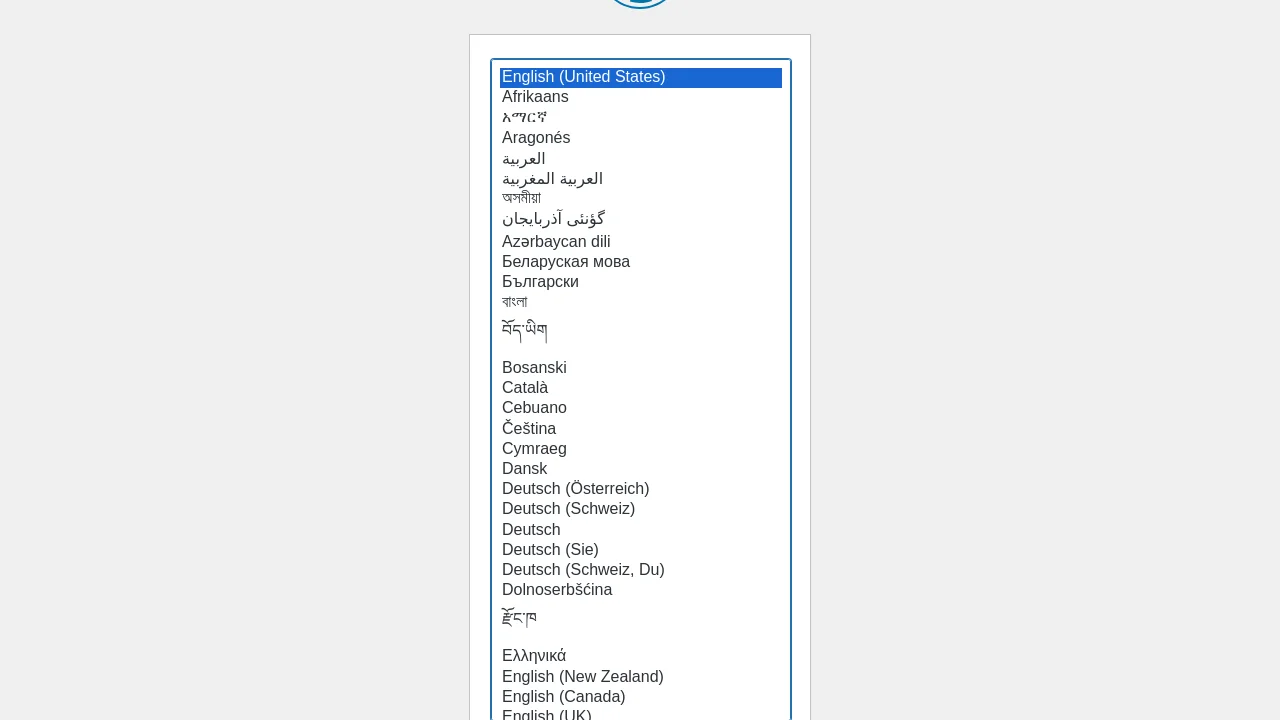
| Title: | WordPress › Setup Configuration File |
| Description: | No description found |
| ip_address | 76.13.123.223 |
| country | US  |
| network_name | Hostinger International Limited |
| asn | AS47583 |
22/tcp | ssh | OpenSSH 9.6p1 Ubuntu 3ubuntu13.15 |
80/tcp | http | nginx - |
443/tcp | https | nginx - |
| Software / Version | Category |
|---|---|
| jQuery Migrate 3.4.1 | JavaScript libraries |
| HTTP/3 | Miscellaneous |
| jQuery 3.7.1 | JavaScript libraries |
| MySQL | Databases |
| Nginx | Web servers, Reverse proxies |
| PHP | Programming languages |
| WordPress | CMS, Blogs |
Web Application Vulnerabilities
Evidence
Vulnerability description
We found that the target application's web server presents an SSL/TLS certificate that is not trusted by web browsers. This issue typically arises when the server uses a self-signed certificate, a certificate from an untrusted authority, or a certificate that has expired or is invalid for other reasons. The lack of a trusted certificate makes it challenging for users to verify the authenticity of the server, undermining the security of the SSL/TLS connection.
Risk description
The risk is that an attacker could easily mount a man-in-the-middle attack in order to sniff the SSL communication by presenting the user a fake SSL certificate.
Recommendation
We recommend you to configure a trusted SSL certificate for the web server. Examples of how to configure SSL for various servers for Apache and Nginx are referenced.
Classification
| CWE | CWE-295 |
| OWASP Top 10 - 2017 | |
| OWASP Top 10 - 2021 |
Evidence
| URL | Method | Parameters | Evidence |
|---|---|---|---|
| https://bsionary.com/wp-admin/setup-config.php | POST | Query: step=2 Body: dbhost=localhost dbname=1d3d2d231d2dd4 language=af prefix=wp_ pwd=Secure123456$ submit=Dien in uname=1d3d2d231d2dd4 Headers: Content-Type=application/x-www-form-urlencoded User-Agent=Mozilla/5.0 (Windows NT 10.0; Win64; x64) AppleWebKit/537.36 (KHTML, like... | Response has an internal server error status code: 500 |
Vulnerability description
We noticed that the target application's website does not properly handle or incorrectly manages exceptional conditions like Internal Server Errors. These errors can reveal sensitive information through their error messages. For instance, an error message could inadvertently disclose system paths or private application details.
Risk description
The risk exists that attackers could utilize information revealed in Internal Server Error messages to mount more targeted and effective attacks. Detailed error messages could, for example, expose a path traversal weakness (CWE-22) or other exploitable system vulnerabilities.
Recommendation
Ensure that error messages only contain minimal details that are useful to the intended audience, and nobody else. The messages need to strike the balance between being too cryptic and not being cryptic enough. They should not necessarily reveal the methods that were used to determine the error. Such detailed information can be used to refine the original attack to increase the chances of success. If errors must be tracked in some detail, capture them in log messages - but consider what could occur if the log messages can be viewed by attackers. Avoid recording highly sensitive information such as passwords in any form. Avoid inconsistent messaging that might accidentally tip off an attacker about internal state, such as whether a username is valid or not.
Classification
| CWE | CWE-209 |
| OWASP Top 10 - 2017 | |
| OWASP Top 10 - 2021 |
Evidence
| URL | Evidence |
|---|---|
| https://bsionary.com/wp-admin/setup-config.php | Response headers do not include the HTTP Strict-Transport-Security header |
Vulnerability description
We noticed that the target application lacks the HTTP Strict-Transport-Security header in its responses. This security header is crucial as it instructs browsers to only establish secure (HTTPS) connections with the web server and reject any HTTP connections.
Risk description
The risk is that lack of this header permits an attacker to force a victim user to initiate a clear-text HTTP connection to the server, thus opening the possibility to eavesdrop on the network traffic and extract sensitive information (e.g. session cookies).
Recommendation
The Strict-Transport-Security HTTP header should be sent with each HTTPS response. The syntax is as follows: `Strict-Transport-Security: max-age=<seconds>[; includeSubDomains]` The parameter `max-age` gives the time frame for requirement of HTTPS in seconds and should be chosen quite high, e.g. several months. A value below 7776000 is considered as too low by this scanner check. The flag `includeSubDomains` defines that the policy applies also for sub domains of the sender of the response.
Classification
| CWE | CWE-693 |
| OWASP Top 10 - 2017 | |
| OWASP Top 10 - 2021 |
Evidence
| Software / Version | Category |
|---|---|
| jQuery Migrate 3.4.1 | JavaScript libraries |
| HTTP/3 | Miscellaneous |
| jQuery 3.7.1 | JavaScript libraries |
| MySQL | Databases |
| Nginx | Web servers, Reverse proxies |
| PHP | Programming languages |
| WordPress | CMS, Blogs |
Vulnerability description
We noticed that server software and technology details are exposed, potentially aiding attackers in tailoring specific exploits against identified systems and versions.
Risk description
The risk is that an attacker could use this information to mount specific attacks against the identified software type and version.
Recommendation
We recommend you to eliminate the information which permits the identification of software platform, technology, server and operating system: HTTP server headers, HTML meta information, etc.
Classification
| CWE | CWE-200 |
| OWASP Top 10 - 2017 | |
| OWASP Top 10 - 2021 |
Evidence
| URL | Evidence |
|---|---|
| https://bsionary.com/wp-admin/setup-config.php | Response does not include the HTTP Content-Security-Policy security header or meta tag |
Vulnerability description
We noticed that the target application lacks the Content-Security-Policy (CSP) header in its HTTP responses. The CSP header is a security measure that instructs web browsers to enforce specific security rules, effectively preventing the exploitation of Cross-Site Scripting (XSS) vulnerabilities.
Risk description
The risk is that if the target application is vulnerable to XSS, lack of this header makes it easily exploitable by attackers.
Recommendation
Configure the Content-Security-Header to be sent with each HTTP response in order to apply the specific policies needed by the application.
Classification
| CWE | CWE-1021 |
| OWASP Top 10 - 2017 | |
| OWASP Top 10 - 2021 |
Vulnerability description
We have noticed that the server is missing the security.txt file, which is considered a good practice for web security. It provides a standardized way for security researchers and the public to report security vulnerabilities or concerns by outlining the preferred method of contact and reporting procedures.
Risk description
There is no particular risk in not having a security.txt file for your server. However, this file is important because it offers a designated channel for reporting vulnerabilities and security issues.
Recommendation
We recommend you to implement the security.txt file according to the standard, in order to allow researchers or users report any security issues they find, improving the defensive mechanisms of your server.
Classification
| CWE | CWE-1188 |
| OWASP Top 10 - 2017 | |
| OWASP Top 10 - 2021 |
Evidence
| URL | Evidence |
|---|---|
| https://bsionary.com/wp-admin/setup-config.php |
|
Vulnerability description
We have discovered that the target application presents a login interface that could be a potential target for attacks. While login interfaces are standard for user authentication, they can become vulnerabilities if not properly secured.
Risk description
The risk is that an attacker could use this interface to mount brute force attacks against known passwords and usernames combinations leaked throughout the web.
Recommendation
Ensure each interface is not bypassable using common knowledge of the application or leaked credentials using occasional password audits.
Classification
| CWE | CWE-287 |
| OWASP Top 10 - 2017 | |
| OWASP Top 10 - 2021 |
Infrastructure Vulnerabilities
Evidence
We managed to detect a publicly accessible SSH service. Starting Nmap ( https://nmap.org ) at 2026-04-17 21:25 EEST Nmap scan report for bsionary.com (76.13.123.223) Host is up (0.093s latency). rDNS record for 76.13.123.223: srv1572894.hstgr.cloud
PORT STATE SERVICE VERSION 22/tcp open ssh OpenSSH 9.6p1 Ubuntu 3ubuntu13.15 (Ubuntu Linux; protocol 2.0) | ssh-auth-methods: | Supported authentication methods: | publickey |_ password Service Info: OS: Linux; CPE: cpe:/o:linux:linux_kernel
Service detection performed. Please report any incorrect results at https://nmap.org/submit/ . Nmap done: 1 IP address (1 host up) scanned in 1.76 seconds
Vulnerability description
We found that the SSH service with username/password authentication is publicly accessible. Network administrators often use remote administration protocols to control devices like switches, routers, and other essential systems. However, allowing these services to be accessible via the Internet can increase security risks, creating potential opportunities for attacks on the organization.
Risk description
Exposing this service online with username/password authentication can enable attackers to launch authentication attacks, like guessing login credentials, and potentially gaining unauthorized access. Vulnerabilities, such as unpatched software, protocol flaws, or backdoors could also be exploited. An example is the CVE-2024-3094 (XZ Utils Backdoor) vulnerability.
Recommendation
We recommend turning off SSH with username/password authentication access over the Internet and instead using a Virtual Private Network (VPN) that mandates two-factor authentication (2FA). If the SSH service is essential for business purposes, we recommend limiting access only from designated IP addresses using a firewall. Furthermore, it is advisable to utilize SSH Public Key Authentication since it employs a key pair to verify the identity of a user or process.
Evidence
We found insecure DNS cookie usage on the following nameservers: ns1.dns-parking.com, ns2.dns-parking.com
Vulnerability description
We found that the server does not implement DNS Cookies or uses them insecurely. DNS Cookies help prevent DNS-based attacks, such as spoofing and amplification attacks.
Risk description
The risk exists because without DNS Cookies, the server is vulnerable to DNS spoofing and amplification attacks. Attackers can manipulate responses or use the server in distributed denial-of-service (DDoS) attacks, compromising network availability and security.
Recommendation
We recommend enabling DNS Cookies to prevent spoofed DNS responses. Ensure proper cookie validation is implemented to mitigate DNS amplification attacks. Regularly update DNS servers to support the latest DNS security features.
Evidence
| Domain Queried | DNS Record Type | Description | Value |
|---|---|---|---|
| bsionary.com | A | IPv4 address | 76.13.123.223 |
| bsionary.com | NS | Name server | ns1.dns-parking.com |
| bsionary.com | NS | Name server | ns2.dns-parking.com |
| bsionary.com | SOA | Start of Authority | ns1.dns-parking.com. dns.hostinger.com. 2026041601 10000 2400 604800 600 |
Risk description
An initial step for an attacker aiming to learn about an organization involves conducting searches on its domain names to uncover DNS records associated with the organization. This strategy aims to amass comprehensive insights into the target domain, enabling the attacker to outline the organization's external digital landscape. This gathered intelligence may subsequently serve as a foundation for launching attacks, including those based on social engineering techniques. DNS records pointing to services or servers that are no longer in use can provide an attacker with an easy entry point into the network.
Recommendation
We recommend reviewing all DNS records associated with the domain and identifying and removing unused or obsolete records.
Evidence
| Operating System | Accuracy |
|---|---|
| Linux 4.15 - 5.6 | 93% |
Vulnerability description
OS Detection
Evidence
| Software / Version | Category |
|---|---|
| WordPress | CMS, Blogs |
| MySQL | Databases |
| PHP | Programming languages |
| Nginx | Web servers, Reverse proxies |
| jQuery Migrate 3.4.1 | JavaScript libraries |
| jQuery | JavaScript libraries |
| HTTP/3 | Miscellaneous |
Vulnerability description
We noticed that server software and technology details are exposed, potentially aiding attackers in tailoring specific exploits against identified systems and versions.
Risk description
The risk is that an attacker could use this information to mount specific attacks against the identified software type and version.
Recommendation
We recommend you to eliminate the information which permits the identification of software platform, technology, server and operating system: HTTP server headers, HTML meta information, etc.