Vulnerability Scan Result

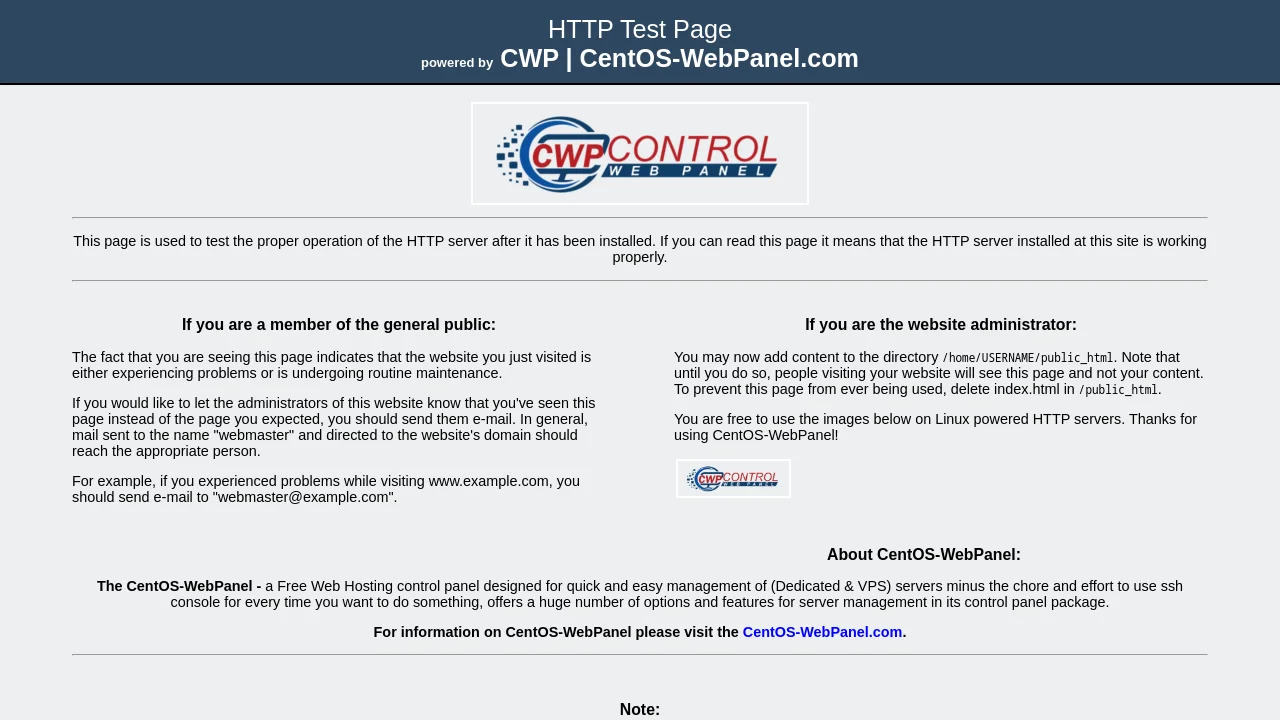
| Title: | HTTP Server Test Page powered by CentOS-WebPanel.com |
| Description: | No description found |
| ip_address | 194.163.171.42 |
| country | FR  |
| network_name | Contabo GmbH |
| asn | AS51167 |
21/tcp | ftp | Pure-FTPd - |
22/tcp | ssh | OpenSSH 8 |
25/tcp | smtp | Postfix smtpd - |
53/tcp | domain | ISC BIND 9.11.36 |
80/tcp | http | Apache httpd 2.4.65 |
110/tcp | pop3 | Dovecot pop3d - |
143/tcp | imap | Dovecot imapd - |
443/tcp | https | Apache httpd 2.4.65 |
465/tcp | smtp | Postfix smtpd - |
587/tcp | smtp | Postfix smtpd - |
993/tcp | imaps | - - |
995/tcp | pop3s | - - |
2082/tcp | infowave | - - |
2083/tcp | https | - - |
2086/tcp | gnunet | - - |
2087/tcp | https | - - |
| Software / Version | Category |
|---|---|
| Apache HTTP Server 2.4.65 | Web servers |
| OpenSSL 1.1.1k | Web server extensions |
| UNIX | Operating systems |
Web Application Vulnerabilities
Evidence
| CVE | CVSS | EPSS Score | EPSS Percentile | Summary |
|---|---|---|---|---|
| CVE-2025-59775 | 7.5 | 0.00071 | 0.21528 | Server-Side Request Forgery (SSRF) vulnerability in Apache HTTP Server on Windows with AllowEncodedSlashes On and MergeSlashes Off allows to potentially leak NTLM hashes to a malicious server via SSRF and malicious requests or content Users are recommended to upgrade to version 2.4.66, which fixes the issue. |
| CVE-2025-55753 | 7.5 | 0.00104 | 0.27938 | An integer overflow in the case of failed ACME certificate renewal leads, after a number of failures (~30 days in default configurations), to the backoff timer becoming 0. Attempts to renew the certificate then are repeated without delays until it succeeds. This issue affects Apache HTTP Server: from 2.4.30 before 2.4.66. Users are recommended to upgrade to version 2.4.66, which fixes the issue. |
| CVE-2025-65082 | 6.5 | 0.00164 | 0.37028 | Improper Neutralization of Escape, Meta, or Control Sequences vulnerability in Apache HTTP Server through environment variables set via the Apache configuration unexpectedly superseding variables calculated by the server for CGI programs. This issue affects Apache HTTP Server from 2.4.0 through 2.4.65. Users are recommended to upgrade to version 2.4.66 which fixes the issue. |
| CVE-2025-66200 | 5.4 | 0.0007 | 0.21283 | mod_userdir+suexec bypass via AllowOverride FileInfo vulnerability in Apache HTTP Server. Users with access to use the RequestHeader directive in htaccess can cause some CGI scripts to run under an unexpected userid. This issue affects Apache HTTP Server: from 2.4.7 through 2.4.65. Users are recommended to upgrade to version 2.4.66, which fixes the issue. |
Vulnerability description
Outdated or vulnerable software components include versions of server-side software that are no longer supported or have known, publicly disclosed vulnerabilities. Using outdated software significantly increases the attack surface of a system and may allow unauthorized access, data leaks, or service disruptions. Vulnerabilities in these components are often well-documented and actively exploited by attackers. Without security patches or vendor support, any weaknesses remain unmitigated, exposing the application to risks. In some cases, even after patching, the reported version may remain unchanged, requiring manual verification.
Risk description
The risk is that an attacker could search for an appropriate exploit (or create one himself) for any of these vulnerabilities and use it to attack the system. Since the vulnerabilities were discovered using only version-based testing, the risk level for this finding will not exceed 'high' severity. Critical risks will be assigned to vulnerabilities identified through accurate active testing methods.
Recommendation
In order to eliminate the risk of these vulnerabilities, we recommend you check the installed software version and upgrade to the latest version.
Classification
| CWE | CWE-1035 |
| OWASP Top 10 - 2017 | |
| OWASP Top 10 - 2021 |
Evidence
| CVE | CVSS | EPSS Score | EPSS Percentile | Summary |
|---|---|---|---|---|
| CVE-2021-3711 | 9.8 | 0.02373 | 0.8502 | In order to decrypt SM2 encrypted data an application is expected to call the API function EVP_PKEY_decrypt(). Typically an application will call this function twice. The first time, on entry, the "out" parameter can be NULL and, on exit, the "outlen" parameter is populated with the buffer size required to hold the decrypted plaintext. The application can then allocate a sufficiently sized buffer and call EVP_PKEY_decrypt() again, but this time passing a non-NULL value for the "out" parameter. A bug in the implementation of the SM2 decryption code means that the calculation of the buffer size required to hold the plaintext returned by the first call to EVP_PKEY_decrypt() can be smaller than the actual size required by the second call. This can lead to a buffer overflow when EVP_PKEY_decrypt() is called by the application a second time with a buffer that is too small. A malicious attacker who is able present SM2 content for decryption to an application could cause attacker chosen data to overflow the buffer by up to a maximum of 62 bytes altering the contents of other data held after the buffer, possibly changing application behaviour or causing the application to crash. The location of the buffer is application dependent but is typically heap allocated. Fixed in OpenSSL 1.1.1l (Affected 1.1.1-1.1.1k). |
| CVE-2026-28387 | 8.1 | 0.00032 | 0.09148 | Issue summary: An uncommon configuration of clients performing DANE TLSA-based server authentication, when paired with uncommon server DANE TLSA records, may result in a use-after-free and/or double-free on the client side. Impact summary: A use after free can have a range of potential consequences such as the corruption of valid data, crashes or execution of arbitrary code. However, the issue only affects clients that make use of TLSA records with both the PKIX-TA(0/PKIX-EE(1) certificate usages and the DANE-TA(2) certificate usage. By far the most common deployment of DANE is in SMTP MTAs for which RFC7672 recommends that clients treat as 'unusable' any TLSA records that have the PKIX certificate usages. These SMTP (or other similar) clients are not vulnerable to this issue. Conversely, any clients that support only the PKIX usages, and ignore the DANE-TA(2) usage are also not vulnerable. The client would also need to be communicating with a server that publishes a TLSA RRset with both types of TLSA records. No FIPS modules are affected by this issue, the problem code is outside the FIPS module boundary. |
| CVE-2023-4807 | 7.8 | 0.0085 | 0.74964 | Issue summary: The POLY1305 MAC (message authentication code) implementation contains a bug that might corrupt the internal state of applications on the Windows 64 platform when running on newer X86_64 processors supporting the AVX512-IFMA instructions. Impact summary: If in an application that uses the OpenSSL library an attacker can influence whether the POLY1305 MAC algorithm is used, the application state might be corrupted with various application dependent consequences. The POLY1305 MAC (message authentication code) implementation in OpenSSL does not save the contents of non-volatile XMM registers on Windows 64 platform when calculating the MAC of data larger than 64 bytes. Before returning to the caller all the XMM registers are set to zero rather than restoring their previous content. The vulnerable code is used only on newer x86_64 processors supporting the AVX512-IFMA instructions. The consequences of this kind of internal application state corruption can be various - from no consequences, if the calling application does not depend on the contents of non-volatile XMM registers at all, to the worst consequences, where the attacker could get complete control of the application process. However given the contents of the registers are just zeroized so the attacker cannot put arbitrary values inside, the most likely consequence, if any, would be an incorrect result of some application dependent calculations or a crash leading to a denial of service. The POLY1305 MAC algorithm is most frequently used as part of the CHACHA20-POLY1305 AEAD (authenticated encryption with associated data) algorithm. The most common usage of this AEAD cipher is with TLS protocol versions 1.2 and 1.3 and a malicious client can influence whether this AEAD cipher is used by the server. This implies that server applications using OpenSSL can be potentially impacted. However we are currently not aware of any concrete application that would be affected by this issue therefore we consider this a Low severity security issue. As a workaround the AVX512-IFMA instructions support can be disabled at runtime by setting the environment variable OPENSSL_ia32cap: OPENSSL_ia32cap=:~0x200000 The FIPS provider is not affected by this issue. |
| CVE-2026-28390 | 7.5 | 0.00031 | 0.08752 | Issue summary: During processing of a crafted CMS EnvelopedData message with KeyTransportRecipientInfo a NULL pointer dereference can happen. Impact summary: Applications that process attacker-controlled CMS data may crash before authentication or cryptographic operations occur resulting in Denial of Service. When a CMS EnvelopedData message that uses KeyTransportRecipientInfo with RSA-OAEP encryption is processed, the optional parameters field of RSA-OAEP SourceFunc algorithm identifier is examined without checking for its presence. This results in a NULL pointer dereference if the field is missing. Applications and services that call CMS_decrypt() on untrusted input (e.g., S/MIME processing or CMS-based protocols) are vulnerable. The FIPS modules in 3.6, 3.5, 3.4, 3.3 and 3.0 are not affected by this issue, as the affected code is outside the OpenSSL FIPS module boundary. |
| CVE-2026-28389 | 7.5 | 0.00031 | 0.08752 | Issue summary: During processing of a crafted CMS EnvelopedData message with KeyAgreeRecipientInfo a NULL pointer dereference can happen. Impact summary: Applications that process attacker-controlled CMS data may crash before authentication or cryptographic operations occur resulting in Denial of Service. When a CMS EnvelopedData message that uses KeyAgreeRecipientInfo is processed, the optional parameters field of KeyEncryptionAlgorithmIdentifier is examined without checking for its presence. This results in a NULL pointer dereference if the field is missing. Applications and services that call CMS_decrypt() on untrusted input (e.g., S/MIME processing or CMS-based protocols) are vulnerable. The FIPS modules in 3.6, 3.5, 3.4, 3.3 and 3.0 are not affected by this issue, as the affected code is outside the OpenSSL FIPS module boundary. |
Vulnerability description
Outdated or vulnerable software components include versions of server-side software that are no longer supported or have known, publicly disclosed vulnerabilities. Using outdated software significantly increases the attack surface of a system and may allow unauthorized access, data leaks, or service disruptions. Vulnerabilities in these components are often well-documented and actively exploited by attackers. Without security patches or vendor support, any weaknesses remain unmitigated, exposing the application to risks. In some cases, even after patching, the reported version may remain unchanged, requiring manual verification.
Risk description
The risk is that an attacker could search for an appropriate exploit (or create one himself) for any of these vulnerabilities and use it to attack the system. Since the vulnerabilities were discovered using only version-based testing, the risk level for this finding will not exceed 'high' severity. Critical risks will be assigned to vulnerabilities identified through accurate active testing methods.
Recommendation
In order to eliminate the risk of these vulnerabilities, we recommend you check the installed software version and upgrade to the latest version.
Classification
| CWE | CWE-1035 |
| OWASP Top 10 - 2017 | |
| OWASP Top 10 - 2021 |
Evidence
| URL | Response URL | Evidence |
|---|---|---|
| http://ftp.nabccouncil.com/ | http://ftp.nabccouncil.com/ | Communication is made over unsecure, unencrypted HTTP. |
Vulnerability description
We noticed that the communication between the web browser and the server is done using the HTTP protocol, which transmits data unencrypted over the network.
Risk description
The risk is that an attacker who manages to intercept the communication at the network level can read and modify the data transmitted (including passwords, secret tokens, credit card information and other sensitive data).
Recommendation
We recommend you to reconfigure the web server to use HTTPS - which encrypts the communication between the web browser and the server.
Classification
| CWE | CWE-319 |
| OWASP Top 10 - 2017 | |
| OWASP Top 10 - 2021 |
Evidence
| URL | Evidence |
|---|---|
| http://ftp.nabccouncil.com/ | Response headers do not include the Referrer-Policy HTTP security header as well as the |
Vulnerability description
We noticed that the target application's server responses lack the Referrer-Policy HTTP header, which controls how much referrer information the browser will send with each request originated from the current web application.
Risk description
The risk is that if a user visits a web page (e.g. "http://example.com/pricing/") and clicks on a link from that page going to e.g. "https://www.google.com", the browser will send to Google the full originating URL in the `Referer` header, assuming the Referrer-Policy header is not set. The originating URL could be considered sensitive information and it could be used for user tracking.
Recommendation
The Referrer-Policy header should be configured on the server side to avoid user tracking and inadvertent information leakage. The value `no-referrer` of this header instructs the browser to omit the Referer header entirely.
Classification
| CWE | CWE-693 |
| OWASP Top 10 - 2017 | |
| OWASP Top 10 - 2021 |
Evidence
| URL | Evidence |
|---|---|
| http://ftp.nabccouncil.com/ | Response headers do not include the X-Content-Type-Options HTTP security header |
Vulnerability description
We noticed that the target application's server responses lack the X-Content-Type-Options header. This header is particularly important for preventing Internet Explorer from reinterpreting the content of a web page (MIME-sniffing) and thus overriding the value of the Content-Type header.
Risk description
The risk is that lack of this header could make possible attacks such as Cross-Site Scripting or phishing in Internet Explorer browsers.
Recommendation
We recommend setting the X-Content-Type-Options header such as `X-Content-Type-Options: nosniff`.
Classification
| CWE | CWE-693 |
| OWASP Top 10 - 2017 | |
| OWASP Top 10 - 2021 |
Evidence
| Software / Version | Category |
|---|---|
| Apache HTTP Server 2.4.65 | Web servers |
| OpenSSL 1.1.1k | Web server extensions |
| UNIX | Operating systems |
Vulnerability description
We noticed that server software and technology details are exposed, potentially aiding attackers in tailoring specific exploits against identified systems and versions.
Risk description
The risk is that an attacker could use this information to mount specific attacks against the identified software type and version.
Recommendation
We recommend you to eliminate the information which permits the identification of software platform, technology, server and operating system: HTTP server headers, HTML meta information, etc.
Classification
| CWE | CWE-200 |
| OWASP Top 10 - 2017 | |
| OWASP Top 10 - 2021 |
Evidence
| URL | Evidence |
|---|---|
| http://ftp.nabccouncil.com/ | Response does not include the HTTP Content-Security-Policy security header or meta tag |
Vulnerability description
We noticed that the target application lacks the Content-Security-Policy (CSP) header in its HTTP responses. The CSP header is a security measure that instructs web browsers to enforce specific security rules, effectively preventing the exploitation of Cross-Site Scripting (XSS) vulnerabilities.
Risk description
The risk is that if the target application is vulnerable to XSS, lack of this header makes it easily exploitable by attackers.
Recommendation
Configure the Content-Security-Header to be sent with each HTTP response in order to apply the specific policies needed by the application.
Classification
| CWE | CWE-1021 |
| OWASP Top 10 - 2017 | |
| OWASP Top 10 - 2021 |
Evidence
| URL | Method | Summary |
|---|---|---|
| http://ftp.nabccouncil.com/?canary=hamprilufo | TRACE | We injected a random query parameter inside a HTTP TRACE request. The server responded with a 200 OK HTTP status code and we found the random value reflected in the body of the response. |
Vulnerability description
We have noticed that the webserver responded with a 200 OK HTTP status when a TRACE/TRACK HTTP request was sent. Originally intended for debugging purposes, these methods respond to requests by echoing back the contents of the request received.
Risk description
The only risk this might present nowadays is revealing HTTP headers that have been appended by intermediate proxy servers on the way to the destination. This can present a danger if any of those headers contain sensitive information like authentication information, secret keys.
Recommendation
Generally, it is good practice to disable unused functionality to minimize your attack surface. We recommend that you disable unused HTTP methods, or even better, allow only the ones that you know are used. This can be done using your webserver configuration.
Classification
| CWE | CWE-16 |
| OWASP Top 10 - 2017 | |
| OWASP Top 10 - 2021 |
Evidence
| URL | Method | Parameters | Evidence |
|---|---|---|---|
| http://ftp.nabccouncil.com/ | GET | Headers: User-Agent=Mozilla/5.0 (Windows NT 10.0; Win64; x64) AppleWebKit/537.36 (KHTML, like Gecko) Chrome/108.0.0.0 Safari/537.36 | Operating system paths found in the HTTP response: |
Vulnerability description
We found operating system paths returned in a HTTP response.
Risk description
The risk is that path disclosure may help an attacker learn more about the remote server's file system, thus increasing the effectiveness and precision of any future attacks.
Recommendation
Configure the web server to avoid leaking path information by using generic error messages that do not reveal any internal file paths. Make sure no server file is referred with its absolute path in the website code.
Classification
| CWE | CWE-200 |
| OWASP Top 10 - 2017 | |
| OWASP Top 10 - 2021 |
Vulnerability description
We have noticed that the server is missing the security.txt file, which is considered a good practice for web security. It provides a standardized way for security researchers and the public to report security vulnerabilities or concerns by outlining the preferred method of contact and reporting procedures.
Risk description
There is no particular risk in not having a security.txt file for your server. However, this file is important because it offers a designated channel for reporting vulnerabilities and security issues.
Recommendation
We recommend you to implement the security.txt file according to the standard, in order to allow researchers or users report any security issues they find, improving the defensive mechanisms of your server.
Classification
| CWE | CWE-1188 |
| OWASP Top 10 - 2017 | |
| OWASP Top 10 - 2021 |
Evidence
| URL | Method | Summary |
|---|---|---|
| http://ftp.nabccouncil.com/ | OPTIONS | We did a HTTP OPTIONS request. The server responded with a 200 status code and the header: `Allow: GET,POST,OPTIONS,HEAD,TRACE` Request / Response |
Vulnerability description
We have noticed that the webserver responded with an Allow HTTP header when an OPTIONS HTTP request was sent. This method responds to requests by providing information about the methods available for the target resource.
Risk description
The only risk this might present nowadays is revealing debug HTTP methods that can be used on the server. This can present a danger if any of those methods can lead to sensitive information, like authentication information, secret keys.
Recommendation
We recommend that you check for unused HTTP methods or even better, disable the OPTIONS method. This can be done using your webserver configuration.
Classification
| CWE | CWE-16 |
| OWASP Top 10 - 2017 | |
| OWASP Top 10 - 2021 |
Infrastructure Vulnerabilities
Evidence
| CVE | CVSS | EPSS Score | EPSS Percentile | CISA KEV | Summary |
|---|---|---|---|---|---|
| CVE-2023-38408 | 9.8 | 0.64352 | 0.98457 | No | The PKCS#11 feature in ssh-agent in OpenSSH before 9.3p2 has an insufficiently trustworthy search path, leading to remote code execution if an agent is forwarded to an attacker-controlled system. (Code in /usr/lib is not necessarily safe for loading into ssh-agent.) NOTE: this issue exists because of an incomplete fix for CVE-2016-10009. |
| CVE-2019-16905 | 7.8 | 0.00271 | 0.50498 | No | OpenSSH 7.7 through 7.9 and 8.x before 8.1, when compiled with an experimental key type, has a pre-authentication integer overflow if a client or server is configured to use a crafted XMSS key. This leads to memory corruption and local code execution because of an error in the XMSS key parsing algorithm. NOTE: the XMSS implementation is considered experimental in all released OpenSSH versions, and there is no supported way to enable it when building portable OpenSSH. |
| CVE-2026-35385 | 7.5 | 0.00039 | 0.11535 | No | In OpenSSH before 10.3, a file downloaded by scp may be installed setuid or setgid, an outcome contrary to some users' expectations, if the download is performed as root with -O (legacy scp protocol) and without -p (preserve mode). |
| CVE-2020-15778 | 7.4 | 0.61479 | 0.98338 | No | scp in OpenSSH through 8.3p1 allows command injection in the scp.c toremote function, as demonstrated by backtick characters in the destination argument. NOTE: the vendor reportedly has stated that they intentionally omit validation of "anomalous argument transfers" because that could "stand a great chance of breaking existing workflows." |
| CVE-2021-41617 | 7 | 0.00274 | 0.50763 | No | sshd in OpenSSH 6.2 through 8.x before 8.8, when certain non-default configurations are used, allows privilege escalation because supplemental groups are not initialized as expected. Helper programs for AuthorizedKeysCommand and AuthorizedPrincipalsCommand may run with privileges associated with group memberships of the sshd process, if the configuration specifies running the command as a different user. |
Vulnerability description
Vulnerabilities found for Openssh 8.0
Risk description
These vulnerabilities expose the affected applications to the risk of unauthorized access to confidential data and possibly to denial of service attacks. An attacker could search for an appropriate exploit (or create one) for any of these vulnerabilities and use it to attack the system. Notes: - The vulnerabilities are identified based on the server's version.; - Only the first 5 vulnerabilities with the highest risk are shown for each port.; Since the vulnerabilities were discovered using only version-based testing, the risk level for this finding will not exceed "high" severity. Critical risks will be assigned to vulnerabilities identified through accurate active testing methods.
Recommendation
We recommend you to upgrade the affected software to the latest version in order to eliminate the risks imposed by these vulnerabilities.
Evidence
| CVE | CVSS | EPSS Score | EPSS Percentile | CISA KEV | Summary |
|---|---|---|---|---|---|
| CVE-2025-59775 | 7.5 | 0.00071 | 0.21528 | No | Server-Side Request Forgery (SSRF) vulnerability in Apache HTTP Server on Windows with AllowEncodedSlashes On and MergeSlashes Off allows to potentially leak NTLM hashes to a malicious server via SSRF and malicious requests or content Users are recommended to upgrade to version 2.4.66, which fixes the issue. |
| CVE-2025-55753 | 7.5 | 0.00104 | 0.27938 | No | An integer overflow in the case of failed ACME certificate renewal leads, after a number of failures (~30 days in default configurations), to the backoff timer becoming 0. Attempts to renew the certificate then are repeated without delays until it succeeds. This issue affects Apache HTTP Server: from 2.4.30 before 2.4.66. Users are recommended to upgrade to version 2.4.66, which fixes the issue. |
| CVE-2025-65082 | 6.5 | 0.00164 | 0.37028 | No | Improper Neutralization of Escape, Meta, or Control Sequences vulnerability in Apache HTTP Server through environment variables set via the Apache configuration unexpectedly superseding variables calculated by the server for CGI programs. This issue affects Apache HTTP Server from 2.4.0 through 2.4.65. Users are recommended to upgrade to version 2.4.66 which fixes the issue. |
| CVE-2025-66200 | 5.4 | 0.0007 | 0.21283 | No | mod_userdir+suexec bypass via AllowOverride FileInfo vulnerability in Apache HTTP Server. Users with access to use the RequestHeader directive in htaccess can cause some CGI scripts to run under an unexpected userid. This issue affects Apache HTTP Server: from 2.4.7 through 2.4.65. Users are recommended to upgrade to version 2.4.66, which fixes the issue. |
Vulnerability description
Vulnerabilities found for Apache HTTP Server 2.4.65
Risk description
These vulnerabilities expose the affected applications to the risk of unauthorized access to confidential data and possibly to denial of service attacks. An attacker could search for an appropriate exploit (or create one) for any of these vulnerabilities and use it to attack the system. Notes: - The vulnerabilities are identified based on the server's version.; - Only the first 5 vulnerabilities with the highest risk are shown for each port.; Since the vulnerabilities were discovered using only version-based testing, the risk level for this finding will not exceed "high" severity. Critical risks will be assigned to vulnerabilities identified through accurate active testing methods.
Recommendation
We recommend you to upgrade the affected software to the latest version in order to eliminate the risks imposed by these vulnerabilities.
Evidence
| CVE | CVSS | EPSS Score | EPSS Percentile | CISA KEV | Summary |
|---|---|---|---|---|---|
| CVE-2021-3711 | 9.8 | 0.02373 | 0.8502 | No | In order to decrypt SM2 encrypted data an application is expected to call the API function EVP_PKEY_decrypt(). Typically an application will call this function twice. The first time, on entry, the "out" parameter can be NULL and, on exit, the "outlen" parameter is populated with the buffer size required to hold the decrypted plaintext. The application can then allocate a sufficiently sized buffer and call EVP_PKEY_decrypt() again, but this time passing a non-NULL value for the "out" parameter. A bug in the implementation of the SM2 decryption code means that the calculation of the buffer size required to hold the plaintext returned by the first call to EVP_PKEY_decrypt() can be smaller than the actual size required by the second call. This can lead to a buffer overflow when EVP_PKEY_decrypt() is called by the application a second time with a buffer that is too small. A malicious attacker who is able present SM2 content for decryption to an application could cause attacker chosen data to overflow the buffer by up to a maximum of 62 bytes altering the contents of other data held after the buffer, possibly changing application behaviour or causing the application to crash. The location of the buffer is application dependent but is typically heap allocated. Fixed in OpenSSL 1.1.1l (Affected 1.1.1-1.1.1k). |
| CVE-2026-28387 | 8.1 | 0.00032 | 0.09148 | No | Issue summary: An uncommon configuration of clients performing DANE TLSA-based server authentication, when paired with uncommon server DANE TLSA records, may result in a use-after-free and/or double-free on the client side. Impact summary: A use after free can have a range of potential consequences such as the corruption of valid data, crashes or execution of arbitrary code. However, the issue only affects clients that make use of TLSA records with both the PKIX-TA(0/PKIX-EE(1) certificate usages and the DANE-TA(2) certificate usage. By far the most common deployment of DANE is in SMTP MTAs for which RFC7672 recommends that clients treat as 'unusable' any TLSA records that have the PKIX certificate usages. These SMTP (or other similar) clients are not vulnerable to this issue. Conversely, any clients that support only the PKIX usages, and ignore the DANE-TA(2) usage are also not vulnerable. The client would also need to be communicating with a server that publishes a TLSA RRset with both types of TLSA records. No FIPS modules are affected by this issue, the problem code is outside the FIPS module boundary. |
| CVE-2023-4807 | 7.8 | 0.0085 | 0.74964 | No | Issue summary: The POLY1305 MAC (message authentication code) implementation contains a bug that might corrupt the internal state of applications on the Windows 64 platform when running on newer X86_64 processors supporting the AVX512-IFMA instructions. Impact summary: If in an application that uses the OpenSSL library an attacker can influence whether the POLY1305 MAC algorithm is used, the application state might be corrupted with various application dependent consequences. The POLY1305 MAC (message authentication code) implementation in OpenSSL does not save the contents of non-volatile XMM registers on Windows 64 platform when calculating the MAC of data larger than 64 bytes. Before returning to the caller all the XMM registers are set to zero rather than restoring their previous content. The vulnerable code is used only on newer x86_64 processors supporting the AVX512-IFMA instructions. The consequences of this kind of internal application state corruption can be various - from no consequences, if the calling application does not depend on the contents of non-volatile XMM registers at all, to the worst consequences, where the attacker could get complete control of the application process. However given the contents of the registers are just zeroized so the attacker cannot put arbitrary values inside, the most likely consequence, if any, would be an incorrect result of some application dependent calculations or a crash leading to a denial of service. The POLY1305 MAC algorithm is most frequently used as part of the CHACHA20-POLY1305 AEAD (authenticated encryption with associated data) algorithm. The most common usage of this AEAD cipher is with TLS protocol versions 1.2 and 1.3 and a malicious client can influence whether this AEAD cipher is used by the server. This implies that server applications using OpenSSL can be potentially impacted. However we are currently not aware of any concrete application that would be affected by this issue therefore we consider this a Low severity security issue. As a workaround the AVX512-IFMA instructions support can be disabled at runtime by setting the environment variable OPENSSL_ia32cap: OPENSSL_ia32cap=:~0x200000 The FIPS provider is not affected by this issue. |
| CVE-2026-28390 | 7.5 | 0.00031 | 0.08752 | No | Issue summary: During processing of a crafted CMS EnvelopedData message with KeyTransportRecipientInfo a NULL pointer dereference can happen. Impact summary: Applications that process attacker-controlled CMS data may crash before authentication or cryptographic operations occur resulting in Denial of Service. When a CMS EnvelopedData message that uses KeyTransportRecipientInfo with RSA-OAEP encryption is processed, the optional parameters field of RSA-OAEP SourceFunc algorithm identifier is examined without checking for its presence. This results in a NULL pointer dereference if the field is missing. Applications and services that call CMS_decrypt() on untrusted input (e.g., S/MIME processing or CMS-based protocols) are vulnerable. The FIPS modules in 3.6, 3.5, 3.4, 3.3 and 3.0 are not affected by this issue, as the affected code is outside the OpenSSL FIPS module boundary. |
| CVE-2026-28389 | 7.5 | 0.00031 | 0.08752 | No | Issue summary: During processing of a crafted CMS EnvelopedData message with KeyAgreeRecipientInfo a NULL pointer dereference can happen. Impact summary: Applications that process attacker-controlled CMS data may crash before authentication or cryptographic operations occur resulting in Denial of Service. When a CMS EnvelopedData message that uses KeyAgreeRecipientInfo is processed, the optional parameters field of KeyEncryptionAlgorithmIdentifier is examined without checking for its presence. This results in a NULL pointer dereference if the field is missing. Applications and services that call CMS_decrypt() on untrusted input (e.g., S/MIME processing or CMS-based protocols) are vulnerable. The FIPS modules in 3.6, 3.5, 3.4, 3.3 and 3.0 are not affected by this issue, as the affected code is outside the OpenSSL FIPS module boundary. |
Vulnerability description
Vulnerabilities found for OpenSSL 1.1.1k
Risk description
These vulnerabilities expose the affected applications to the risk of unauthorized access to confidential data and possibly to denial of service attacks. An attacker could search for an appropriate exploit (or create one) for any of these vulnerabilities and use it to attack the system. Notes: - The vulnerabilities are identified based on the server's version.; - Only the first 5 vulnerabilities with the highest risk are shown for each port.; Since the vulnerabilities were discovered using only version-based testing, the risk level for this finding will not exceed "high" severity. Critical risks will be assigned to vulnerabilities identified through accurate active testing methods.
Recommendation
We recommend you to upgrade the affected software to the latest version in order to eliminate the risks imposed by these vulnerabilities.
Evidence
| CVE | CVSS | EPSS Score | EPSS Percentile | CISA KEV | Summary |
|---|---|---|---|---|---|
| CVE-2022-37454 | 9.8 | 0.014 | 0.80507 | No | The Keccak XKCP SHA-3 reference implementation before fdc6fef has an integer overflow and resultant buffer overflow that allows attackers to execute arbitrary code or eliminate expected cryptographic properties. This occurs in the sponge function interface. |
| CVE-2017-8923 | 9.8 | 0.04586 | 0.89264 | No | The zend_string_extend function in Zend/zend_string.h in PHP through 7.1.5 does not prevent changes to string objects that result in a negative length, which allows remote attackers to cause a denial of service (application crash) or possibly have unspecified other impact by leveraging a script's use of .= with a long string. |
| CVE-2022-31629 | 6.5 | 0.15416 | 0.94674 | No | In PHP versions before 7.4.31, 8.0.24 and 8.1.11, the vulnerability enables network and same-site attackers to set a standard insecure cookie in the victim's browser which is treated as a `__Host-` or `__Secure-` cookie by PHP applications. |
| CVE-2022-4900 | 6.2 | 0.00065 | 0.19932 | No | A vulnerability was found in PHP where setting the environment variable PHP_CLI_SERVER_WORKERS to a large value leads to a heap buffer overflow. |
| CVE-2020-7069 | 5.4 | 0.08351 | 0.92309 | No | In PHP versions 7.2.x below 7.2.34, 7.3.x below 7.3.23 and 7.4.x below 7.4.11, when AES-CCM mode is used with openssl_encrypt() function with 12 bytes IV, only first 7 bytes of the IV is actually used. This can lead to both decreased security and incorrect encryption data. |
Vulnerability description
Vulnerabilities found for PHP 7.2.30
Risk description
These vulnerabilities expose the affected applications to the risk of unauthorized access to confidential data and possibly to denial of service attacks. An attacker could search for an appropriate exploit (or create one) for any of these vulnerabilities and use it to attack the system. Notes: - The vulnerabilities are identified based on the server's version.; - Only the first 5 vulnerabilities with the highest risk are shown for each port.; Since the vulnerabilities were discovered using only version-based testing, the risk level for this finding will not exceed "high" severity. Critical risks will be assigned to vulnerabilities identified through accurate active testing methods.
Recommendation
We recommend you to upgrade the affected software to the latest version in order to eliminate the risks imposed by these vulnerabilities.
Evidence
| CVE | CVSS | EPSS Score | EPSS Percentile | CISA KEV | Summary |
|---|---|---|---|---|---|
| CVE-2021-3711 | 9.8 | 0.02373 | 0.8502 | No | In order to decrypt SM2 encrypted data an application is expected to call the API function EVP_PKEY_decrypt(). Typically an application will call this function twice. The first time, on entry, the "out" parameter can be NULL and, on exit, the "outlen" parameter is populated with the buffer size required to hold the decrypted plaintext. The application can then allocate a sufficiently sized buffer and call EVP_PKEY_decrypt() again, but this time passing a non-NULL value for the "out" parameter. A bug in the implementation of the SM2 decryption code means that the calculation of the buffer size required to hold the plaintext returned by the first call to EVP_PKEY_decrypt() can be smaller than the actual size required by the second call. This can lead to a buffer overflow when EVP_PKEY_decrypt() is called by the application a second time with a buffer that is too small. A malicious attacker who is able present SM2 content for decryption to an application could cause attacker chosen data to overflow the buffer by up to a maximum of 62 bytes altering the contents of other data held after the buffer, possibly changing application behaviour or causing the application to crash. The location of the buffer is application dependent but is typically heap allocated. Fixed in OpenSSL 1.1.1l (Affected 1.1.1-1.1.1k). |
| CVE-2026-28387 | 8.1 | 0.00032 | 0.09148 | No | Issue summary: An uncommon configuration of clients performing DANE TLSA-based server authentication, when paired with uncommon server DANE TLSA records, may result in a use-after-free and/or double-free on the client side. Impact summary: A use after free can have a range of potential consequences such as the corruption of valid data, crashes or execution of arbitrary code. However, the issue only affects clients that make use of TLSA records with both the PKIX-TA(0/PKIX-EE(1) certificate usages and the DANE-TA(2) certificate usage. By far the most common deployment of DANE is in SMTP MTAs for which RFC7672 recommends that clients treat as 'unusable' any TLSA records that have the PKIX certificate usages. These SMTP (or other similar) clients are not vulnerable to this issue. Conversely, any clients that support only the PKIX usages, and ignore the DANE-TA(2) usage are also not vulnerable. The client would also need to be communicating with a server that publishes a TLSA RRset with both types of TLSA records. No FIPS modules are affected by this issue, the problem code is outside the FIPS module boundary. |
| CVE-2023-4807 | 7.8 | 0.0085 | 0.74964 | No | Issue summary: The POLY1305 MAC (message authentication code) implementation contains a bug that might corrupt the internal state of applications on the Windows 64 platform when running on newer X86_64 processors supporting the AVX512-IFMA instructions. Impact summary: If in an application that uses the OpenSSL library an attacker can influence whether the POLY1305 MAC algorithm is used, the application state might be corrupted with various application dependent consequences. The POLY1305 MAC (message authentication code) implementation in OpenSSL does not save the contents of non-volatile XMM registers on Windows 64 platform when calculating the MAC of data larger than 64 bytes. Before returning to the caller all the XMM registers are set to zero rather than restoring their previous content. The vulnerable code is used only on newer x86_64 processors supporting the AVX512-IFMA instructions. The consequences of this kind of internal application state corruption can be various - from no consequences, if the calling application does not depend on the contents of non-volatile XMM registers at all, to the worst consequences, where the attacker could get complete control of the application process. However given the contents of the registers are just zeroized so the attacker cannot put arbitrary values inside, the most likely consequence, if any, would be an incorrect result of some application dependent calculations or a crash leading to a denial of service. The POLY1305 MAC algorithm is most frequently used as part of the CHACHA20-POLY1305 AEAD (authenticated encryption with associated data) algorithm. The most common usage of this AEAD cipher is with TLS protocol versions 1.2 and 1.3 and a malicious client can influence whether this AEAD cipher is used by the server. This implies that server applications using OpenSSL can be potentially impacted. However we are currently not aware of any concrete application that would be affected by this issue therefore we consider this a Low severity security issue. As a workaround the AVX512-IFMA instructions support can be disabled at runtime by setting the environment variable OPENSSL_ia32cap: OPENSSL_ia32cap=:~0x200000 The FIPS provider is not affected by this issue. |
| CVE-2026-28390 | 7.5 | 0.00031 | 0.08752 | No | Issue summary: During processing of a crafted CMS EnvelopedData message with KeyTransportRecipientInfo a NULL pointer dereference can happen. Impact summary: Applications that process attacker-controlled CMS data may crash before authentication or cryptographic operations occur resulting in Denial of Service. When a CMS EnvelopedData message that uses KeyTransportRecipientInfo with RSA-OAEP encryption is processed, the optional parameters field of RSA-OAEP SourceFunc algorithm identifier is examined without checking for its presence. This results in a NULL pointer dereference if the field is missing. Applications and services that call CMS_decrypt() on untrusted input (e.g., S/MIME processing or CMS-based protocols) are vulnerable. The FIPS modules in 3.6, 3.5, 3.4, 3.3 and 3.0 are not affected by this issue, as the affected code is outside the OpenSSL FIPS module boundary. |
| CVE-2026-28389 | 7.5 | 0.00031 | 0.08752 | No | Issue summary: During processing of a crafted CMS EnvelopedData message with KeyAgreeRecipientInfo a NULL pointer dereference can happen. Impact summary: Applications that process attacker-controlled CMS data may crash before authentication or cryptographic operations occur resulting in Denial of Service. When a CMS EnvelopedData message that uses KeyAgreeRecipientInfo is processed, the optional parameters field of KeyEncryptionAlgorithmIdentifier is examined without checking for its presence. This results in a NULL pointer dereference if the field is missing. Applications and services that call CMS_decrypt() on untrusted input (e.g., S/MIME processing or CMS-based protocols) are vulnerable. The FIPS modules in 3.6, 3.5, 3.4, 3.3 and 3.0 are not affected by this issue, as the affected code is outside the OpenSSL FIPS module boundary. |
Vulnerability description
Vulnerabilities found for OpenSSL 1.1.1k
Risk description
These vulnerabilities expose the affected applications to the risk of unauthorized access to confidential data and possibly to denial of service attacks. An attacker could search for an appropriate exploit (or create one) for any of these vulnerabilities and use it to attack the system. Notes: - The vulnerabilities are identified based on the server's version.; - Only the first 5 vulnerabilities with the highest risk are shown for each port.; Since the vulnerabilities were discovered using only version-based testing, the risk level for this finding will not exceed "high" severity. Critical risks will be assigned to vulnerabilities identified through accurate active testing methods.
Recommendation
We recommend you to upgrade the affected software to the latest version in order to eliminate the risks imposed by these vulnerabilities.
Evidence
| CVE | CVSS | EPSS Score | EPSS Percentile | CISA KEV | Summary |
|---|---|---|---|---|---|
| CVE-2025-59775 | 7.5 | 0.00071 | 0.21528 | No | Server-Side Request Forgery (SSRF) vulnerability in Apache HTTP Server on Windows with AllowEncodedSlashes On and MergeSlashes Off allows to potentially leak NTLM hashes to a malicious server via SSRF and malicious requests or content Users are recommended to upgrade to version 2.4.66, which fixes the issue. |
| CVE-2025-55753 | 7.5 | 0.00104 | 0.27938 | No | An integer overflow in the case of failed ACME certificate renewal leads, after a number of failures (~30 days in default configurations), to the backoff timer becoming 0. Attempts to renew the certificate then are repeated without delays until it succeeds. This issue affects Apache HTTP Server: from 2.4.30 before 2.4.66. Users are recommended to upgrade to version 2.4.66, which fixes the issue. |
| CVE-2025-65082 | 6.5 | 0.00164 | 0.37028 | No | Improper Neutralization of Escape, Meta, or Control Sequences vulnerability in Apache HTTP Server through environment variables set via the Apache configuration unexpectedly superseding variables calculated by the server for CGI programs. This issue affects Apache HTTP Server from 2.4.0 through 2.4.65. Users are recommended to upgrade to version 2.4.66 which fixes the issue. |
| CVE-2025-66200 | 5.4 | 0.0007 | 0.21283 | No | mod_userdir+suexec bypass via AllowOverride FileInfo vulnerability in Apache HTTP Server. Users with access to use the RequestHeader directive in htaccess can cause some CGI scripts to run under an unexpected userid. This issue affects Apache HTTP Server: from 2.4.7 through 2.4.65. Users are recommended to upgrade to version 2.4.66, which fixes the issue. |
Vulnerability description
Vulnerabilities found for Apache HTTP Server 2.4.65
Risk description
These vulnerabilities expose the affected applications to the risk of unauthorized access to confidential data and possibly to denial of service attacks. An attacker could search for an appropriate exploit (or create one) for any of these vulnerabilities and use it to attack the system. Notes: - The vulnerabilities are identified based on the server's version.; - Only the first 5 vulnerabilities with the highest risk are shown for each port.; Since the vulnerabilities were discovered using only version-based testing, the risk level for this finding will not exceed "high" severity. Critical risks will be assigned to vulnerabilities identified through accurate active testing methods.
Recommendation
We recommend you to upgrade the affected software to the latest version in order to eliminate the risks imposed by these vulnerabilities.
Evidence
| CVE | CVSS | EPSS Score | EPSS Percentile | CISA KEV | Summary |
|---|---|---|---|---|---|
| CVE-2023-50868 | 7.5 | 0.11802 | 0.93741 | No | The Closest Encloser Proof aspect of the DNS protocol (in RFC 5155 when RFC 9276 guidance is skipped) allows remote attackers to cause a denial of service (CPU consumption for SHA-1 computations) via DNSSEC responses in a random subdomain attack, aka the "NSEC3" issue. The RFC 5155 specification implies that an algorithm must perform thousands of iterations of a hash function in certain situations. |
| CVE-2023-50387 | 7.5 | 0.51989 | 0.97927 | No | Certain DNSSEC aspects of the DNS protocol (in RFC 4033, 4034, 4035, 6840, and related RFCs) allow remote attackers to cause a denial of service (CPU consumption) via one or more DNSSEC responses, aka the "KeyTrap" issue. One of the concerns is that, when there is a zone with many DNSKEY and RRSIG records, the protocol specification implies that an algorithm must evaluate all combinations of DNSKEY and RRSIG records. |
| CVE-2023-4408 | 7.5 | 0.00295 | 0.52744 | No | The DNS message parsing code in `named` includes a section whose computational complexity is overly high. It does not cause problems for typical DNS traffic, but crafted queries and responses may cause excessive CPU load on the affected `named` instance by exploiting this flaw. This issue affects both authoritative servers and recursive resolvers. This issue affects BIND 9 versions 9.0.0 through 9.16.45, 9.18.0 through 9.18.21, 9.19.0 through 9.19.19, 9.9.3-S1 through 9.11.37-S1, 9.16.8-S1 through 9.16.45-S1, and 9.18.11-S1 through 9.18.21-S1. |
| CVE-2023-3341 | 7.5 | 0.00247 | 0.47873 | No | The code that processes control channel messages sent to `named` calls certain functions recursively during packet parsing. Recursion depth is only limited by the maximum accepted packet size; depending on the environment, this may cause the packet-parsing code to run out of available stack memory, causing `named` to terminate unexpectedly. Since each incoming control channel message is fully parsed before its contents are authenticated, exploiting this flaw does not require the attacker to hold a valid RNDC key; only network access to the control channel's configured TCP port is necessary. This issue affects BIND 9 versions 9.2.0 through 9.16.43, 9.18.0 through 9.18.18, 9.19.0 through 9.19.16, 9.9.3-S1 through 9.16.43-S1, and 9.18.0-S1 through 9.18.18-S1. |
| CVE-2023-2828 | 7.5 | 0.01176 | 0.78806 | No | Every `named` instance configured to run as a recursive resolver maintains a cache database holding the responses to the queries it has recently sent to authoritative servers. The size limit for that cache database can be configured using the `max-cache-size` statement in the configuration file; it defaults to 90% of the total amount of memory available on the host. When the size of the cache reaches 7/8 of the configured limit, a cache-cleaning algorithm starts to remove expired and/or least-recently used RRsets from the cache, to keep memory use below the configured limit. It has been discovered that the effectiveness of the cache-cleaning algorithm used in `named` can be severely diminished by querying the resolver for specific RRsets in a certain order, effectively allowing the configured `max-cache-size` limit to be significantly exceeded. This issue affects BIND 9 versions 9.11.0 through 9.16.41, 9.18.0 through 9.18.15, 9.19.0 through 9.19.13, 9.11.3-S1 through 9.16.41-S1, and 9.18.11-S1 through 9.18.15-S1. |
Vulnerability description
Vulnerabilities found for Isc Bind 9.11.36
Risk description
These vulnerabilities expose the affected applications to the risk of unauthorized access to confidential data and possibly to denial of service attacks. An attacker could search for an appropriate exploit (or create one) for any of these vulnerabilities and use it to attack the system. Notes: - The vulnerabilities are identified based on the server's version.; - Only the first 5 vulnerabilities with the highest risk are shown for each port.; Since the vulnerabilities were discovered using only version-based testing, the risk level for this finding will not exceed "high" severity. Critical risks will be assigned to vulnerabilities identified through accurate active testing methods.
Recommendation
We recommend you to upgrade the affected software to the latest version in order to eliminate the risks imposed by these vulnerabilities.
Evidence
| CVE | CVSS | EPSS Score | EPSS Percentile | CISA KEV | Summary |
|---|---|---|---|---|---|
| CVE-2022-37454 | 9.8 | 0.014 | 0.80507 | No | The Keccak XKCP SHA-3 reference implementation before fdc6fef has an integer overflow and resultant buffer overflow that allows attackers to execute arbitrary code or eliminate expected cryptographic properties. This occurs in the sponge function interface. |
| CVE-2017-8923 | 9.8 | 0.04586 | 0.89264 | No | The zend_string_extend function in Zend/zend_string.h in PHP through 7.1.5 does not prevent changes to string objects that result in a negative length, which allows remote attackers to cause a denial of service (application crash) or possibly have unspecified other impact by leveraging a script's use of .= with a long string. |
| CVE-2022-31629 | 6.5 | 0.15416 | 0.94674 | No | In PHP versions before 7.4.31, 8.0.24 and 8.1.11, the vulnerability enables network and same-site attackers to set a standard insecure cookie in the victim's browser which is treated as a `__Host-` or `__Secure-` cookie by PHP applications. |
| CVE-2022-4900 | 6.2 | 0.00065 | 0.19932 | No | A vulnerability was found in PHP where setting the environment variable PHP_CLI_SERVER_WORKERS to a large value leads to a heap buffer overflow. |
| CVE-2020-7069 | 5.4 | 0.08351 | 0.92309 | No | In PHP versions 7.2.x below 7.2.34, 7.3.x below 7.3.23 and 7.4.x below 7.4.11, when AES-CCM mode is used with openssl_encrypt() function with 12 bytes IV, only first 7 bytes of the IV is actually used. This can lead to both decreased security and incorrect encryption data. |
Vulnerability description
Vulnerabilities found for PHP 7.2.30
Risk description
These vulnerabilities expose the affected applications to the risk of unauthorized access to confidential data and possibly to denial of service attacks. An attacker could search for an appropriate exploit (or create one) for any of these vulnerabilities and use it to attack the system. Notes: - The vulnerabilities are identified based on the server's version.; - Only the first 5 vulnerabilities with the highest risk are shown for each port.; Since the vulnerabilities were discovered using only version-based testing, the risk level for this finding will not exceed "high" severity. Critical risks will be assigned to vulnerabilities identified through accurate active testing methods.
Recommendation
We recommend you to upgrade the affected software to the latest version in order to eliminate the risks imposed by these vulnerabilities.
Evidence
We managed to detect a publicly accessible SSH service. Starting Nmap ( https://nmap.org ) at 2026-04-30 18:29 EEST Nmap scan report for ftp.nabccouncil.com (194.163.171.42) Host is up (0.016s latency). rDNS record for 194.163.171.42: mac51.winihost.com
PORT STATE SERVICE VERSION 22/tcp open ssh OpenSSH 8.0 (protocol 2.0) | ssh-auth-methods: | Supported authentication methods: | publickey | gssapi-keyex | gssapi-with-mic |_ password
Service detection performed. Please report any incorrect results at https://nmap.org/submit/ . Nmap done: 1 IP address (1 host up) scanned in 1.00 seconds
Vulnerability description
We found that the SSH service with username/password authentication is publicly accessible. Network administrators often use remote administration protocols to control devices like switches, routers, and other essential systems. However, allowing these services to be accessible via the Internet can increase security risks, creating potential opportunities for attacks on the organization.
Risk description
Exposing this service online with username/password authentication can enable attackers to launch authentication attacks, like guessing login credentials, and potentially gaining unauthorized access. Vulnerabilities, such as unpatched software, protocol flaws, or backdoors could also be exploited. An example is the CVE-2024-3094 (XZ Utils Backdoor) vulnerability.
Recommendation
We recommend turning off SSH with username/password authentication access over the Internet and instead using a Virtual Private Network (VPN) that mandates two-factor authentication (2FA). If the SSH service is essential for business purposes, we recommend limiting access only from designated IP addresses using a firewall. Furthermore, it is advisable to utilize SSH Public Key Authentication since it employs a key pair to verify the identity of a user or process.
Evidence
| CVE | CVSS | EPSS Score | EPSS Percentile | CISA KEV | Summary |
|---|---|---|---|---|---|
| CVE-2020-11023 | 6.9 | 0.66129 | 0.98531 | Yes | In jQuery versions greater than or equal to 1.0.3 and before 3.5.0, passing HTML containing <option> elements from untrusted sources - even after sanitizing it - to one of jQuery's DOM manipulation methods (i.e. .html(), .append(), and others) may execute untrusted code. This problem is patched in jQuery 3.5.0. |
| CVE-2020-11022 | 6.9 | 0.07042 | 0.91521 | No | In jQuery starting with 1.12.0 and before 3.5.0, passing HTML from untrusted sources - even after sanitizing it - to one of jQuery's DOM manipulation methods (i.e. .html(), .append(), and others) may execute untrusted code. This problem is patched in jQuery 3.5.0. |
| CVE-2019-11358 | 6.1 | 0.02426 | 0.85198 | No | jQuery before 3.4.0, as used in Drupal, Backdrop CMS, and other products, mishandles jQuery.extend(true, {}, ...) because of Object.prototype pollution. If an unsanitized source object contained an enumerable __proto__ property, it could extend the native Object.prototype. |
Vulnerability description
Vulnerabilities found for jQuery 3.1.1
Risk description
These vulnerabilities expose the affected applications to the risk of unauthorized access to confidential data and possibly to denial of service attacks. An attacker could search for an appropriate exploit (or create one) for any of these vulnerabilities and use it to attack the system. Notes: - The vulnerabilities are identified based on the server's version.; - Only the first 5 vulnerabilities with the highest risk are shown for each port.; Since the vulnerabilities were discovered using only version-based testing, the risk level for this finding will not exceed "high" severity. Critical risks will be assigned to vulnerabilities identified through accurate active testing methods.
Recommendation
We recommend you to upgrade the affected software to the latest version in order to eliminate the risks imposed by these vulnerabilities.
Evidence
We managed to detect that php has reached the End-of-Life (EOL).
Version detected: 7.2.30 End-of-life date: 2020-11-30 Latest version for the cycle: 7.2.34 This release cycle (7.2) doesn't have long-term-support (LTS). The cycle was released on 2017-11-30 and its latest release date was 2020-10-01. The support ended on 2019-11-30.
Risk description
Using end-of-life (EOL) software poses significant security risks for organizations. EOL software no longer receives updates, including critical security patches. This creates a vulnerability landscape where known and potentially new security flaws remain unaddressed, making the software an attractive target for malicious actors. Attackers can exploit these vulnerabilities to gain unauthorized access, disrupt services, or steal sensitive data. Moreover, without updates, compatibility issues arise with newer technologies, leading to operational inefficiencies and increased potential for system failures. Additionally, regulatory and compliance risks accompany the use of EOL software. Many industries have strict data protection regulations that require up-to-date software to ensure the highest security standards. Non-compliance can result in hefty fines and legal consequences. Organizations also risk damaging their reputation if a breach occurs due to outdated software, eroding customer trust and potentially leading to a loss of business. Therefore, continuing to use EOL software undermines both security posture and business integrity, necessitating timely upgrades and proactive risk management strategies.
Recommendation
To mitigate the risks associated with end-of-life (EOL) software, it's crucial to take proactive steps. Start by identifying any EOL software currently in use within your organization. Once identified, prioritize upgrading or replacing these applications with supported versions that receive regular updates and security patches. This not only helps close security gaps but also ensures better compatibility with newer technologies, enhancing overall system efficiency and reliability.Additionally, develop a comprehensive software lifecycle management plan. This plan should include regular audits to identify upcoming EOL dates and a schedule for timely updates or replacements. Train your IT staff and users about the importance of keeping software up to date and the risks associated with using outdated versions. By maintaining a proactive approach to software management, you can significantly reduce security risks, ensure compliance with industry regulations, and protect your organization's reputation and customer trust.
Evidence
We managed to detect a publicly accessible File Transfer Protocol (FTP) service. PORT STATE SERVICE VERSION 21/tcp open ftp Pure-FTPd
Vulnerability description
We found that the File Transfer Protocol (FTP) service is publicly accessible. The FTP enables client systems to connect to upload and download files. Nonetheless, FTP lacks encryption for the data exchanged between the server and the client, leaving all transferred data exposed in plaintext.
Risk description
Exposing this service online can enable attackers to execute man-in-the-middle attacks, capturing sensitive user credentials and the contents of files because FTP operates without encryption. The entirety of the communication between the client and the server remains unsecured in plaintext. This acquired information could further facilitate additional attacks within the network.
Recommendation
We recommend turning off FTP access over the Internet and instead using a Virtual Private Network (VPN) that mandates two-factor authentication (2FA). If the FTP service is essential for business purposes, we recommend limiting access only from designated IP addresses using a firewall. Furthermore, utilizing SFTP (Secure File Transfer Protocol) is recommended as this protocol employs encryption to secure data transfers.
Evidence
We managed to detect that OpenSSL has reached the End-of-Life (EOL).
Version detected: 1.1.1k End-of-life date: 2023-09-11 Latest version for the cycle: 1.1.1w This release cycle (1.1.1) does have long-term-support (LTS). The cycle was released on 2018-09-11 and its latest release date was 2023-09-12.
Risk description
Using end-of-life (EOL) software poses significant security risks for organizations. EOL software no longer receives updates, including critical security patches. This creates a vulnerability landscape where known and potentially new security flaws remain unaddressed, making the software an attractive target for malicious actors. Attackers can exploit these vulnerabilities to gain unauthorized access, disrupt services, or steal sensitive data. Moreover, without updates, compatibility issues arise with newer technologies, leading to operational inefficiencies and increased potential for system failures. Additionally, regulatory and compliance risks accompany the use of EOL software. Many industries have strict data protection regulations that require up-to-date software to ensure the highest security standards. Non-compliance can result in hefty fines and legal consequences. Organizations also risk damaging their reputation if a breach occurs due to outdated software, eroding customer trust and potentially leading to a loss of business. Therefore, continuing to use EOL software undermines both security posture and business integrity, necessitating timely upgrades and proactive risk management strategies.
Recommendation
To mitigate the risks associated with end-of-life (EOL) software, it's crucial to take proactive steps. Start by identifying any EOL software currently in use within your organization. Once identified, prioritize upgrading or replacing these applications with supported versions that receive regular updates and security patches. This not only helps close security gaps but also ensures better compatibility with newer technologies, enhancing overall system efficiency and reliability.Additionally, develop a comprehensive software lifecycle management plan. This plan should include regular audits to identify upcoming EOL dates and a schedule for timely updates or replacements. Train your IT staff and users about the importance of keeping software up to date and the risks associated with using outdated versions. By maintaining a proactive approach to software management, you can significantly reduce security risks, ensure compliance with industry regulations, and protect your organization's reputation and customer trust.
Evidence
We managed to detect that php has reached the End-of-Life (EOL).
Version detected: 7.2.30 End-of-life date: 2020-11-30 Latest version for the cycle: 7.2.34 This release cycle (7.2) doesn't have long-term-support (LTS). The cycle was released on 2017-11-30 and its latest release date was 2020-10-01. The support ended on 2019-11-30.
Risk description
Using end-of-life (EOL) software poses significant security risks for organizations. EOL software no longer receives updates, including critical security patches. This creates a vulnerability landscape where known and potentially new security flaws remain unaddressed, making the software an attractive target for malicious actors. Attackers can exploit these vulnerabilities to gain unauthorized access, disrupt services, or steal sensitive data. Moreover, without updates, compatibility issues arise with newer technologies, leading to operational inefficiencies and increased potential for system failures. Additionally, regulatory and compliance risks accompany the use of EOL software. Many industries have strict data protection regulations that require up-to-date software to ensure the highest security standards. Non-compliance can result in hefty fines and legal consequences. Organizations also risk damaging their reputation if a breach occurs due to outdated software, eroding customer trust and potentially leading to a loss of business. Therefore, continuing to use EOL software undermines both security posture and business integrity, necessitating timely upgrades and proactive risk management strategies.
Recommendation
To mitigate the risks associated with end-of-life (EOL) software, it's crucial to take proactive steps. Start by identifying any EOL software currently in use within your organization. Once identified, prioritize upgrading or replacing these applications with supported versions that receive regular updates and security patches. This not only helps close security gaps but also ensures better compatibility with newer technologies, enhancing overall system efficiency and reliability.Additionally, develop a comprehensive software lifecycle management plan. This plan should include regular audits to identify upcoming EOL dates and a schedule for timely updates or replacements. Train your IT staff and users about the importance of keeping software up to date and the risks associated with using outdated versions. By maintaining a proactive approach to software management, you can significantly reduce security risks, ensure compliance with industry regulations, and protect your organization's reputation and customer trust.
Evidence
We managed to detect that OpenSSL has reached the End-of-Life (EOL).
Version detected: 1.1.1k End-of-life date: 2023-09-11 Latest version for the cycle: 1.1.1w This release cycle (1.1.1) does have long-term-support (LTS). The cycle was released on 2018-09-11 and its latest release date was 2023-09-12.
Risk description
Using end-of-life (EOL) software poses significant security risks for organizations. EOL software no longer receives updates, including critical security patches. This creates a vulnerability landscape where known and potentially new security flaws remain unaddressed, making the software an attractive target for malicious actors. Attackers can exploit these vulnerabilities to gain unauthorized access, disrupt services, or steal sensitive data. Moreover, without updates, compatibility issues arise with newer technologies, leading to operational inefficiencies and increased potential for system failures. Additionally, regulatory and compliance risks accompany the use of EOL software. Many industries have strict data protection regulations that require up-to-date software to ensure the highest security standards. Non-compliance can result in hefty fines and legal consequences. Organizations also risk damaging their reputation if a breach occurs due to outdated software, eroding customer trust and potentially leading to a loss of business. Therefore, continuing to use EOL software undermines both security posture and business integrity, necessitating timely upgrades and proactive risk management strategies.
Recommendation
To mitigate the risks associated with end-of-life (EOL) software, it's crucial to take proactive steps. Start by identifying any EOL software currently in use within your organization. Once identified, prioritize upgrading or replacing these applications with supported versions that receive regular updates and security patches. This not only helps close security gaps but also ensures better compatibility with newer technologies, enhancing overall system efficiency and reliability.Additionally, develop a comprehensive software lifecycle management plan. This plan should include regular audits to identify upcoming EOL dates and a schedule for timely updates or replacements. Train your IT staff and users about the importance of keeping software up to date and the risks associated with using outdated versions. By maintaining a proactive approach to software management, you can significantly reduce security risks, ensure compliance with industry regulations, and protect your organization's reputation and customer trust.
Evidence
| Software / Version | Category |
|---|---|
| PHP 7.2.30 | Programming languages |
| Bootstrap | UI frameworks |
| jQuery 3.1.1 | JavaScript libraries |
| iCheck | JavaScript libraries |
| Popper | Miscellaneous |
Vulnerability description
We noticed that server software and technology details are exposed, potentially aiding attackers in tailoring specific exploits against identified systems and versions.
Risk description
The risk is that an attacker could use this information to mount specific attacks against the identified software type and version.
Recommendation
We recommend you to eliminate the information which permits the identification of software platform, technology, server and operating system: HTTP server headers, HTML meta information, etc.
Evidence
| Domain Queried | DNS Record Type | Description | Value |
|---|---|---|---|
| ftp.nabccouncil.com | A | IPv4 address | 194.163.171.42 |
Risk description
An initial step for an attacker aiming to learn about an organization involves conducting searches on its domain names to uncover DNS records associated with the organization. This strategy aims to amass comprehensive insights into the target domain, enabling the attacker to outline the organization's external digital landscape. This gathered intelligence may subsequently serve as a foundation for launching attacks, including those based on social engineering techniques. DNS records pointing to services or servers that are no longer in use can provide an attacker with an easy entry point into the network.
Recommendation
We recommend reviewing all DNS records associated with the domain and identifying and removing unused or obsolete records.
Evidence
| Software / Version | Category |
|---|---|
| CentOS Web Panel | Control systems |
| PHP 7.2.30 | Programming languages |
Vulnerability description
We noticed that server software and technology details are exposed, potentially aiding attackers in tailoring specific exploits against identified systems and versions.
Risk description
The risk is that an attacker could use this information to mount specific attacks against the identified software type and version.
Recommendation
We recommend you to eliminate the information which permits the identification of software platform, technology, server and operating system: HTTP server headers, HTML meta information, etc.
Evidence
| Operating System | Accuracy |
|---|---|
| Linux 4.4 | 100% |
Vulnerability description
OS Detection
Evidence
| Software / Version | Category |
|---|---|
| UNIX | Operating systems |
| OpenSSL 1.1.1k | Web server extensions |
| Apache HTTP Server 2.4.65 | Web servers |
Vulnerability description
We noticed that server software and technology details are exposed, potentially aiding attackers in tailoring specific exploits against identified systems and versions.
Risk description
The risk is that an attacker could use this information to mount specific attacks against the identified software type and version.
Recommendation
We recommend you to eliminate the information which permits the identification of software platform, technology, server and operating system: HTTP server headers, HTML meta information, etc.
Evidence
| Software / Version | Category |
|---|---|
| UNIX | Operating systems |
| OpenSSL 1.1.1k | Web server extensions |
| Apache HTTP Server 2.4.65 | Web servers |
Vulnerability description
We noticed that server software and technology details are exposed, potentially aiding attackers in tailoring specific exploits against identified systems and versions.
Risk description
The risk is that an attacker could use this information to mount specific attacks against the identified software type and version.
Recommendation
We recommend you to eliminate the information which permits the identification of software platform, technology, server and operating system: HTTP server headers, HTML meta information, etc.